

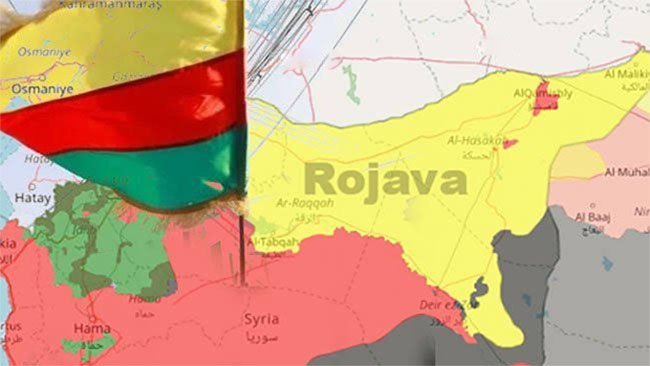
According to Kurdpress, the representative of the Syrian government in the United Nations announced that the northeast of Syria or the Kurdish region of this country is no longer a "complex challenge" for Damascus, and according to him, it has become a "national achievement" on the way to stabilizing the situation.
Ibrahim Alabi, Syria's ambassador to the United Nations, said on Friday at the Security Council meeting: "Syria continues to turn challenges into achievements." As you heard today, the northeast of Syria is no longer a complex challenge, but a national achievement that has borne fruit on the successful path to stabilizing the situation.
In late January, an agreement was reached between the Syrian Democratic Forces (SDF) and the Syrian government, which aimed to end the fighting and begin the gradual process of integrating the Kurdish-led forces into official government structures. According to Olabi, "the comprehensive ceasefire and the full integration of the SDF have entered the implementation stage and the process of integrating the military and security institutions has begun." He added that the integration of administrative institutions related to self-governing management is also underway within the framework of government structures.
The Syrian ambassador announced that the "security" of the al-Hol camp and its surrounding facilities has now been achieved, and Damascus is working with international partners to improve the humanitarian situation in these camps. Earlier, the United Nations High Commissioner for Refugees had warned about the risk of security violations following the unrest and described the unfavorable humanitarian conditions as a factor that exacerbated the situation. The authorities of the self-governing administration have repeatedly asked foreign countries to return their nationals from these camps.
The representative of Damascus also announced the beginning of the implementation of Decree No. 13 issued by Ahmed al-Shara, the interim president of Syria. This decree describes the Syrian Kurds as an "original and essential part" of the Syrian nation and recognizes their cultural and linguistic identity.
According to Olabi, "we have practically started the process of recognizing the civil and educational rights of the Kurdish community."
This decree, which was signed on January 17, includes the recognition of the cultural and linguistic rights of the Kurds, the possibility of teaching the Kurdish language in public and private schools in the Kurdish regions, the cancellation of the controversial 1962 census in Haskeh province, and the granting of Syrian citizenship to stateless Kurds. Also, March 21, at the same time as Nowruz, has been declared as an official nationwide holiday.
However, the officials of the Kurdish self-governing administration previously considered this decree insufficient and emphasized the necessity of holding a comprehensive national dialogue and drafting a democratic and decentralized constitution. According to them, only such a framework can guarantee equal rights, real participation and lasting stability in post-war Syria.
On the other hand, Damascus opposes decentralization and considers it a form of separatism, and with the recent military operations in northeastern Syria, it emphasizes the prospect of centralizing power in the central government.

Your Comment