

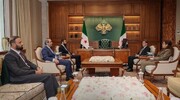
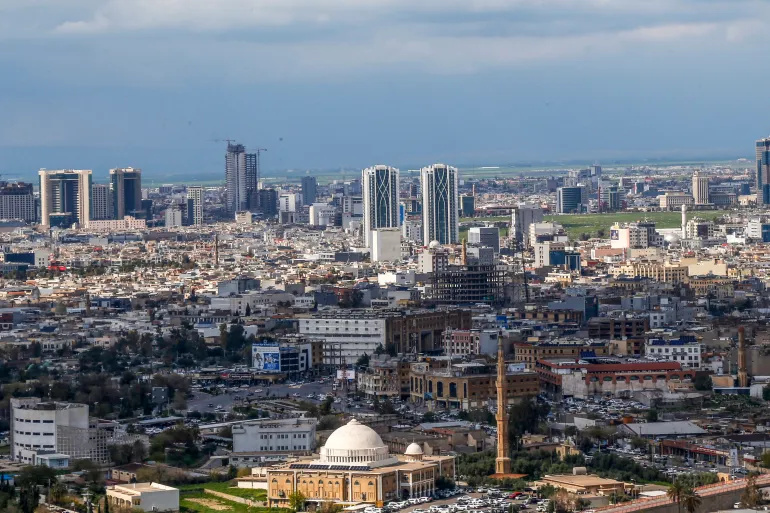
According to Kurdpress, the meeting of Masoud Barzani, the former president of the Kurdistan Region of Iraq and the leader of the Iraqi Kurdistan Democratic Party, with Mazloum Abdi, the commander of the Syrian Democratic Forces, on February 6, was a symbolic meeting between the two Kurdish leaders. But at the same time, this meeting is a reflection of the shaky and contradictory role of the United States in the Middle East. Abdi was a key figure in transforming a small Kurdish militia into a U.S.-backed entity that ultimately played a major role in the defeat of ISIS in eastern Syria.
Barzani has also been one of the main actors of Kurdish politics in northern Iraq for decades, and his leadership, with the continuous support of the United States, has led to the establishment of a form of Kurdish self-government in Iraq. This symmetry makes the visit to Erbil a symbol of the successes and failures of American policy towards the Kurds.
This year seems to be a decisive year for the Middle East and especially for the Syrian Democratic Forces. These forces, which until the beginning of the year controlled nearly a third of the Syrian territory, mainly east of the Euphrates, lost a large part of the areas under their control following the mid-January clashes with the Syrian government forces.
The January 30 agreement between Damascus and the SDF also paved the way for the deployment of Syrian Ministry of Interior forces in the remaining areas under the control of these forces. The future of the SDF is now uncertain; A part of its thousands of forces may join the Syrian army; For the Syrian Ministry of Defense, this means the recruitment of several brigades trained and equipped by the United States.
From a military and tactical point of view, the cooperation between the US and the SDF was successful. These forces bore the brunt of the battle against ISIS, inflicted heavy casualties, and with the support of American air, intelligence and special forces, liberated Raqqa in 2017 and took control of the Euphrates Valley by 2019.
But at the diplomatic level, this partnership always faced a fundamental problem: the SDF was considered a non-state actor. The State Department prefers to work with governments, not armed groups. US officials have repeatedly warned that support for the SDF is temporary, tactical and lacks a long-term political commitment.
The difference between Centcom's and the US State Department's views on the SDF was also one of the weak points of this policy. Kurdish supporters felt betrayed every time Washington talked about the possibility of leaving Syria; A feeling that has been repeated in 2018, 2019 and now again.
The relationship between the US and the SDF lacked a clear political roadmap from the beginning. The experience of this partnership shows that relying solely on military cooperation, without defining long-term political goals, inevitably leads to a dead end; A lesson that Washington will have to read again in its future interactions with non-state actors in the Middle East.

Your Comment