

According to Kurdpress, the "Arab Spring" that swept Syria in 2011 provided a historic opportunity for the Kurds. As the unrest spread, Bashar al-Assad's government shifted its focus to the defense of Damascus and coastal bases. This power vacuum made the Kurds and other residents of northern and eastern Syria practically responsible for the administration and security of their regions.
With the announcement of the ISIS caliphate and the formation of an international coalition to defeat this group, the "Syrian Democratic Forces" (SDF) became the most important ground force in the battle against ISIS and fought side by side with the coalition partners. This mainly Kurdish force played a decisive role in liberating the big cities; including the liberation of Raqqa in 2017, which was considered the operational capital of ISIS, and then the final defeat of the group in Baghouz in March 2019.
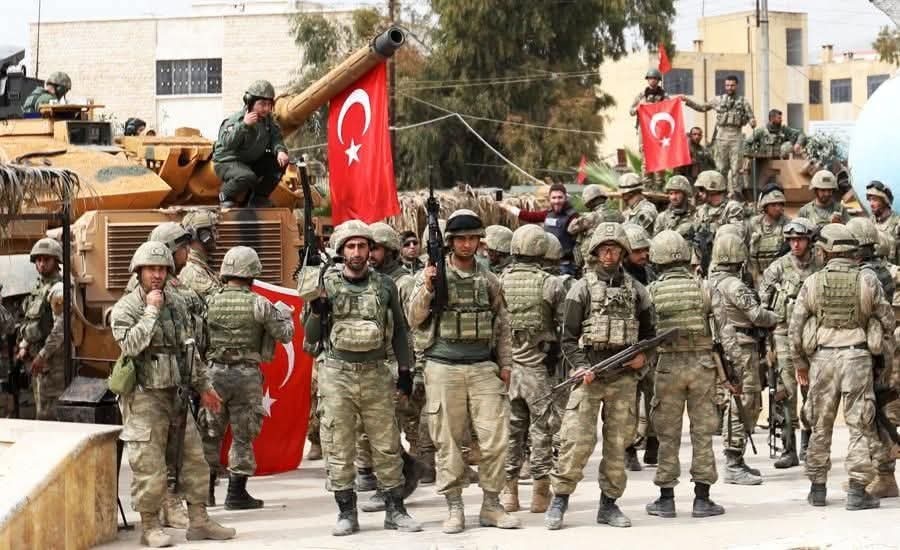
After the collapse of the Assad regime in December 2024, Turkey and its proxy forces, organized as the Syrian National Army (SNA), intensified their attacks on Manbij, Kobani, and the Tishrin Dam. The main goal, which is to drive out the Kurdish forces and settle millions of refugees in their place, remains the same. An action that actually leads to a fundamental change in the population structure of the region.
Ankara usually justifies its hostility by labeling the SDF as an offshoot of the Kurdistan Workers' Party (PKK). But this argument has lost its validity. Since the spring of 2024, and especially since October of the same year, the peace talks between the Turkish government and the PKK have reached important milestones. Abdullah Ocalan, the imprisoned leader of the PKK, has announced his readiness to issue a call for the complete disarmament of this group.
If Türkiye's real concern was the security of its borders, these diplomatic developments should lead to a reduction in tension in Syria. But in practice, Türkiye continues to target the infrastructure of the "autonomous administration" in the north and east of Syria. This behavior shows that Türkiye's real fear is not errorism", but the self-governing system itself."
The ongoing battle in Syria is no longer about the "fight against terrorism". This conflict is the confrontation between the existing situation of centralized nationalist governments and a new model of decentralized democracy. For Türkiye, the existence of an autonomous Kurdish region is an existential threat—not because of the weapons it possesses, but because of the political idea it represents.



Your Comment