

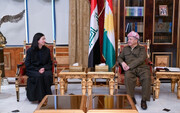
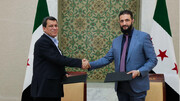
According to Kurdpress, with the fall of Bashar al-Assad's government in December 2024 and the signing of the March 10 agreement between the Syrian Democratic Forces (SDF) and Damascus, Germany's approach to this Kurdish-Arab force has entered a new phase. General Mazloum Abdi and Elham Ahmed at the Munich security conference in February 2026, with the official facilitation of Berlin, is a clear sign of this gradual turn, which was unthinkable until a few years ago due to considerations of relations with Ankara and the EU-Turkey immigration agreement.
German officials have made their contacts with SDF commanders more public and regular since the fall of the Assad government. While supporting the recent agreements between the SDF and the Syrian interim government, Berlin has emphasized the cessation of conflicts and the structural integration of these forces into the Syrian national security framework. In a statement on the sidelines of the Munich meeting, the German Foreign Ministry supported the implementation of the January agreement between Damascus and the SDF and described it as a step towards stability.
This development occurred in a situation where Germany simultaneously reopened its embassy in Damascus in March 2025 and provided political support to the new Syrian government. Berlin is forced to interact with the new Damascus government due to internal considerations, especially the Syrian refugee return case. At the same time, field instabilities and intermittent clashes between government forces and the SDF have made Germany emphasize the necessity of a permanent ceasefire and the peaceful integration of the SDF into the government structure.
At the analytical level, German experts consider this turn as the result of "political realism". Yan Ilhan Kizilhan, a Kurdish psychologist and winner of the German Federal Medal of Merit, believes that the change in Berlin's position was gradual and accelerated after the political pressure on Damascus intensified and the fragility of the post-Assad regime became apparent. According to him, Germany has come to the conclusion that the actor who actually manages and secures parts of Syria cannot be removed from future equations.
However, this change does not mean unconditional support for the SDF. Berlin's relations with this force are still defined as cautious and pragmatic. Germany must balance several variables: strategic relations with Türkiye, counterterrorism priorities, the future structure of the Syrian government, and regional stability. Previously, Ankara's opposition had repeatedly prevented representatives of the North and East Syrian Autonomous Administration from attending international meetings.
In the past, Germany's official policy was to distance itself from Kurdish self-governing institutions. Berlin had close relations with the Syrian opposition coalition and recognized its political legitimacy even in the first years of the crisis. On the other hand, direct interaction with the autonomous administration of North and East Syria was limited, and even in the case of the return of German citizens who were members of ISIS, direct contact was initially avoided. This policy changed gradually from 2019 under the pressure of field realities.
Now, with the beginning of the peace process between the Turkish government and the Kurdistan Workers' Party and the continuation of the threat of ISIS, Berlin sees the SDF more than ever as a field partner in the fight against extremism and maintaining stability. However, German officials stress that their positions are not "fixed and unchangeable" and developments on the ground will be decisive.
Overall, Germany's new policy can be seen as an attempt to manage several crises simultaneously: redefining the relationship with post-Assad Syria, controlling the consequences of migration, curbing security instability, and avoiding direct tension with Turkey. In this framework, the SDF is no longer merely a marginal actor, but is seen as a key factor in the future equation of Syria, driven not by ideological alignment but by geopolitical imperatives.

Your Comment