

According to Kurdpress, Turkey's openly hostile position towards the Syrian Kurds and even its tacit support for the Syrian army's attacks on Kurdish areas and areas under the control of the Syrian Democratic Forces (SDF) have once again drawn attention to Ankara's policy towards the Kurdish issue. These developments raise fundamental questions about Türkiye's current goals and the future it envisions for the Syrian Kurds.
From Lausanne to today; Has Türkiye's policy changed?
After the redrawing of the map of the Middle East with the signing of the Treaty of Lausanne in 1923 and the establishment of the modern Republic of Türkiye, the Kurds were practically left without any political status. Historian and researcher Alişan Akpinar emphasizes that the core of Turkey's policy after 1923 was that the Kurds would not gain political status or rights in any of the Middle East countries.
According to Akpinar, since the largest population of Kurds lives inside Turkey's borders, the Turkish government has always considered any political achievement of Kurds outside its borders as a direct threat to itself.
This concern shaped not only Türkiye's domestic policy, but also its regional and Middle East strategy and remained almost unchanged until the end of the Cold War in the 1990s.
Iraq's turning point and limited changes
After the First Persian Gulf War and the formation of the Iraqi Kurdistan Regional Government in 1992, a gradual process of change began. The American invasion of Iraq in 2003 and the stabilization of the federal structure of the Kurdistan Region was the first example of the formalization of the Kurds' political position by the international powers after the Lausanne Treaty.
Akpinar recalls that Türkiye strongly opposed the formation of the Kurdistan Federal Region at first and considered it an existential threat and a hostile act. However, from 2006 and 2007 onwards, Ankara gradually accepted this reality, opened channels of communication with Kurdish parties and leaders in Iraq, and established close relations with the Kurdistan Region.
According to Akpinar: "Until the 1990s, there was an absolute policy based on denying any right or status to the Kurds. With the end of the Cold War and the formation of a new political order in the Middle East, this approach was somewhat revised, but its essence did not change.
Kurdish regions of Syria and the regional equation
In the context of regional developments, what policy is Türkiye following towards the Syrian Kurds today? According to Akpinar, the main goal is still to prevent the formation of a political situation, but Turkey is aware that in the current regional and international situation, it can no longer fully achieve this goal as in the past.
Akpinar relates the beginning of the current phase to the attack of Hamas on Israel on October 7, 2023; The incident that led to Israel's massive attack on Gaza, the escalation of conflicts with Hezbollah in Lebanon, and finally the fall of the Assad regime in Syria. According to him, these developments are part of a broader strategic process.
He points to the January 6 meeting in Paris between Israel, Turkey, the United States, and the Syrian interim government, and believes that the intensification of Tahrir al-Sham (HTS) attacks after these meetings is not a coincidence, but is directly related to the multi-layered reorganization of power in Syria.
"What was done in Gaza was supposed to be repeated in the Kurdish regions of Syria"
Akpinar compares Türkiye's approach to the Kurdish regions of Syria with Israel's policy in Gaza. According to him, Türkiye was seeking to do in the Kurdish regions of Syria what Israel did in Gaza. But there was a fundamental difference: while Hamas is considered an enemy by the West, the Kurdish forces in Syria are allies of the West in the field. For this reason, Türkiye's expectations were not fulfilled.
However, according to Akpinar, Ankara's message to the Syrian Kurds is still clear: "You should not exist as a political subject or ruler; You can only exist as a subculture. He summarizes Türkiye's policy as follows: "The initial plan was the complete elimination of the Syrian Kurds. When this was not possible, the strategy changed to gradually pushing it back east of the Euphrates, then withdrawing it from Deir ez-Zor and Raqqa. If possible, the ultimate goal is the fall of Hasakah and Kobani and limiting the Kurds to Qamishlo.
Resistance and determining factor
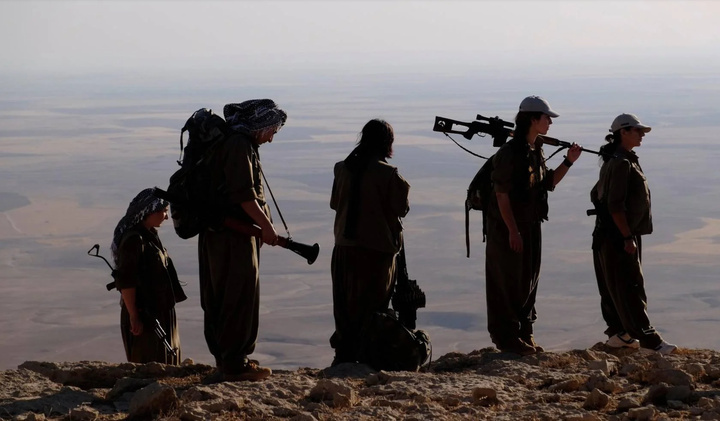
Along with these pressures, QSD has also kept the negotiation channels open to prevent massive killings. At the global level, there has been a wave of reactions against the attacks on the areas controlled by the Syrian Kurds.
According to Akpinar, the military and social resistance of the SDF not only prevented a possible humanitarian disaster, but also strengthened the position of the Kurds at the negotiating table.
In the end, he emphasizes that at the heart of all these developments, there is a special collective consciousness that the Kurds have formed over the past century, which, despite the failures and genocides, was formed without having an organization and is not based on a closed model, but has the capacity to present a social democratic project in the Middle East.

Your Comment