

The Kurds hope that the ceasefire will hold and the region will be protected from a new war, but at the same time, they are pessimistic about the ambiguity of the terms of the agreement, the history of violence in other parts of Syria, and the lack of constitutional guarantees.
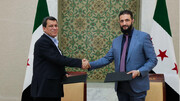
According to Kurdpress, at the same time as the internal security forces of the Syrian government entered the cities of Hasakah and Qamishlo and the Shoyukh region in the west of Kobani, based on the framework of the January 30 merger agreement between Damascus and the Syrian Democratic Forces, the atmosphere in the northeast of Syria is experiencing a mixture of cautious calm and deep concern. The residents of the areas under the control of the Syrian Democratic Forces are waiting for the clarification of the fate of this agreement and its consequences.
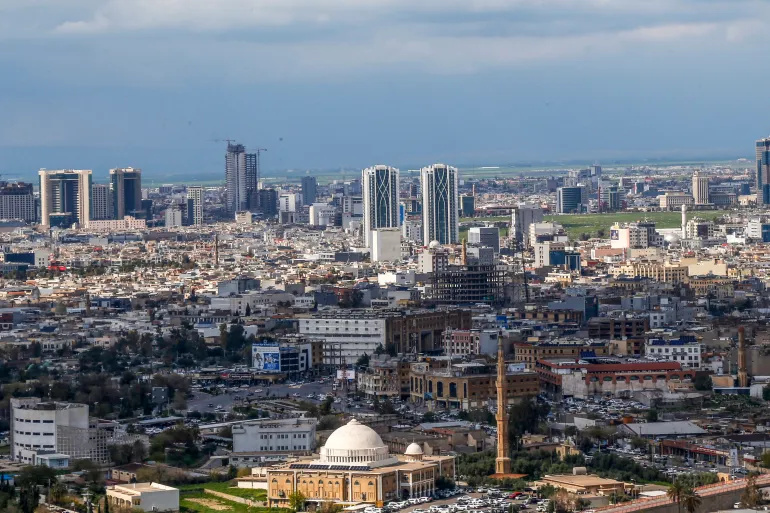
The presence of government forces in Haskeh and Qamishlo was accompanied by a limited welcome, mainly in some Arab neighborhoods. In the Kurdish neighborhoods, there was neither a scene of widespread acceptance nor open opposition. At the western entrance of Qamishlo, a small group gathered holding Kurdish flags and chanting slogans praising the "Rojava resistance". In Hasakah, a number of journalists and relief forces affiliated with the Syrian Democratic Forces chanted similar slogans.
Despite the difference in perceptions, many Kurds express hope that the agreement and the resulting ceasefire will last and spare the region from a military conflict with catastrophic humanitarian consequences.
On a broader level, the prevailing feeling among Kurds is a mixture of relief and anxiety. Abdul Hamid Suleiman, a journalist from Ras al-Ain (Sirikaniyeh) who lives in Qamishlo, says: "This relief is accompanied by great concern." He points to the history of violence against other Syrian communities and the rise of hate speech against the Kurds.
At the political level, despite past criticisms of the performance of this Kurdish force, now a significant part of the Kurds consider this force to be the only practical option for protecting Kurdish cities and guaranteeing their political and cultural rights within the framework of a unified Syria.
However, criticism of the SDF has increased, especially after the withdrawal from areas such as Deir Hafer, Maskaneh, Taqa, Raqqa and Deir ez-Zor. Akid Mashmesh, director of the news department of the North Press news agency in Qamishlo, says that these criticisms are aimed at a project that was "defective and lacked sufficient support" from the beginning and was not widely welcomed at the international, regional and even local level.
Finally, what a large part of Kurdish public opinion emphasizes is the necessity of written guarantees and the constitution. Rostam Othman states that the rights of Kurds and other Syrian communities should be "clearly established in the constitution" and relying on temporary decisions or presidential decrees is not enough.
In a situation where conditional consent is intertwined with deep concerns, the Kurds of northeastern Syria are waiting more than anything to receive clear guarantees and a predictable future.
Your Comment