

According to Kurdpress, the government of Damascus is facing the issue of minorities, while at the same time it has to advance the economic and infrastructural reconstruction of the war-torn country. How to manage the demands of the Kurds, balance with Türkiye, and maintain internal cohesion will be a decisive test for the presidency of Ahmad al-Shora. The SDF's presence in Munich showed that, despite its weakening on the ground, the actor still has the capacity for diplomatic maneuvering—a capacity that could facilitate or complicate the implementation path of the integration agreement.
In this meeting, SDF commander Mazloum Abdi (Kobani) and Elham Ahmed, head of the foreign relations board of these forces, along with Iraqi Kurdistan Regional President Nechirvan Barzani, met with Western officials, including US Secretary of State Marco Rubio, US Senator Lindsey Graham, French President Emmanuel Macron and German Foreign Minister Johann Wadeful. In his speech, Macron referred to the SDF as "freedom fighters", which is in line with the February 12 resolution of the European Parliament in support of the civil and educational rights of Syrian Kurds.
The Turkish government has not yet announced an official position on Abdi's presence in Munich, but the media close to the government described this move as a worrying sign. Ankara considers the SDF a branch of the PKK and insists on its dissolution and disarmament. At the same time, unofficial reports were published about the possibility of Abdi's secret meeting with Ibrahim Kalin, the head of the Turkish Intelligence Organization, which has not been confirmed by the sources.
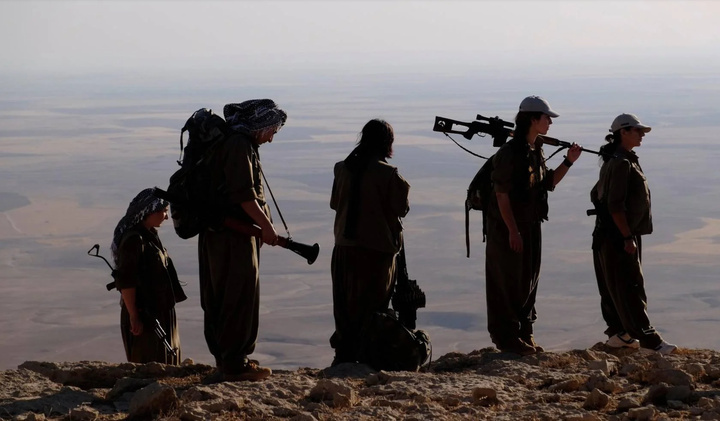
During the Syrian civil war, especially in the framework of the anti-ISIS coalition, the SDF enjoyed the broad support of the United States and Europe and controlled about one-third of Syria's territory, including the oil-rich areas of the northeast. But in January 2026, with the rapid advance of the Syrian government forces led by Ahmed al-Shara, this equation changed: the QSD lost most of its territory and oil resources, and thousands of its forces left the ranks after the secession of some Arab tribes.
The turn of Washington's policy also dealt a political blow to Qasd. It is said that in a meeting in Erbil, Barak announced to Abdi that America will not fire "even a single bullet" to counter the SDF in Damascus; The message that finally led to the agreement on January 30 for the integration of QSD into government institutions.
Despite this, the recent agreement is not considered to mean the complete defeat of Qasd. First, the Kurds were recognized as an official actor in the Syrian equation. Second, the four brigades of the Syrian army are completely composed of the former forces of the SDF and are stationed in Kurdish areas with their weapons and commanders. Third, the Kurdish language has found an official position.
The different interpretations of Damascus and Qasd of the terms of the agreement can hinder its implementation. Abdi sees the differences as "superficial," but the inclusion of provisions related to Kurdish cultural and educational rights in the new constitution is potentially controversial. QSD's request to implement "Decree No. 13" on the education and cultural rights of Kurds, as well as the official integration of the "Autonomous Administration" into the government structure, can arouse the sensitivity of other minorities - Druze, Alevi, Turkmen and Christians.
The government of Damascus is faced with the issue of minorities while at the same time it has to advance the economic and infrastructural reconstruction of the war-torn country. How to manage the demands of the Kurds, balance with Türkiye, and maintain internal cohesion will be a decisive test for the presidency of Ahmad al-Shora. The SDF's presence in Munich showed that, despite its weakening on the ground, the actor still has the capacity for diplomatic maneuvering—which could facilitate or complicate the path to the implementation of the integration agreement.
Your Comment