

According to Kurdpress, the Iraqi Kurdistan Democratic Party or KDP, as the dominant party in the Iraqi Kurdistan region, has made a dramatic and sudden change in its approach to the Syrian Democratic Forces (SDF) after the collapse of the Syrian regime during the Assad era.
During the past years, the Kurdistan Democratic Party has practically surrounded the areas under the control of the SDF and treated these forces as hostile actors; An approach that was rooted in the KDP's view of the SDF as a branch of the Kurdistan Workers' Party (PKK). Meanwhile, the KDP also saw the growing alliance of its traditional rival in the region, the Patriotic Union of Kurdistan (PUK), with the SDF as a strategic threat; According to this party, the alliance put the KDP in trouble from the east and the west. However, the main question is what caused this sudden change?
The Kurdistan Democratic Party's current messaging, which emphasizes "solidarity with Kurdish brothers against an existential threat," may be sincere to some extent, but it alone cannot explain the speed and extent of this political turn. In practice, the previous position of the KDP towards the SDF was very similar to Türkiye's policies before the collapse of the Assad regime in December 2024. This change of approach has gained more momentum at the same time as the forces of the new Syrian government advance towards the main Kurdish areas of Syria.
First: geography and leverage in the border triangle
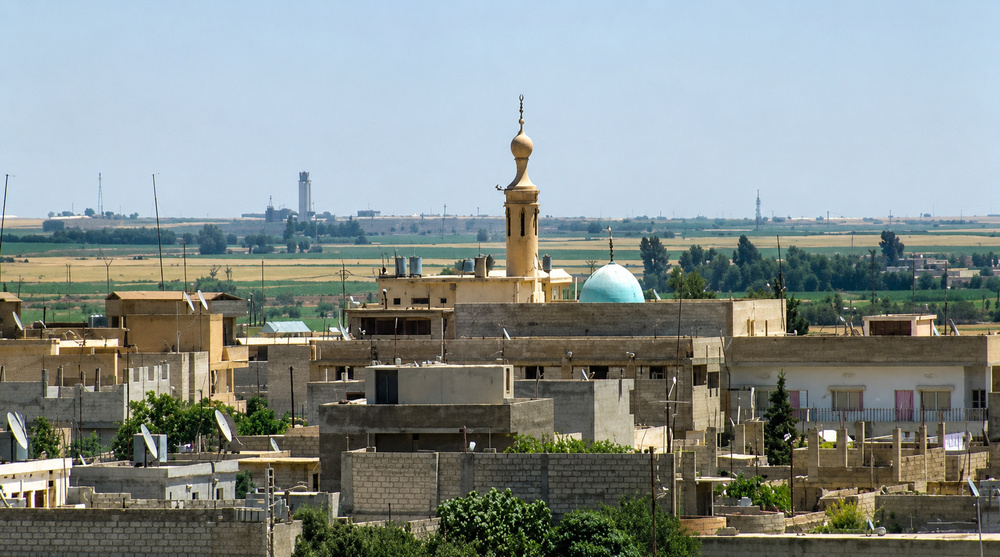
The Kurdistan Democratic Party controls the northwestern part of the Kurdistan Region, including the border with Syria. As it stands, the border on the Syrian side of the region is mostly adjacent to SDF-controlled areas, while a significant portion of Syrian forces' advances have occurred near areas closer to the Iraqi Federal Government's sphere of influence.
From KDP's point of view, it is strategically important that the Syria-Iraq-Türkiye border triangle is not completely under the control of the Syrian government; Because in this case, Baghdad and Ankara will get alternative routes that will make them unnecessary from the current dependence on the crossings and routes controlled by the Kurdistan Democratic Party.
This issue is sensitive for KDP in at least two ways. On the one hand, the Iraqi central government has incentives to reduce the KDP's influence and leverage. On the other hand, Turkey, which has established close relations with the new Syrian leadership, can by bypassing the Kurdistan region, put political or economic pressure on the Kurdistan Democratic Party and reduce its bargaining power.
In such a scenario, projects such as the "Development Road" that is supposed to connect Iraq to Turkey, could theoretically be redesigned in such a way that instead of crossing the Kurdistan region, they would pass through the territory of Syria. Such a change would directly undermine one of the KDP's most important levers: control of the Ibrahim Khalil crossing, Iraq's most important land border with Turkey, which is both a source of political influence and a significant source of revenue for the region.
Second: new regional atmosphere and pressure on the strategic depth of the Kurdistan region
The return of Syria as an active and coherent actor in the region can embolden some forces in Baghdad, including Sunni political currents, and create a more favorable atmosphere for efforts to weaken the position of the Kurdistan Region. Although the complete repetition of the "Syrian scenario" inside Iraq seems unlikely - because the Kurdistan region has a decisive Kurdish majority - but the change in geopolitical balances can create a new form of pressure against Erbil.
One of the most likely areas of pressure is the energy sector. For years, Baghdad has defined some of the Kurdistan Region's hydrocarbon assets, particularly fields located near contact lines between the federal government and the region, as "disputed areas"; Even in cases where these fields are practically under climate control.
Key examples in this field are Khormaleh oil field - the largest oil field in the region - and Khormur gas field - its largest gas field - which are only a few kilometers away from the control lines of the federal government. In a regional atmosphere that has become more aggressive and competitive than in the past, Baghdad can apply stronger pressure to put these strategic assets under the control of the central government, citing the same "disputed areas" narrative; A measure that directly targets the revenues and the degree of autonomy of the Kurdistan region.
Source: National Context magazine



Your Comment