

According to Kordpress, the Middle East is once again at a point that has significant similarities with the last years of the Ottoman Empire; A period full of political collapse, intervention of foreign powers, identity crisis and redrawing of borders. More than a century after the fall of the Ottoman Empire, the region is again faced with fragile governments, unstable borders, ethnic tensions and international actors' competition; A situation that many see as history repeating itself, albeit with new names and actors.
In such a situation, re-reading the thought of three figures of Kurdish descent from different periods of the Middle East crisis becomes especially important: Abdullah Judet, Zia Gokalp and Abdullah Ocalan. These three figures are not just representatives of three different intellectual trends, but each one has provided a different answer to the crisis of political order in the Middle East.
Abdullah Judet and Zia Gokalp belonged to the generation that experienced the collapse of the Ottoman Empire closely; A generation that faced war, ethnic rebellions, the intervention of European powers and the gradual disintegration of the empire. Their tendency towards Turkish nationalism was more than just an ideological choice, it was a reaction to the fear of collapse and statelessness.
For this generation, nationalism was defined as a tool for survival. The Ottoman Empire had not been able to prevent separatism through its multi-ethnicity and multi-layered structure, and many intellectuals of that period came to the conclusion that the only way to maintain political order was through centralism and identity homogenization.
In the same framework, Zia Gokalp became one of the main theorists of Turkish nationalism, and Abdullah Judet was also one of the defenders of centralized modernization and positivist reforms. Both, despite their Kurdish social background, eventually came to the conclusion that ethnic diversity has become a threat to survival in an age of nationalist competition.
The result of this process was the formation of the modern Middle East based on centralized, militaristic and pessimistic nation-states; A structure that made the preservation of territorial integrity and unit identity its main priority.
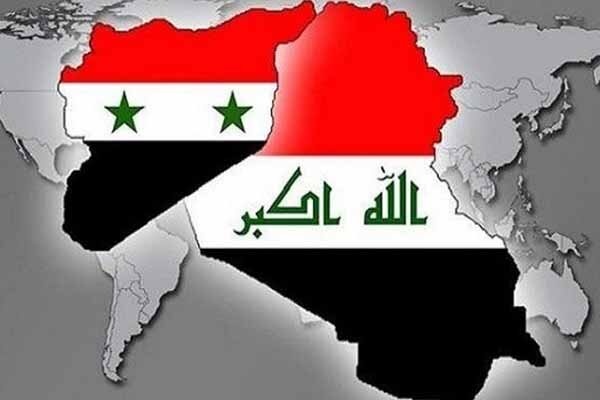
Now, a century later, the Middle East has again entered a transformative phase. Syria is practically fragmented after years of civil war, Iraq is still dealing with a structural crisis, Lebanon is involved in political paralysis, Gaza is burning in the fire of war, and the tension between Iran and Israel has reached an unprecedented level. At the same time, the competition of world powers over corridors, energy routes and regional influence has intensified, and Kurdish actors have also found a key role in almost all regional equations.
The similarity of this situation with the last years of the Ottoman Empire cannot be denied, from the point of view of many observers; Once again, the region is being redefined in the conditions of war, foreign intervention, and the crisis of political legitimacy, and again this fundamental question is raised, how can the plural societies of the Middle East live together without collapsing?
It is at this point that Abdullah Ojalan's political thought becomes important.
Ocalan, unlike Gokalp and Judet, does not consider the nation-state to be the solution to the Middle East crisis, but believes that the nation-state itself has been one of the main causes of the region's crises; Because he has tried to define the deeply pluralistic societies of the Middle East in the form of uniform and centralized identities.
In his view, the main tragedy of the 20th century in the Middle East was not simply colonialism or authoritarianism, but the destruction of democratic coexistence as a result of centralized nationalism. For this reason, the concept of "democratic confederalism" in Ocalan's thought is not just a Kurdish political project, but a kind of rereading of the political history of the Middle East.
While Gokalp saw salvation in national unity, Öcalan sees nationalist centralism as the source of the crisis. Jodet considered centralized modernization as a sign of progress, but Öcalan called it the distance of society from politics.
Against the 20th century model based on centralized governance, military power and ethnic nationalism, Öcalan emphasizes concepts such as local democracy, social organization, women's freedom, multiculturalism and decentralized administration.
However, the main question is whether such a vision can be understood and realized in the Middle East today.
For more than a century, the political culture of the region has been shaped by the ideology of the nation-state. Educational systems, military institutions, official narratives, and state media have all reproduced centralized nationalism as the natural form of political organization. As a result, many societies in the region continue to associate political legitimacy with a powerful central government, hard borders, and military authority.
In such an atmosphere, "democratic confederalism" seems like an unfamiliar or even idealistic concept to many. Even many oppressed groups still seek salvation in the formation of independent nation-states, rather than transcending nation-state logic.
For this reason, it is difficult for a large part of the region's public opinion to fully understand Öcalan's ideas. He wants societies that have lived with nationalism for a century to think beyond nationalism; He wants governments based on assimilation to accept pluralism; And he wants the societies that have experienced war and collapse to trust in coexistence again.
However, today's crises in the Middle East have revealed more than ever the limitations of the traditional nation-state model. The nation-state system has not been able to resolve ethnic tensions, prevent authoritarianism, or create stable coexistence. In many cases, this structure has even led to the deepening of divisions and the reproduction of exclusion and denial.
This issue does not necessarily mean that Ocalan's view is completely correct, but it has made his criticism of the dominant political structure in the Middle East more difficult than before.
If Gokalp and Judet took refuge in nationalism and centralism in the face of the collapse of the Ottoman Empire, Ocalan seeks a solution in the face of the current crisis in the region in a democratic society and decentralized coexistence.
The main question now is whether the Middle East can imagine a different path before fear and violence once again push the region towards a new form of authoritarianism and ethnic divisions.
National Context.





Your Comment