
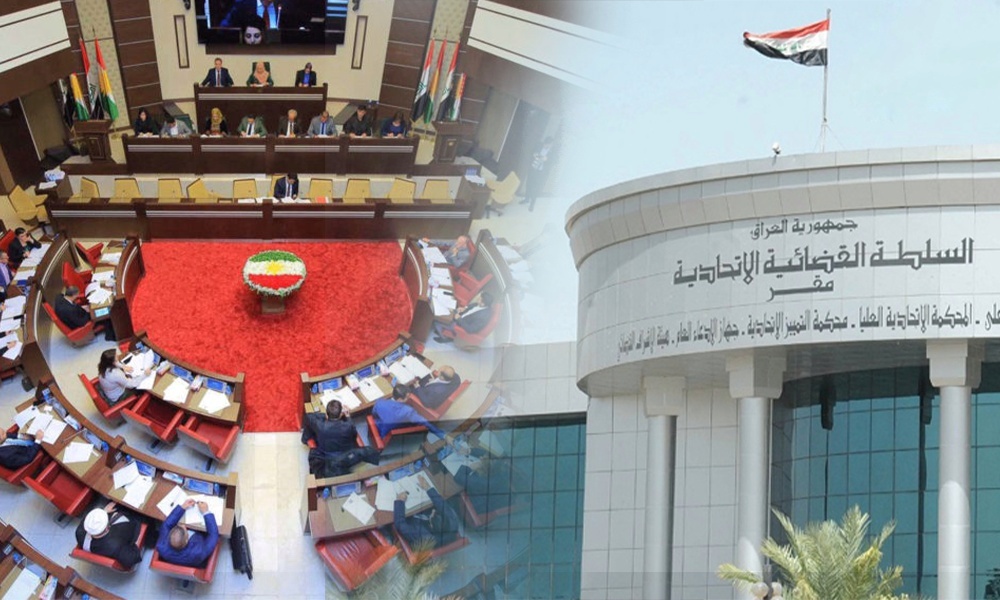
According to Kurdpress, while the political coalitions in Baghdad have split over the division of ministries and federal positions, the Kurdistan Region of Iraq has also failed to form a new government. Eighteen months after the October 2024 parliamentary elections, the Kurdistan Regional Government is still in the "interim government" status, and negotiations between the two main Kurdish parties, the Kurdistan Democratic Party and the Patriotic Union of Kurdistan, are still deadlocked. Despite several rounds of talks, disagreements over power-sharing, especially over control of the Ministry of Interior, have prevented an agreement. These divisions have deepened after the long and tense process of forming the Iraqi federal government in Baghdad.
Meanwhile, each of the two Kurdish parties seems to have approached different coalitions in Baghdad; An issue that has practically weakened the united position of the Kurds against the central government. In such a situation, the current disputes are no longer just a party competition, but can be a sign of the gradual collapse of the power-sharing model that has ruled the Kurdistan Region since 2005.
Fragile equation of power balance
After the fall of Saddam Hussein's government in 2003, the Patriotic Union of Kurdistan practically accepted a lower position than the Kurdistan Democratic Party in the regional government and the federal structure of Iraq; However, this position has always been a source of controversy. This situation included a lower share in ministries, government positions and control of a part of the Peshmerga forces. On the other hand, Erbil was practically considered the main representative of the Kurdistan region in Baghdad and the international arena. According to this unwritten agreement, since 2005, the post of president of Iraq has been in the hands of the Patriotic Union, and on the other hand, the presidency of the regional government and the prime minister of the regional government have been in the hands of the Democratic Party.
In the regional parliamentary elections in 2024, the Democratic Party won 39 seats and the Patriotic Union won 21 seats out of a total of 100 parliamentary seats. The Democratic Party considered this result as a confirmation of its superior position and tried to play a more dominant role in the power structure. Since then, government formation talks have stalled many times over key positions; Especially the Ministry of Interior, which the Patriotic Union wants, but the Democratic Party is not willing to hand over. These differences gained federal dimensions when the Democratic Party led by Masoud Barzani tried to take over the post of Iraqi president after the Iraqi parliamentary elections in November 2025.
In response, the Sulaymaniyah-based Patriotic Union formed a parliamentary coalition with the New Generation movement last February and increased its number of seats to 38, just one seat less than the Democratic Party. However, this measure has not been able to break the political deadlock.
Abd Khalid, a researcher at the Center for Future Studies in Sulaymaniyah, told Amwaj Media that despite the close number of seats, the Democratic Party is not willing to negotiate with the Patriotic Union on the basis of equality. According to him, the two parties will eventually be forced to form a government through "political agreement", but this requires political trust and abandoning monopoly in the power structure of the region.
Baghdad and the exploitation of the internal division of the Kurds
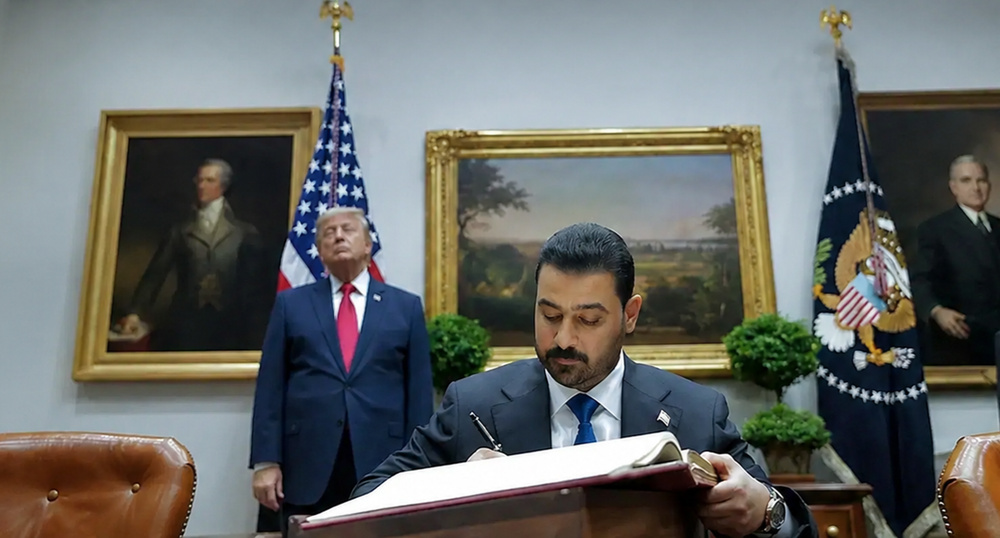
In the midst of deepening internal divisions, both parties accuse each other of violating the "political consensus" model. Tensions increased when on April 11, the Patriotic Union was able to bring Nizar Amidi to the presidency of Iraq with the support of the Shiite Coordination Framework and the Sunni coalition "Tadem" without prior agreement between the Kurdish parties.
In response, the Democratic Party boycotted the meetings of the Iraqi parliament until it returned to the political process on May 6, at the same time as the negotiations to form a new government in Baghdad.
According to Farooq Abdul, a researcher and university professor, the impasse between the Democratic Party and the Patriotic Union "has created a big gap that Baghdad can exploit." Oil, employees' rights and reduction of climate powers
The most important arena of confrontation between Erbil and Baghdad is the issue of oil and the payment of salaries of regional employees. The two sides have been at odds for years over the control of the Kirkuk-Ceyhan pipeline, which transports oil from the region to the Turkish port of Ceyhan. When the region started independent oil sales in 2014 and considered it a part of its "economic independence", Baghdad responded by stopping or limiting the payment of salaries to the region's employees. While according to the constitution of Iraq, the central goverAbout 1.2 million people out of the 6.3 million population of the region are public sector employees, and this has made the rights crisis the most important measure of the political legitimacy of the region's government.
The Kirkuk-Ceyhan pipeline was closed after the International Court of Arbitration ruled in favor of Baghdad in March 2023 and ordered Turkey to pay $1.5 billion in compensation for exporting Iraqi oil without the permission of the Iraqi government. The pipeline was finally reopened in September 2025, but according to the new agreement, the sale of Aqlim oil was placed under the full control of the Iraqi Oil Marketing Company, Sumo. As a result, the role of the Ministry of Climate Natural Resources was greatly reduced and the management of many oil fields was gradually handed over to the central government.
Is the Kurdistan region on the verge of administrative collapse?
Regardless of which party finds the upper hand in the current competition, it seems that the self-government of the Kurdistan Region has faced its most difficult phase since 2005 after these developments.
Some observers have warned that in the future, the Kurdistan Region may be practically divided into two separate federal regions; One under the influence of Erbil and the other under the influence of Sulaymaniyah, both of which interact directly with Baghdad. Such a scenario would mean the practical end of the Kurdistan region as a unified political and administrative unit; An issue that can deal a serious blow to the long-standing goal of Kurdish political self-governance in Iraq.
In the end, the main issue is no longer just identity or territorial control, but the economy and the ability to pay employees will determine the future. Any party that can guarantee the regular payment of salaries is likely to win the support of the next generation of Kurdish voters. On the other hand, a party that fails in this regard may lose its social base forever; Even if he has important ministries and positions in Baghdad.nment is responsible for paying these rights, but Baghdad has always made this issue conditional on the delivery of oil revenues from Erbil.
Your Comment