

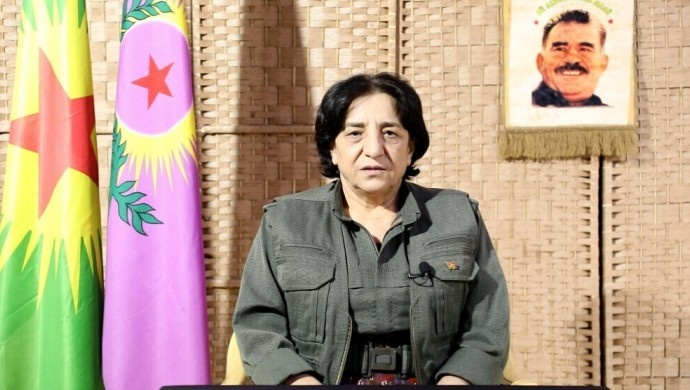
According to Kurdpress, Suzdar Avesta, a member of the KCK Joint Presidency Council, in an interview with Stark TV, evaluated the current process of peace negotiations in Turkey and said that the Kurdish issue can only be solved through dialogue and negotiation, and in the meantime, Abdullah Ocalan is still considered the main and determining party of this process.
Referring to the continued imprisonment and restrictions of Abdullah Öcalan in Amrali prison, he said that during the past 27 years, normal laws have not been implemented in his case, and if there is really a will to solve the problem, Öcalan's position and status should be reviewed first of all.
Avesta emphasized that Ocalan has been the leader and the main authority of this movement since the establishment of the Kurdish movement until today, and for this reason, he should assume the role of the main negotiator in the process of solving the Kurdish issue. According to him, providing the possibility of free political activity, regular communication, independent working conditions and finally the physical freedom of Öcalan is one of the basic prerequisites for any progress in the peace process.
He further pointed to the recent statements of Dolat Bahce Lee, the leader of the National Movement Party, and said that although Bahce Lee at one point supported Ocalan's role in the peace process and politicization of the issue, later he adopted completely different positions. Avesta saw this change of position as a sign of an approach that uses it as a political tool instead of solving the problem.
This member of the KCK Joint Presidency Council said: "You cannot talk about Öcalan's presence in the parliament and his participation in the political process one day, and then announce the next day that he should dissolve his organization and return to prison again. Such an approach is nothing but wasting time and prolonging the process."
Avesta also mentioned the recent meeting of the Dem party-affiliated emir delegation with Abdullah Ocalan and said that reports have been published about the preparation of a seven- or nine-point legal package, but so far no official message or evaluation from Ocalan has reached KCK.
According to him, solving the Kurdish issue is only possible through dialogue between Öcalan, the Kurdish movement and political institutions, and any law or legal package must be formulated in harmony with this process. He emphasized that simply publishing reports or making some proposals in the media is not enough to advance the process.
In another part of his speech, Suzdar Avesta criticized the slowness of the legal process and said that the issues discussed since March should have become law months ago. According to him, the gap between snacks and practical actions has increased doubts in the society.
He added that parts of public opinion believe that the government is using the peace process for political and electoral purposes, and the longer the approval of laws and practical measures is delayed, the more widespread this distrust will be.
Avesta also criticized the government's official literature and said that while there is talk of a "Turkey without terrorism", no clear picture of the political solution to the Kurdish issue has been presented yet. According to him, the passing of some laws alone will not solve the problem, and in order to achieve sustainable peace, the security and punishment-oriented approach must be replaced by a political and democratic approach.
He further emphasized that the struggle for Abdullah Ocalan's release should continue in parallel with the negotiations, and granting the "right to hope" and amending the laws related to life imprisonment are among the measures that can increase trust in the peace process.
Also referring to the recent political tensions surrounding the People's Republican Party (CHP), Avesta said that the pressures and judicial interventions against this party have made Turkey's political atmosphere tense and harmed the peace process. According to him, the Kurdish issue is not a party or election issue, but a hundred-year-old issue that affects the fate of all Turkish citizens.
In the end, he asked all political parties, civil institutions and democratic forces to look at the peace process with a look beyond the daily political competition and to play a more active role in solving one of Turkey's oldest crises.



Your Comment