

According to KurdPress, the Kurdish regions of Syria have gone through a path of ups and downs, from the control of Kobani in 2012 to the period after the fall of Bashar al-Assad's government; a path that Kurdish activists consider not a completed revolution, but a social and political process that continues with the creation of local institutions, the increase in the role of women, the war against ISIS, and now the phase of integration with the new structures of Damascus.The word “revolution” usually conjures up images of a sudden and violent change in a political order, but the experience of the Kurdish regions of Syria over the past fourteen years has been more like a gradual social transformation that began on July 19, 2012, after the Syrian government forces withdrew from Kobani, and gradually shaped new political, social, and cultural structures in these regions.
While many see this date as the starting point of the “Rojava Revolution,” Kurdish activists emphasize that the main significance of this event was not only the change in military control of the cities, but also the changes that followed at the societal level, from the establishment of people’s houses and women’s centers to the establishment of Kurdish language institutions and a model of co-management between men and women in local councils.Today, fourteen years after the event, Kurdish activists describe the experience as an unfinished and evolving project that has gone through different phases. The course of these developments can be seen as the establishment of local governance structures and the fight against ISIS, to the fall of Bashar al-Assad’s regime and the entry into a new phase of engagement and integration with political structures in Damascus, which many consider to be the most difficult test of the experience.
Shahreza Osman, a Kurdish political activist who was in Afrin when government forces withdrew from Kobani, sees that moment as a historic one for Syrian Kurds. At the time, she was attending a clandestine political training workshop held by the Democratic Union Party (PYD) in a cave in the mountainous region of Afrin. “We all stood up and started dancing,” she says of the public’s reaction to the news.We were moving so excitedly that the dust rose and we could no longer see each other.” This joy, he says, was the result of years of pressure and repression under the Baath regime: “There was always a hand around our necks, not allowing us to breathe, to say a quiet word, to express ourselves or to talk about our thoughts.”
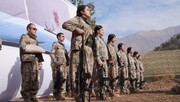
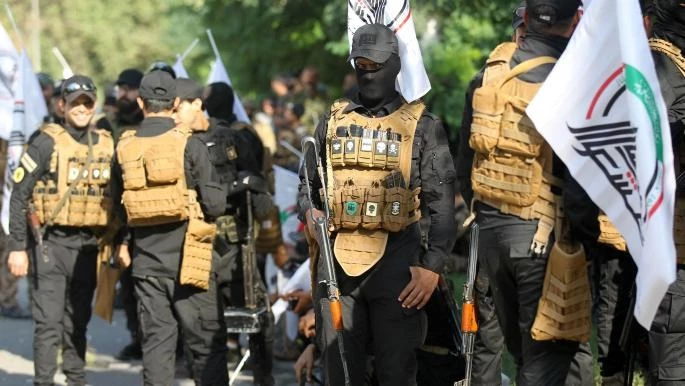
Hindi Kobani, one of the first people to join the local defense forces, also describes this moment as “the first ray of light after the darkness.” After the government forces withdrew, he says, people organized themselves to protect their areas from armed groups. “A small military battalion was formed and many people joined it, even though they had light weapons. We took control of the checkpoints peacefully.”
From the Qamishlo protests to the formation of self-government
Kurdish activists believe that the social foundations of this transformation were formed years before 2012. Shilan Ahmed, a political activist and women's rights advocate from Amudah, who worked for years with the Kurdistan Workers' Party in Iraq and returned to the Kurdish regions of Syria in 2011, says that the Kurdish community in Syria had been prepared before this process began. She points to the 2004 protests in Qamishlo and says: "The community in the Kurdish regions of Syria was ready because the events in the Qamishlo stadium in 2004 had ignited people's hearts. All you had to do was say, 'Yala.'" According to Ahmed, the difference between 2012 and past protests was the way people treated government institutions: "In 2004, government buildings were set on fire; that was the tradition at the time. But this time it was the opposite; the goal was not to damage the institutions, but to accept their responsibility."
The Role of Women and Social Change
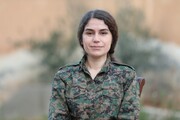
A key feature of this experiment was the attempt to increase the role of women in social and political structures. Osman says that the first training course he held in the Kurdish areas of Syria had only 32 participants, 30 of whom were men and only two were women. “We faced a lot of difficulties in convincing families to let their daughters take part in these trainings,” he says. People said it was shameful or inappropriate. The women themselves did not believe in their own strength and ability.” But a few months later, another course was attended by 50 young women. Osman considers this change to be one of the most important experiences of her life: “It had a huge impact on me. The revolution was like a child growing up before my eyes."The training was not limited to practical skills, but rather aimed at increasing women's self-confidence and changing their view of their social status: "They gradually recognized their own power and the power of women."
Your Comment