

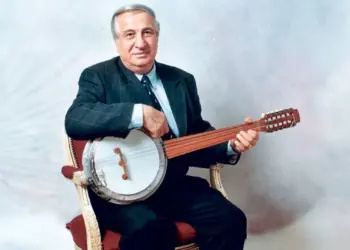
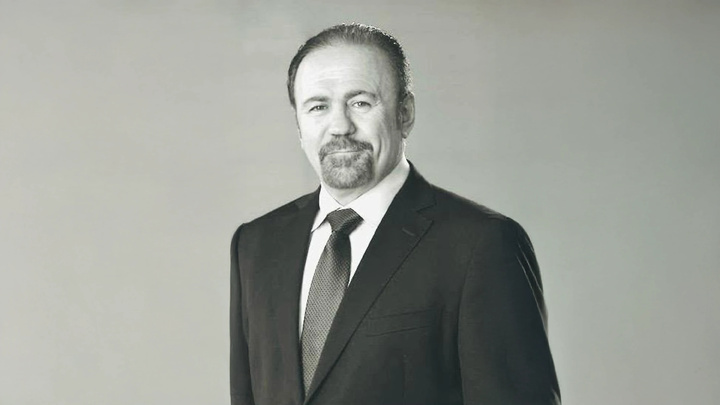
According to KurdPress, Mozaffar Shafei, a prolific artist in Britain, was born in 1956 to a Kurdish family in Mahabad. According to some reports, he turned to theater when he was in high school and staged several plays in Mahabad during those years. The Kurdish artist went to Britain in 1973 to continue his studies. He began his studies in the field of art at Darlington College of Art.Muzaffar Shafei, a Kurdish actor, director and artist, spent a significant part of his career in the UK, starting in theatre and expanding into television, cinema, radio, speaking and cultural activities. Official and specialist British archives show that he was involved in professional productions in the country from the early 1990s, working with institutions such as the Royal National Theatre, BBC Radio 4 and BBC Television for more than two decades.
The first significant documents of Shafei’s professional activity in the UK date back to the early 1990s. The official National Theatre archives record his appearance in the play Black Snow, written by Keith Dewhurst, based on Mikhail Bulgakov. The play was staged at the Cottesloe Theatre in 1991, and Shafei played several roles, including Demian Kuzmich and one of the cast members.His appearance in a production by the National Theatre, one of Britain’s most important theatre institutions, was the first clear indication of his entry into the professional theatre scene in the country. National Theatre Archive — Black Snow
The Theatricalia archive also confirms Shafei’s appearance in the play. His name is listed in the cast of Black Snow alongside a collection of professional British actors. Theatricalia — National Theatre productions
Three years later, Shafei appeared in Claire Bailey’s Northern Lights in London. In this production, he played the role of Pamir, a Kurdish refugee. The significance of this performance was not limited to its subject matter; The Independent, in its review of the play, positively assessed Shafei’s performance and praised his performance as Pamir. This is one of the few British press documents that directly assesses the quality of his performance. The Independent — London Fringe: An audience with the living dead
Northern Lights was later transferred to radio and broadcast on BBC Radio 4.The official archive of the play's author, Clare Bayley, lists Shafei as Pamir in the radio version. Clare Bayley — Radio plays
This collaboration marked the beginning of a longer period on British radio. Shafei appeared in A Dish of Pomegranates in the Arabian Afternoons series in 2010, playing the roles of Tawfik and Trader 2. This production is recorded in the BBC Radio 4 archive and the BBC Studios and Penguin release. Penguin / BBC Studios — Arabian Afternoons
A year later, he played Nakshband Khan in the BBC Radio 4 radio adaptation of M. M. Kaye's novel The Far Pavilions. The British Radio Archive records this role and the broadcast time of the production.
Shafei's continued presence on radio is particularly significant because his work in this field was not limited to a single experience. From Northern Lights in the 1990s to BBC Radio 4 productions in 2010 and 2011, his voice has been used in several professional British radio productions.
In addition to theatre and radio, Shafei has also continued to work in television.His name appears on the cast list of series such as The Knock, The Robinsons, The Bill, Wire in the Blood and House of Saddam. Specialized film and television databases such as IMDb and TV Guide have recorded these records. IMDb — Mozaffar Shafeie
In 2008, he played the role of General Al Rashid in the miniseries House of Saddam; a television series about the life and rule of Saddam Hussein, which was one of the major British television productions of that period. During the same period, Shafeie also appeared in the crime series Wire in the Blood, playing the role of Karwan Umed.
A year later, he appeared in the film Triage directed by Danis Tanovic, playing the role of Talzani's assistant. The film was an international production and placed Shafeie alongside well-known actors such as Colin Farrell. IMDb — Mozaffar Shafeie filmography
In 2012, Shafeie appeared again in one of the well-known BBC productions. He played Dr Benhamadi in the second season of the comedy series Twenty Twelve, which looked behind the scenes of the organisation of the London Olympics and starred Hugh Bonneville and Jessica Hynes.British Comedy Guide has recorded Shafei's appearance in the first episode of the second season. British Comedy Guide — Twenty Twelve
He is also listed in the British Comedy Guide archives for The Robinsons, where Shafei played the role of Milos in 2005. British Comedy Guide — Mozaffar Shafeie
A look back at three decades of the artist's career in the British arts and media scene
But one of the most distinctive parts of Shafei's career in the UK has been his presence in the field of voice acting and dubbing. In 2013, the BBC World Service introduced Mozaffar Shafei in a report on the popularity of Top Gear in Iran. The report introduced him as a London-based actor who performed the voice of Jeremy Clarkson in the Persian version of the show. This role made his voice associated with the famous British presenter's personality for Persian-speaking audiences. BBC World Service — Top Gear in Iran
The Daily Telegraph also covered Shafei in a report on the Persian version of Top Gear around the same time, referring to him as the Persian voice of Jeremy Clarkson.The Daily Telegraph — It's the Iranian Jeremy Clarkson on Top Gear
This part of his career shows that Shafei's ability was not limited to acting in front of the camera or on stage. He also used his acting skills to recreate character and tone in the form of voice, and this feature allowed him to work in a different field than conventional acting.
In addition to his professional activity, Shafei was also involved in the cultural life of the Kurdish community in London and was one of the founders of the Kurdish Cultural Centre. He participated in the theatrical and cultural activities of the centre and, through the performance of plays and artistic programs, linked part of his professional activity to the cultural space of the British Kurdish community. This aspect of his life is also reflected in archival documents related to the British Kurdish community, but his professional reputation can be traced independently of these activities in the main archives of British art and media.Overall, Shafei’s career in Britain follows a fairly continuous path: professional theatre at the National Theatre, appearances at the London Theatre, joining BBC Radio 4, continuing his work on television, acting in major productions such as House of Saddam and Wire in the Blood, appearing on Twenty Twelve and finally, extensive work in the field of Persian sound and media.
What distinguishes this career from a collection of scattered appearances is its continuity and diversity. Shafei worked in various artistic formats for more than two decades, and his name remains in the archives of several British professional institutions. His appearance at the National Theatre in the early 1990s and his collaboration with the BBC in the following years are two ends of a professional path that began in theatre and ended in radio, television and voice acting.
From this perspective, Mozaffar Shafei can be considered part of the history of the presence of immigrant and Kurdish artists in the professional space of British art.His work in the Kurdish cultural community has been accompanied by a significant independent career in the mainstream of British arts and media. This background places him beyond an immigrant actor and makes him a significant figure in the nexus between theatre, British media and Kurdish culture.

Your Comment