

According to Kurdistan Press, the New York Times, in an article titled “Turkey and the Kurds Show a Way Forward,” examined the peace process between the Turkish government and the PKK as an example of an attempt to end a long conflict by replacing politics with weapons.Journalist and author Asli Aydintasbas describes the passage of the “Strengthening National Solidarity and Social Integration” law as a significant step for a country that has prioritized national security over many other issues over the past decade.
According to him, the law is not a “general amnesty” or a comprehensive package for democratizing Turkey; but it has increased the possibility of achieving national reconciliation and ending one of the longest conflicts in the Middle East more than ever before.
Both sides accept the limits of a military solution
Aydintasbas analyzes that after about a year of negotiations, the PKK leadership has apparently concluded that the armed struggle can no longer secure the rights and demands of the Kurds.On the other hand, the Turkish government has also tacitly accepted that the Kurdish issue cannot be resolved through military means alone and that a political path must be created to respond to the political demands of a movement rooted in a part of Kurdish society.
The author of the article considers the exchange of “disarmament in exchange for opening up political space” to be the most important feature of this process and writes that armed movements usually do not lay down their weapons only at the request of their opponents; rather, they resort to such action when they see armed struggle as ineffective in achieving their goals and find a credible way for themselves to continue pursuing those goals through politics.
Framework Law and the Return of PKK Members
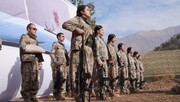
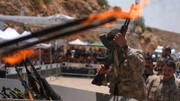
The New York Times article states that the Turkish process has progressed step by step and with the participation of the country’s official institutions.The PKK initially decided to disband and then burned some of its weapons in a symbolic ceremony in Iraqi Kurdistan. In contrast, Turkey has passed a framework law to provide legal guarantees for the possible return of thousands of PKK members and their reintegration into civilian life. The use of the law’s facilities will depend on the confirmation by Turkish authorities of the PKK’s complete disarmament.
The law distinguishes between ordinary PKK members and those accused or convicted of serious crimes. Under this mechanism, the cases of a number of low-ranking members, political prisoners and exiles are postponed for five to 10 years, and if they refuse to return to armed activity, the cases can be closed at the end of this period.The author notes that the PKK’s senior leaders are currently largely outside the law, although their status is expected to be reviewed in the next stages of the process.
Technological change and the weakening of guerrilla warfare
Aydintaşbaş sees one of the factors underlying this change as the decline in the capabilities of armed non-state actors in the face of new military technologies.
Guerrilla warfare in the past, he writes, relied on stealth and prolonged resistance to a superior force; however, drones, surveillance technologies, and precision weapons based on artificial intelligence have weakened this advantage.
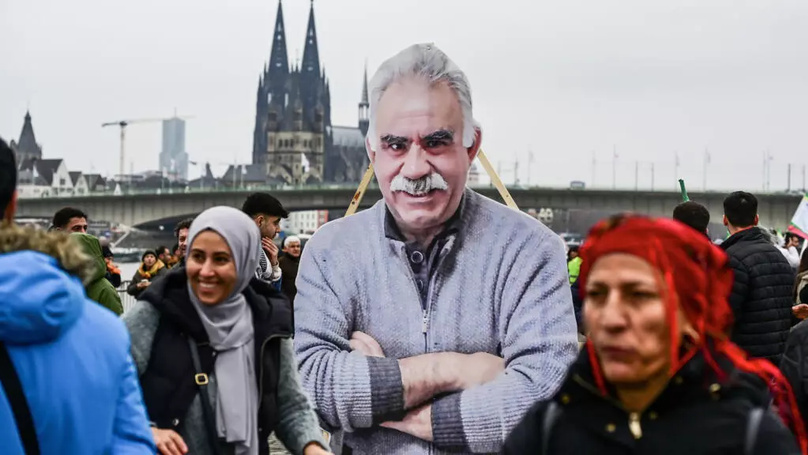
Turkey has used these technologies to contain the PKK in Syria and Iraq, and Israel has used a similar approach against Hamas and Hezbollah; the difference is that Israeli operations in Gaza and Lebanon have been accompanied by widespread destruction and a high number of civilian casualties.The author describes Abdullah Öcalan’s statement about the end of the armed struggle as a sign of acceptance of this new reality. Öcalan, at the same time, has called disarmament a necessary condition for the recognition of democratic politics and the establishment of a legal framework.
Lessons for Hamas and Hezbollah
Aydin Taşbaş emphasizes that there are important differences between the PKK, Hamas, and Hezbollah; but one common principle applies to these conflicts: entrenched armed movements cannot be eliminated by bombing alone. In his view, disarmament must be gradual, conditional, and based on reciprocal measures, and must offer a political perspective to the community that supports the armed group.
In the case of Hezbollah, the Lebanese Shiite community must be assured that laying down its arms does not mean losing security or political influence.The Lebanese government must also be strengthened to the point where it can replace Hezbollah’s parallel military structure and pave the way for its demands to be pursued through politics.
As for Hamas, Israel must accept that eliminating the group’s military capabilities does not mean that Palestinian political demands will disappear. According to Aydin Taşbaş, Hamas cannot have an independent army in Gaza; but any lasting solution must create a credible path for Palestinian self-rule and demonstrate that politics can bring results that armed struggle has not been able to achieve.
The main test; the space for political action
At the same time, the New York Times article did not consider the success of the Turkish process certain. According to Aydin Taşbaş, the disarmament of the PKK does not mean the end of the Kurdish issue or the removal of Kurdish demands.The main test will be whether demands such as the expansion of regional powers that were previously pursued from mountain bases can now be raised and pursued in parliament, municipalities and civil society institutions.
In the author’s view, the success of this process will also depend on how much space Recep Tayyip Erdogan will create for legitimate political activity. Aydintasbas concludes by writing that Middle Eastern governments have for years seen disarmament as a purely security issue, in the form of destroying armed forces or killing their leaders, an approach that has led to endless counterinsurgency operations. Turkey is now testing a different path: whether an armed movement can be fully transformed into a political movement.He concludes that true victory over an armed movement does not come when all its forces are destroyed; it occurs when the armed individual chooses politics over weapons.



Your Comment