

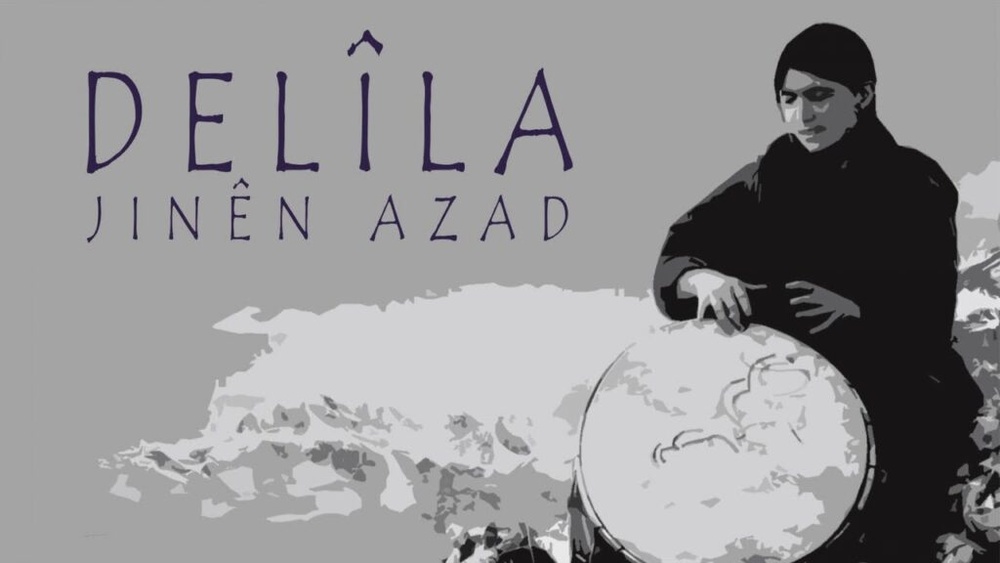
According to KurdPress, Shenay Gocer was born in 1981 in the city of Fergin (Silvan) of the Amed (Diyarbakir) province and turned to music from a young age.
According to the Kurdish Valat News Agency, Delilah joined the Mesopotamian Cultural Center (NÇM) in Istanbul in the late 1990s and received training in singing, tambourine and the Dengbezhi tradition. Gocer also collaborated with musical groups affiliated with the center during this period. Delilah joined the ranks of the PKK in 1999 and continued her cultural and artistic activities in the mountains.Songs such as "Zilan", "Zenan Azad", "Shab Tarik", "Jan Watan", "Del Mi Haat Be Jang Bord" and "Ruz Müdüreran" are among her well-known works.
She lost her life on August 23, 2007, during a clash with the Turkish army in the Basta region of Şırnak province. Delilah's life later became the subject of a book by Turkish journalist Hasan Cemal, titled "Delilah; The Mountain Diary of a Young Guerrilla Woman".
On the occasion of the 19th anniversary of Delilah's death, teachers at the "Ma Music" Center (Kurdish Music Education Center of Mesopotamia) evaluated Delilah's impact on Kurdish culture, music and women's struggles.
Delilah has left a deep mark on the memory of the Kurds and Kurdish music
Avindar Dolek, one of our music teachers, said that Delilah has left a deep mark on the memory of Kurdish women and Kurdish music.
She added: "Delilah had taken on a very important responsibility and until the last moment of her life, in the midst of the struggle, she protected her existence, language and culture and brought it to this point. We have been honoring her every year for 19 years, and this shows that she had based her life on a deep and ideological foundation."
We will always protect this legacy
Reminiscing about her childhood, Dolek said that she and her peers would watch Delilah's songs on television and listen to them with admiration.
She continued: “In her character, it was clear how a woman could be both a fighter and a defender of her culture and position. Even in the difficult conditions of war, Dalila did not abandon her tambourine and music, she created new works and brought her voice to us.”
Dolak added: “She showed with her life that a person can simultaneously fight for her existence and protect her language, culture and art. We will always protect this heritage and resistance.”
Dalila was one person, but today there are thousands of Dalilas
Evin Teriaki, another of our music teachers, also stated that a generation has grown up with Dalila’s songs and said: “When we first saw her, we asked ourselves how a woman could do such a thing in those mountains and amidst all this hardship. Now that we look back, we see that Dalila has become a symbol of Kurdish women."Delilah was one person, but today thousands of Delilahs are walking in her path."




Your Comment