

Kordpress
The recent developments in the Kurdistan region and the failure of the ruling parties to form a new cabinet have plunged the political, security, and economic prospects of this region into an aura of uncertainty and deep concern. In this regard, "Brigadier Johar", a well-known Kurdish journalist and analyst, in a new note he published on his personal page, analyzed the autopsy of this tangled crisis with a pathological look.
In this analytical article, he analyzes the four key factors "international, regional, Iraqi (Baghdad) and domestic" as the main foci of weakening the climate structure. According to this journalist, the end of the strategic patience of the United States of America and the explicit warnings of international institutions on the one hand, and the resurgence of Baghdad for centralism and taking control of economic and military arteries (including Peshmerga forces and border crossings) on the other hand, is a serious alarm for Erbil.
What you will read below is the complete translation of Brigadier Johar's warning note:
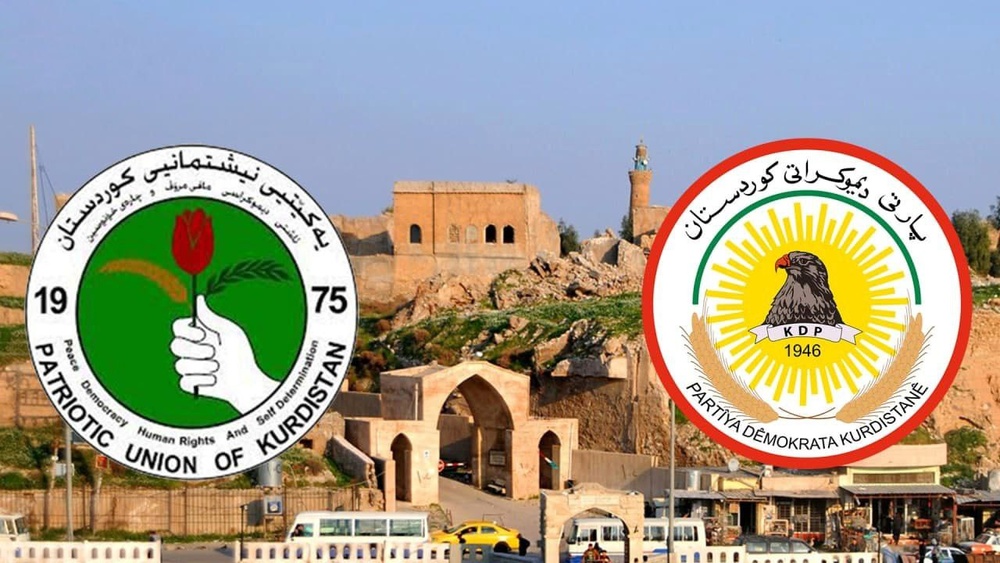
If the Kurdistan Democratic Party and the Patriotic Union of Kurdistan do not reach an agreement during this period, all possibilities will be open.
The coalition forces have been contacted about the Peshmerga forces, but their response has not been satisfactory.
The Patriotic Union of Kurdistan wants half of the government posts, including top posts, but the Kurdistan Democratic Party has rejected the demand.
There is a chauvinist desire in Baghdad to limit the Kurdistan region.
International and regional factors have aligned to limit the region of Kurdistan.
The United States of America has been planning and giving money to the Kurdistan Regional Government for 10 years, but the Kurdish forces have not yet been integrated.
The United States wants a semi-centralized Iraq and is tired of the headaches caused by the Kurdistan issues and the stubbornness of the Kurds.
After the end of the war with America, Iran will react and take revenge on the Kurdistan region.
Brigadier Johar
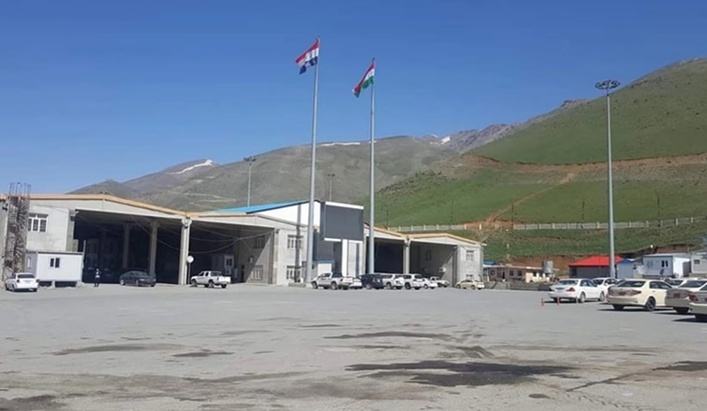
The situation of Kurdistan Region is entering a very difficult stage. Although there was hope that at least the Kurdistan Democratic Party and the Patriotic Union of Kurdistan would hold a meeting, this glimmer of hope has been lost in the past two days. The Patriotic Union of Kurdistan raised the ceiling of its demands and demanded an equal distribution of posts (fifty-fifty), including high posts, and the Kurdistan Democratic Party is not willing to negotiate. There is no possibility of holding a meeting soon and the media war has started in the last two days. If the Democratic Party of Kurdistan and the Patriotic Union of Kurdistan fail to hold a meeting within the next two months and agree on the new cabinet, an unfavorable situation will prevail in the Kurdistan Region and all possibilities are open, it is not yet clear what will happen. On the other hand, there is a religious and ethnic chauvinistic desire in Baghdad to limit the Peshmerga forces, border crossings, and Kurdistan region's oil. Regarding the Peshmerga forces that have not yet been integrated, there is a plan from Baghdad to affiliate these forces to the Iraqi Ministry of Defense. In this regard, the Kurdistan Region has contacted the coalition forces and the United States to prevent this plan, but they have been given a vague answer that has increased the risk. The Peshmerga forces are a strategic issue for the people of Kurdistan. Unfortunately, they have been a party force for 35 years and have not been able to become a unified and organized force. The continuation of this situation is a good excuse for Baghdad and America to depend on Baghdad to organize the Iraqi forces. Border crossings are also under construction. On the one hand, they want to fully implement the Asikoda system in the crossings of the Kurdistan region, and at the same time, the Nusaybin Talkocher or Rabia line for trade between Iraq and Turkey through Syrian territory will be activated, which has a direct effect on the Ibrahim Khalil crossing and dries it up. A crossing that has been around for 35 years has raised questions about its revenue. The issue of oil is another issue that they are likely to touch on, especially oil fields located in disputed areas, they may try to take them out of the hands of the KRG, but it is not clear how the pressure will be applied.
The Kurdistan Region enters a bad and dangerous situation that will have a direct impact on its existence. The dangers are due to poor governance, not listening to friends and grasping party interests. Clearly, after the 2017 referendum, the approach of the international community towards the governance of the Kurdistan Region has changed. The leadership and decision-makers of the Kurdistan region have been warned several times directly and indirectly. Janine Hennis-Plaskhart, the UN Special Envoy in Iraq in 2021 clearly explained before the eyes of all the Kurdish leaders and said briefly: Be careful, if you don't organize yourself and change, the Kurdistan Region will not remain like this! But instead of correcting the mistakes and improving the paralyzed governance of the Kurdistan Region, the situation worsened.
After more than 35 years, this region has not been properly established and does not have an integrated military and security force. It has been more than 10 years (2016) that America has presented a plan and a roadmap and every month officially gives tens of millions of dollars in aid and salaries to the Ministry of Peshmerga to create a unified military force, unfortunately nothing has been done so far. Since 2015, the parliament of the Kurdistan Region has been semi-suspended and has no role in decision-making, and now this entire governance is outside the legal framework and has no definition. The current American government has a different view of the interests of their country, the important question for them is how to support the climate that they have been trying to organize and improve for decades to align with their interests. But if a climate or a regime does not benefit them, why should they support and protect it?! In addition, the Trump administration does not hide that they support the central government and subservient governance, as they brought Ahmed Sharia to power from the terrorist network, and now they are doing whatever they want with him! So they support a powerful and semi-centralized Baghdad, it is very difficult for them to bear the headache of the Kurdistan region and the stubbornness of its leaders. Tom Barak's statement clearly clarifies this fact for anyone who wants to understand it better.
Baghdad agent:
There is a new generation in the parliament and the government in Baghdad, they don't want to have a conflict with America, at least they want it [to be]. They are adapting to the needs of this stage. In the past few days, a number of those armed groups formerly known as anti-American have surrendered their weapons to the government, as part of a US policy to restore some form of centralization to Baghdad. Certainly, under the shelter of this new understanding, there is a chauvinist desire against the Kurdistan Region to limit its powers, especially the tampering with the Peshmerga force and the intention to merge it with the Iraqi army, as well as some other issues related to the powers of the Kurdistan Region as a federal region.
internal factor:
The internal factor is the most dangerous factor of weakening and limiting the existence of the Kurdistan region. The bad internal situation of the Kurdistan region is the cause of all other factors. The absence of a unified region, a unified Peshmerga force, an efficient parliament, a legitimate government, etc., has provided the ground for intervention and imposing any conditions on the Kurdistan region. Whether it is from Baghdad or from Iran and America. There is no time left to escape and hide from these realities. summary; What we see today was predictable. The authorities of the Kurdistan Region know much better, because in addition to the political and governmental logic, the Kurdistan Region does not allow the Kurdistan Region to continue in this way.
Your Comment