

According to Kurdpress, while the Kurdish authorities had repeatedly announced the number of Kurdish-affiliated Syrian Democratic Forces to be around 100,000, the process of integrating these forces into the military structure of the new Syrian government has so far only included a few thousand. An issue that has now become one of the most important uncertainties for the political and security future of the Syrian Kurds.
After extensive clashes in the winter of 2026 between the forces of the Syrian Transitional Government and the SDF, the two sides reached a cease-fire agreement in January and the gradual integration of Kurdish forces into the structure of the central government. Al Jazeera reported that this agreement was reached after the rapid advance of the Syrian army in Kurdish-controlled areas, and according to it, Kurdish military and administrative institutions will be gradually integrated into the structure of the Damascus government.
According to the text of the agreement published by Hawar News, three military brigades of the Syrian Democratic Forces were to be organized in the areas of the island and one brigade in Kobani under the supervision of the Ministry of Defense of Syria. Also, internal security forces and self-governing administrative institutions should be gradually integrated into the structure of the central government.
However, the reports of recent months show that the number of integrated forces is significantly different from the figure of 100,000 announced by the Kurds. Syrian Observer quoted Sipan Hamo, the deputy of the Syrian Ministry of Defense for Eastern Affairs, as reporting that so far only four Kurdish brigades have entered the official structure of the army, and the process of integration is still in the initial stages. He stated that the number of Syrian Democratic Forces is much more than the capacity of these four brigades and new military structures must be created to attract the remaining forces.
At the same time, Charles Lister, the senior analyst of the Middle East Institute (MEI), has announced in a report that so far about 5,200 Kurdish forces have entered the chain of command of the Syrian Ministry of Defense, and about 10,000 internal security forces are also going to be integrated into the Ministry of Interior. According to him, although this process is ongoing, it is still far from being completed.
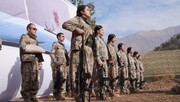
This numerical difference has caused many analysts to doubt the accuracy of previous estimates about the real number of the Syrian Democratic Forces. Western and Kurdish sources say that the figure of 100,000 people probably included a wide range of local Arab forces, internal security forces, ISIS prison guards, female forces, support units and nomadic structures; Not just the core of the People's Defense Units and Women's Defense Units.
The French newspaper Le Monde wrote in a report about the developments in northeastern Syria that a large part of the SDF-affiliated Arab forces have either surrendered their weapons or entered into the "reconciliation" process with Damascus after the Syrian army's operation in Deir ez-Zor and Raqqa. This report emphasizes that the rapid collapse of the defense lines of the Syrian Democratic Forces in the Arab-populated areas showed that the real cohesion of these forces was much lower than the official image presented in the past years.
Meanwhile, the main disagreement between Damascus and Kurdish commanders now remains over the fate of the core Kurdish forces. Al Jazeera reported that the Syrian government insists that all forces be absorbed individually into the army and that no independent or parallel military structures remain. Ahmad al-Shara also emphasized that the new agreement is based on the "complete integration" of the Syrian Democratic Forces in the Syrian Army.
On the other hand, the Kurdish commanders try to maintain a part of their organizational structure and military identity. In an interview with the Kurdish media, Sipan Hamo said that the process of integration should be "gradual and organized" and Kurdish forces should operate in the form of specific regional brigades.
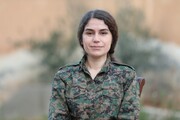
Some reports indicate that one of the most complicated cases in the negotiations is the status of the Women's Units or YPJ and the special anti-terrorism forces. So far, Damascus has not agreed to maintain the independent structure of these forces, and negotiations are ongoing.
At the same time, some of the remaining forces will probably return to civilian life. Syrian experts believe that after the withdrawal of the US and the collapse of the control of the Syrian Democratic Forces over a large part of the Arab-populated areas, the actual number of forces loyal to the Kurdish military-political project is now much lower than the announced statistics of the past.
In an analysis written by Charles Lister, Al Jazeera wrote that the issue of the integration of the armed forces is still one of the biggest challenges of the Syrian transitional government, and the resolution of the situation of the Kurdish forces will determine the final shape of the post-war Syrian security structure.

Your Comment