ahmad al shara
-
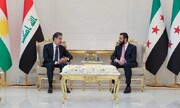
The Objectives of Nechirvan Barzani's Trip to Damascus
World Service- Nechirvan Barzani's trip to Damascus took place in a situation where the gradual withdrawal of the United States, increased security pressures in the region, and developments related to the future of the Syrian Kurdish forces have brought the equations between Erbil and Damascus to a new stage.
-
The status of Mazloum Kobani and Ilham Ahmed after the completion of the integration process
Service Jahan-According to Amarji, the commander of the Syrian Democratic Forces is considering leading an inclusive and democratic political movement at the level of Syria instead of accepting a government position in Damascus, and Ilham Ahmed will most likely join the Syrian Foreign Ministry, although his final position has not yet been determined.
-
Kurds still want more concessions from Damascus
World Service - Kurdish language education, local police powers, and the status of commanders are among the most important unresolved demands of the Kurds in negotiations with the central government of Syria.
-
The process of integrating forces into the Syrian army continues
Syria Service - Mahmoud Habib, spokesman for the SDF, announced that the process of integrating these forces into the Syrian army is continuing according to the determined stages, and despite the appointment of a number of military commanders, the preparation of the units has prolonged the implementation of this process.
-
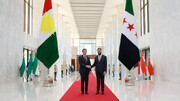
What message did Damascus send to the Kurds by welcoming Nechirvan Barzani?
World Service - National Context analysis shows that Ahmed al-Shara's official welcoming of Nechirvan Barzani is part of Damascus' strategy for the political management of the Kurdish issue, advancing the integration of the Syrian Democratic Forces, and sending a message of coexistence with the Kurdish identity.
-
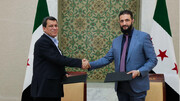
Mazloum Abdi and Ahmed Al-Sharaa meet in Damascus
Syria Service - Mazloum Abdi, the commander-in-chief of the SDF, met with the head of the Syrian interim government in Damascus and discussed the process of integrating the SDF and the autonomous administration into the structure of the government, as well as the issue of education and the status of the Kurdish language.
-
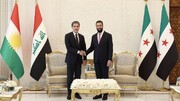
The Impact of Barzani and Al-Shara’s Meeting on the Syrian Kurds’ Case
Service Jahan-According to Al-Monitor, Ahmed Al-Shara’s invitation to Nechirvan Barzani sends a clear message about increasing the role of the Kurdistan Region in the political future of the Syrian Kurds and reducing the monopoly of the Syrian Democratic Forces in this case.
-
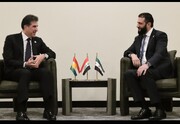
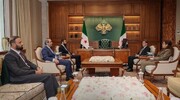
Al-Sharaa, Nechirvan Barzani and Mazloum Kobani meet to discuss Kurdish issues
World Service - Charles Lister, an expert on Syrian issues, announced the holding of a trilateral meeting in Damascus between Syrian President Ahmed Al-Sharaa, Nechirvan Barzani, President of the Iraqi Kurdistan Region, and Mazloum Abdi, Commander of the Syrian Democratic Forces (SDF), which is expected to focus on the future of the Kurdish issue and the process of Damascus' talks with the Syrian Democratic Forces.
-
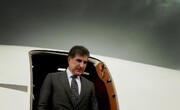
Kurdistan Region President Arrives in Damascus
Iraq and Kurdistan Region Service- Nechirvan Barzani, President of the Kurdistan Region of Iraq, arrived in Damascus on an official visit at the invitation of Syrian President Ahmed Al-Sharaa to hold a bilateral meeting on Syria's relations with Iraq and the Kurdistan Region, ways to expand joint cooperation, and the latest developments in the region.
-
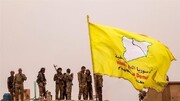
Dissolving the Autonomous Administration and the SDF does not mean eliminating them
Syria Service - "Sihanouk Dibo", the representative of the Autonomous Administration in Damascus, announced that the dissolution of the Autonomous Administration and the SDF will not mean the end of their activities or the elimination of these institutions, but rather, within the framework of the process of integration with the structure of the Syrian government, these groups will continue to operate with a changed structure and political identity.
-
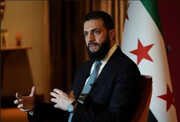
Ahmed al-Shara:
Damascus has no plans for military intervention in Lebanon
Syria Service - "Ahmed al-Shara", the head of the interim Syrian government, announced that Damascus is trying to reach security agreements with Israel through some countries, and at the same time emphasized that the Syrian government has no intention of military intervention in Lebanon.
-
The reason for the uprising and mobilization of Syrian Arab tribes against the Kurds
World Service - According to a professor at the University of Oklahoma in America, the dissatisfaction of Arab tribes in Deir Ezzor and Hasakah is not simply ethnic in origin, but rather due to the economic crisis, competition over oil resources, and the feeling of being excluded from the new Syrian power structure.
-
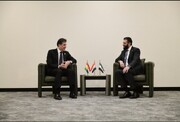
Damascus and Erbil on the Path to Strengthening Political Relations
World Service- The Syrian government, continuing to expand relations with the Iraqi Kurdistan Region, is preparing to open its consulate in Erbil. This move, along with the increasing influence of movements close to the Kurdistan Democratic Party of Iraq in the new political structure of Syria and the decreasing role of the Democratic Union Party and the Syrian Democratic Forces, indicates a change in the balance of power among the Syrian Kurds.
-
Arab media:
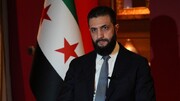
Ahmed al-Sharaa is rebuilding Syria's security structure
Syria Service - Arab media announced that the head of the Syrian interim government, Ahmed al-Sharaa, has begun the process of rebuilding and centralizing the country's security structure by making new appointments in security institutions; an action that, according to these media, is aimed at placing security and intelligence agencies under the direct supervision of the head of the government.
-
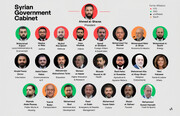
Power Consolidation in the Hands of Ahmed Al-Shara
World Service - From appointing ministers and judges to managing economic and security institutions, the majority of powers in the new Syria have been vested in the president, and this has raised concerns about the future of democracy.
-
Pezhdar Altan:
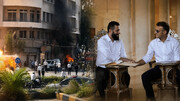
Syria Has Become an Arena for Covert Rivalry Between Turkey, the US, and Israel
Syria Service – In a commentary examining recent developments in Syria—including Emmanuel Macron’s visit to Damascus and the explosions that coincided with it—Kurdish journalist Pezhdar Altan analyzed the security and intelligence rivalries among Turkey, the US, Israel, and other regional actors, while also addressing claims regarding Ankara’s role in these events.
-
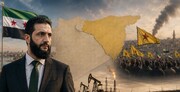
Al-Sharaa Bets on the Kurdish National Council of Syria
World Service – By excluding the Democratic Union Party (PYD) from parliament and allocating the Kurdish seat to the Kurdish National Council of Syria, the president of the Syrian transitional government has sent a clear signal regarding his preferred partner among the Kurds—a move that could jeopardize efforts to maintain the political unity of Syrian Kurds.
-
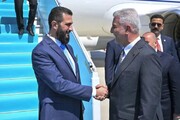
Ahmad al-Sharaa Arrives in Ankara to Attend NATO Summit and Meet International Officials
Syria Desk – Ahmad al-Sharaa, head of the Syrian Interim Government, arrived in Ankara on Wednesday to attend the NATO summit and hold meetings with a number of international leaders and officials, including Donald Trump.
-
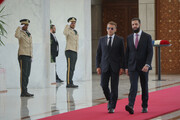
What benefit does Macron's trip to Syria hold for the Kurds?
World Service – Contrary to the expectations of some Kurdish circles, Emmanuel Macron's visit to Damascus is unlikely to mark a turning point in French support for Syrian Kurds. An analysis by *National Context* indicates that diminishing Western influence, Turkey's prominent role, and shifting European priorities have tied Paris's hands regarding practical support for the Kurds.
-
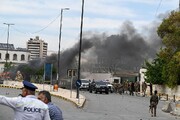
Damascus Explosions Coincide with Macron’s Visit; Security Measures Tightened
Syria Desk – At least two explosions in central Damascus, occurring simultaneously with French President Emmanuel Macron’s visit to Syria, led to a tightening of security measures in the capital; however, his meeting with Ahmad al-Sharaa proceeded as scheduled.
-
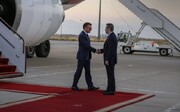
French President Arrives in Damascus
Syria Desk – Emmanuel Macron arrived in Damascus—marking the first visit by a French president to Syria since 2008—and was welcomed by the Syrian Foreign Minister.
-
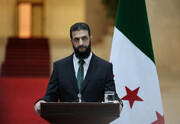
Ahmad al-Sharaa Appoints One-Third of Parliament Members
Syria Desk – Ahmad al-Sharaa, head of the Syrian interim government, has issued a decree appointing 70 new members to the country's interim parliament. This move has drawn criticism from Kurdish political factions in northern and eastern Syria, who argue that the process of forming the parliament lacked genuine participation and could jeopardize Kurdish national rights in the future constitution.
-
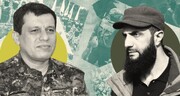
Damascus’s New Parliament Sends a Message to the Kurds: Limited Participation, Diminished Influence
World Desk – While the Syrian government highlights the increased ethnic and religious diversity of the parliament, the complete absence of figures affiliated with the SDF indicates that the Kurdish autonomous administration still holds no share in Damascus’s new political structure.
-
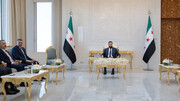
Ahmad al-Shara' Meets Turkish Interior Minister in Damascus; Emphasis Placed on Security Cooperation Between the Two Countries
Syria Desk – Ahmad al-Shara', head of the Syrian Interim Government, met with Turkish Interior Minister Mustafa Çiftçi in Damascus. They discussed issues regarding countering shared security threats, the exchange of expertise, and strategies to expand bilateral cooperation.
-
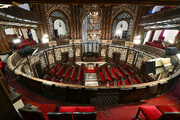
Ahmed al-Shara announced the names of 70 appointed members of the Syrian parliament
Syrian Service - The head of the interim government of Syria announced the names of 70 appointed members of the country's parliament, completing the composition of the 210-member People's Assembly. A list in which only the names of two Kurdish personalities can be seen. These members have been appointed as the direct quota of the head of state, and the first meeting of the new Syrian parliament is scheduled to be held in the coming days to take the oath and elect the board of directors.
-
National Interest:
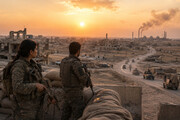
Why does Ahmad al-Shara need Kurdish forces?
World Service-National Interest has warned that the removal of Kurdish forces will turn Syria into a sanctuary for ISIS again. This American publication has emphasized that the integration of the Syrian Democratic Forces; The prerequisite is the stabilization of the government of Ahmad al-Shara, and without Kurdish forces, he is not able to control ISIS and the influence of other groups in Syria.
-
The Carnegie Foundation analyzed;
Implementation of new power architecture in Syria by Kurds and Damascus
World Service - A new Carnegie Foundation report says that the gradual integration of the Syrian Democratic Forces is not just a military agreement, but part of a new model of governance in Syria that is based on the participation of local forces in the government structure.
-
"Ahmad al-Shora", head of the interim government of Syria:
We have no intention of military intervention in Lebanon
Syrian Service - "Ahmad al-Shora", the head of the interim government of Syria, rejecting speculations about the possibility of Damascus' intervention in Lebanon, emphasized that Syria wants to play a constructive role in solving the Lebanese crisis and has no intention of military intervention in Lebanon.
-
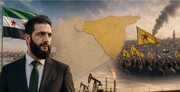
Dealing with the Kurds problem in the style of Ahmad al-Shara
World Service - The new Syrian government has regained control of a large part of the eastern part of the country, while observers say that Damascus is trying to weaken the political and economic structure of the Kurds, without entering into a large-scale war with them.
-
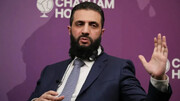
"Ahmad al-Shara", head of the interim government of Syria:
Syria has no intention to intervene in Lebanon
Syrian Service - "Ahmed al-Shara", the head of the interim government of Syria, rejected the reports about the possibility of Damascus' intervention in Lebanon, and emphasized that Syria has no intention of entering the territory of Lebanon and interfering in the country's affairs.