

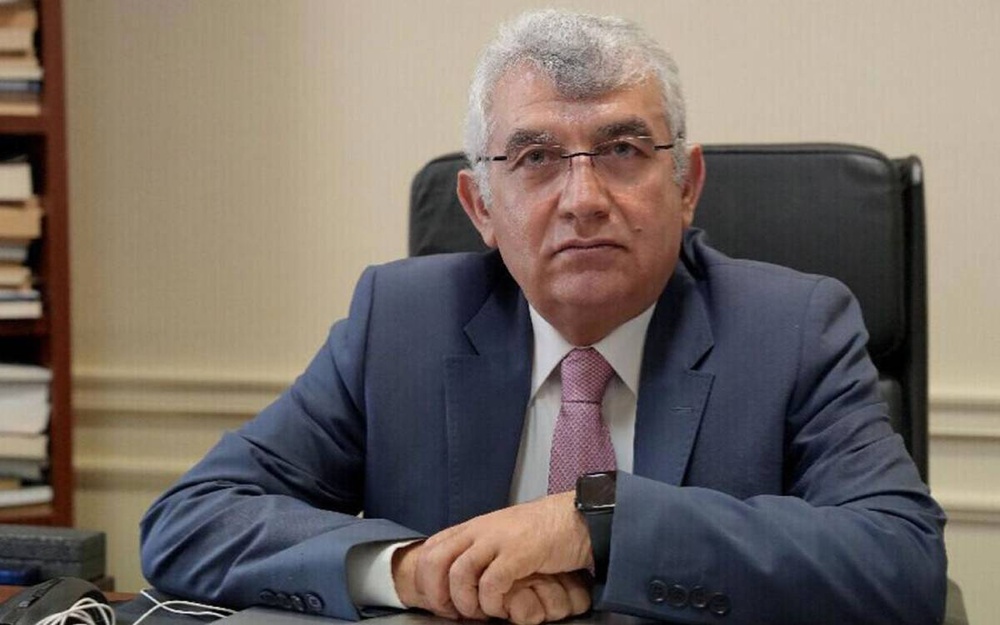
According to KurdPress, this analysis is based on the assumption that the Kurdish issue has entered a new stage and the dominant strategy of the Kurdish movements has moved from "zero and hundred equations" and reliance on hard power to "strategic patience", negotiation, gradual achievements and stabilization of the political position.Tariq Hammo, the author of this analysis, believes that the wave of criticism against the peace and negotiation processes in Turkey and Syria mainly lacks a coherent political alternative and is mostly formed on social networks, based on emotions, nationalism and immediate reactions. In his view, some Kurdish elites and activists have also joined this “rejectionist” movement without carefully examining the historical conditions, balance of power and regional developments; while many of these voices are located outside Kurdistan and even outside the countries where negotiations are underway between them and the Kurdish movements.
The Kurdish Studies Center emphasizes in this analysis that negotiations with the central governments of the region are not a new phenomenon in the history of the Kurdish movement. The contemporary history of the Kurds has been full of attempts to achieve a political solution through dialogue and agreement.Even armed struggle has been used at many points not as an ultimate goal, but as a means of pressure to change the calculations of governments and bring them to the negotiating table. Therefore, the author believes that it is necessary to examine the historical experience of Kurdish negotiations with regional governments; because it is impossible to judge current trends without knowing this experience and without taking into account changing time and space conditions.
In the case of the Iraqi Kurdistan Region, the analysis focuses on the fact that the current situation of the region is the product of a long phase of war, negotiation, defeat, victory and mediation by regional and international actors. The Kurds have been engaged in a cycle of conflict and negotiation with Baghdad for decades and in many cases have used the support of foreign and regional powers to force the central government to accept an agreement.The result of this process is the formation of a climate whose place today is established in the Iraqi constitution and in regional and international equations; although issues such as Kirkuk, Khanaqin and Sinjar remain unresolved. From this perspective, the author considers the climate as an example of the fact that Kurdish achievements are not necessarily the product of a complete military or political victory, but rather the result of the gradual accumulation of achievements in changing conditions.
The same logic is applied to Syria. The author considers the agreement between the Syrian Democratic Forces and the Damascus government to be the result of transforming the military, political and administrative achievements of the Kurds into a political agreement. According to this view, the Kurds have been able to gain advantages as a result of the current conditions that were not even in the programs of many Kurdish parties in the past.The legal equality of Kurds with other Syrian citizens, the possibility of their presence in the administrative and military structures of their regions, the recognition of the Kurdish language, the recognition of Nowruz as a national holiday, the resolution of the issue of citizenship for people without official registration, and the recognition of educational certificates issued by Kurdish educational institutions are among the achievements that the author considers to be the result of this political process.
Another important part of the analysis is dedicated to the Afrin issue. The author considers the return of Kurdish refugees to Afrin not simply a humanitarian issue, but also part of the struggle over the demographic and geographical future of the Kurdish regions of Syria.In his view, Turkey’s policies in northern Syria after 2018 have been aimed at changing the demographic structure of areas such as Afrin, Ras al-Ayn and Tal Abyad, and are placed in a more historical framework that the author sees as a continuation of a kind of policy of assimilation and “Turkification” of Kurdish areas. Therefore, the possibility of the Kurds of Afrin returning to their homes and areas is considered a strategic achievement in the logic of this analysis, because it prevents the consolidation of demographic and geographical changes. The author also believes that the next stage of the political struggle will be the return of the Kurds of Ras al-Ayn and Tal Abyad.
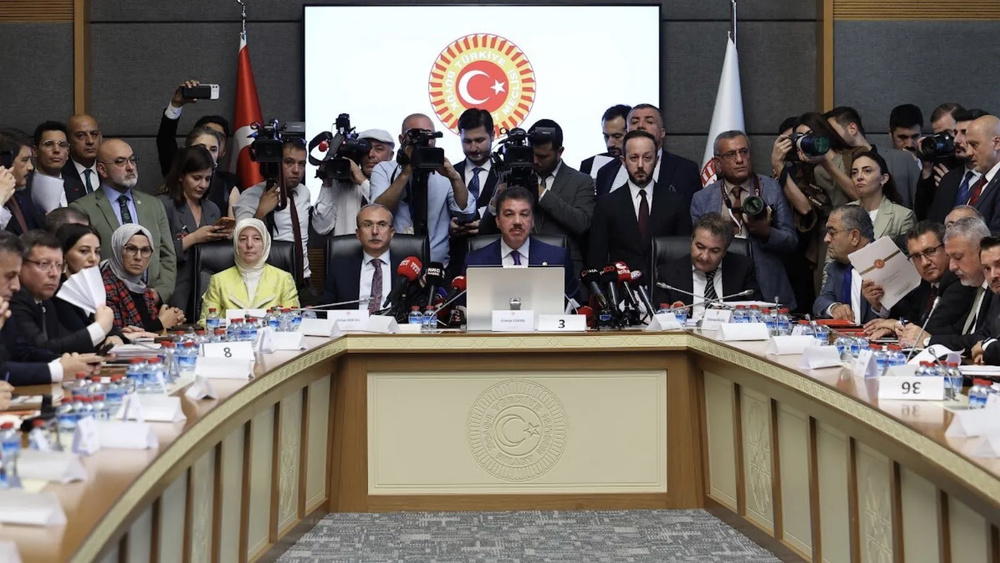
In Turkey, the analysis also sees the process of dialogue between Abdullah Öcalan and the Ankara government as a sign of the transition of the Kurdish issue from the military to the political arena. Öcalan’s statement about the transition of the Kurdish issue from the “execution platform” to the “parliamentary hall” is of central importance in this framework.From the author’s perspective, the goal of this phase is to end the cycle of war and focus on political struggle, social organization, cultural rights, administrative rights, and political participation. Changing the laws, limiting the policy of dismissing elected Kurdish mayors, reducing judicial pressures on political activists, and allowing Kurdish parties to operate more freely within this framework could create a basis for increasing the political power of the Kurds within the Turkish structure.
The above analysis also links this change in strategy to deeper regional developments. The author believes that Öcalan correctly understood the current conditions in Turkey and the changing balance of power in the Middle East, and concluded that continuing to rely on “hard power” in the new conditions could be costly for the Kurds.In his view, Turkey is also facing a series of security and geopolitical pressures, and in a situation where the regional balance has changed, the Kurdish issue could become one of the important areas for redefining the country’s domestic and regional politics. Therefore, the current opportunity should be used to transfer the Kurdish issue from the battlefield to the political arena.
In this context, the author considers “Kurdish soft power” as a suitable alternative to continued reliance on military power. The goal, in the words of the analysis, is to create a kind of political and social capability that can turn the Kurds into a decisive player in national equations. This is pursued through the strengthening of parties, civil institutions, cultural identity, language, local management, and political participation.In such a model, the power of the Kurds will be measured not only in the number of armed forces, but also in the ability to organize society, win votes, influence political institutions, and create internal and external coalitions.
One of the most important points of the analysis is the emphasis on the formation of a kind of convergence between the different parts of the Kurdish movement. The author believes that the developments in Syria and Turkey can no longer be examined separately. The Kurdistan Region supports the trends in Syria and Turkey, and Kurdish movements in Turkey and elsewhere support some political trends in other parts of Kurdistan. As a result, although there is still no single Kurdish leadership or political structure, a kind of common understanding is forming among the Kurdish forces that is based on mutual support, political realism, and the use of existing opportunities.The core of the Kurdish Studies Center’s argument is summarized in the concept of “possible politics.” The author believes that no Kurdish movement can make decisions based solely on ideals, national sentiments, or maximalist demands. Decades of political and military struggle and its heavy human cost have shown that politics, rather than being an arena for the fulfillment of all desires at once, is the art of achieving the greatest possible achievement in the given circumstances. For this reason, the strategy of “take what is available and then strive for more” is introduced as a realistic approach.
To explain the danger of zero-sum and one-hundred approaches, the author points to the experience of some Middle Eastern countries and the costs that recent wars have imposed on the movements and social bases of groups in these countries.The main argument is that miscalculations, reliance on maximalist slogans, and disregard for the changing balance of power can expose the society it is supposed to defend to destruction. Therefore, from the perspective of this analysis, the main issue for Kurdish movements is not only gaining power, but also preserving the existence, society, territory, and existing achievements, which are also part of the concept of political success.
Finally, “strategic patience” is introduced as the desired strategy for the new stage. This patience does not mean passivity or abandoning Kurdish demands; it means accepting the realities of the balance of power, consolidating existing achievements, strengthening political and social capacities, and waiting for more suitable opportunities to achieve further demands.According to this view, rather than trying to achieve all the demands in one go, the Kurds should institutionalize the existing achievements and then use those achievements as a springboard for the next steps.
The analysis concludes that the future of the Kurdish question will likely be shaped neither by the sudden collapse of existing states nor by a complete military victory of one side, but by a gradual change in structures from within. The author believes that the nation-state model in Turkey, Iraq, and Syria cannot be destroyed simply through external pressure or war; it must be reformed from within, by developing Kurdish political and civic activism, changing the concept of citizenship, and accepting cultural and linguistic plurality. In this context, “integration” of the Kurds does not mean the elimination of Kurdish identity, but can mean the entry of the Kurds into existing political structures while preserving their identity, language, and collective rights.Therefore, the final message of this analysis is that the new stage of the Kurdish struggle is not one of “immediate maximumism”; rather, it is a stage of transforming accumulated military and historical power into political, legal, cultural, and institutional power. From the perspective of the Center for Kurdish Studies, negotiation does not mean surrender, and agreement does not necessarily mean the end of the struggle; rather, it can be a means of transferring the struggle from the military field to the political field. “Strategic patience” in this sense is a strategy for maintaining existence, consolidating achievements, and gradually increasing Kurdish bargaining power; a strategy based on the principle that in the changing conditions of the Middle East, the side that can preserve today’s achievements and transform them into tomorrow’s capacities will ultimately have more power to change the equations.
Your Comment