

According to KurdPress, more than four decades after the start of the armed struggle of the Kurdistan Workers' Party (PKK) against the Turkish government, the organization is once again at a point where it has abandoned the strategy of armed war and turned to peace negotiations. According to Hannah Lucinda Smith, author of the article published in Engelsberg Ideas magazine, this change is not the result of a sudden ideological change, but rather the result of the accumulation of military pressures, geopolitical changes and a review of the realities of the region; developments that the PKKThe PKK has concluded that continuing the war will not yield any significant strategic gains.
The article, examining the new book by Eliza Marcus, a veteran Kurdish researcher and journalist, shows that the PKK has repeatedly adapted to new circumstances throughout its existence. The organization, which began its armed struggle in the 1980s with a Marxist-Leninist ideology and the goal of establishing an independent Kurdish state, faced a serious crisis after the arrest of Abdullah Öcalan in 1999. Öcalan called for an end to violence from prison, and the organization gradually moved away from the demand for full independence, replacing its previous goals with concepts such as “democratic confederalism” and political participation. However, this change did not mean a complete abandonment of military means, and the PKKIn the following years, the PKK maintained its combat capability while simultaneously striving for political and international legitimacy.
According to Marcus, the 2000s ceasefire was not simply a period of cessation of hostilities for the PKK, but an opportunity to rebuild its structures, revise its tactics, and expand its influence in Syria. After the 2004 protests in Qamishli, the organization sent its forces and ideological cadres to northern Syria and created a clandestine network that later formed the basis of its influence in Kurdish areas with the outbreak of the Syrian civil war. When the Syrian crisis began, the PKK, unlike many opposition groups in Damascus, refrained from directly engaging in the war against the Assad regime and was able to consolidate its position by maintaining a kind of practical understanding with the Syrian government.This decision ultimately allowed it to maintain its cohesive structure at a time when many armed groups were caught up in internal disputes and extremism.
The emergence of ISIS was another important turning point. The resistance of the People’s Protection Units (YPG) in Kobani and then close cooperation with the United States in the fight against ISIS elevated the position of the PKK-affiliated forces in the regional equation to an unprecedented level. To avoid the sensitivities arising from the PKK being listed as a terrorist organization, the United States supported the structure of the “Syrian Democratic Forces” (SDF), but in practice the main pillar of these forces was made up of veteran PKK cadres. This cooperation made the PKK think that for the first time it had international support.
But these same successes, according to the author, paved the way for one of the PKK’s biggest strategic mistakes.Building on its achievements in Syria, the organization resumed its armed insurgency inside Turkey in 2015, attempting to impose autonomy on the government by establishing strongholds and urban warfare in Kurdish areas. The Turkish government’s response was severe; Kurdish cities were subjected to extensive military operations, thousands of people lost their lives, and a significant portion of urban infrastructure was destroyed. In Marcus’s view, this decision not only failed to achieve the PKK’s goals, but also deprived the organization of a significant portion of the social support of Turkish Kurds and showed that its leaders had miscalculated the balance of power and geopolitical realities.
Meanwhile, the PKK’s hopes for long-term support from the West gradually faded. After the defeat of ISIS, the United States showed no desire to confront Turkey over the Kurdish areas of Syria.Turkey’s 2018 Afrin offensive and subsequent operations sent a message to PKK leaders that Washington’s cooperation was based solely on America’s short-term needs in the fight against ISIS, rather than a lasting commitment to the Kurdish political project. “For America, we were just an opportunity,” said one of the organization’s former commanders.
At the same time, Turkey has been significantly increasing military pressure on PKK bases in northern Iraq and then Syria since 2020, relying on combat drones and indigenous technologies. Targeted operations against the organization’s commanders and infrastructure have further limited its space for maneuver. On the other hand, the fall of Bashar al-Assad’s regime in late 2024 and the emergence of a new order in Syria have further complicated the situation of Kurdish forces.Although negotiations to integrate Kurdish forces into the new Syrian structure began, the process was slow and repeatedly affected by ground clashes.
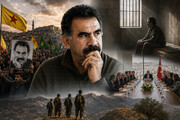
In such circumstances, Abdullah Öcalan called again from prison in 2025 to lay down his arms and start a new round of peace talks with Ankara. The author of the article believes that this decision was more a reflection of the fact that after years of war, the PKK no longer saw a clear prospect of achieving its goals through armed struggle. Turkish military pressure, reduced foreign support, changing regional balances and the failure of the urban warfare strategy all led the organization to conclude that the cost of continuing the fight would outweigh its potential gains.
The article concludes that the PKKThe PKK has repeatedly adapted to new conditions over the past four decades; from a Marxist anti-imperialist movement to a field ally of the United States in the war against ISIS, and now to negotiations and peace. However, the author believes that the experience of 2015 showed that the organization remains overly dependent on Abdullah Öcalan's decisions, sometimes overestimates the real capacity of international support, and ultimately has operated much more effectively in times of war and instability than in times of stability and political competition. Therefore, the success of the new path to peace will depend above all on the PKK's ability to adapt to a stable political environment and completely abandon the logic of armed struggle.


Your Comment