

Kurdpress
At the same time, the political atmosphere of the 1950s and 1960s, in the absence of religious movements from the easternmost part of the world to the westernmost, was inspired by the ideology of Marx, Engels, and Lenin and their models of struggle and liberation, Chagora, Castro, and Hoshemin. Although the east of Sulaymaniyah was the gateway to the entry of political religion in the 1960s, and the Brotherhood movement entered Iraq from this region, the sun of political religion, which was the engine of popular revolutions, had not yet reached the land of the traditional cells of Kurdistan, and it was the Achilles' heel. The political activists revolved around the same world conventional fighting environment, therefore, the fighting environment of the Kurdistan forces was not an exception to this rule, and revolutionary youths entered the fighting arena with communist tendencies, and the communal thinking of the dominant fighting environment moved on the axis of leftist thinking.
Kak Noshirvan Mustafa was also not out of this Jirga. He was involved with the two fronts of national oppression of the Iraqi government and the stratified view of tribalism with the class ideology of the ruling party in Kurdistan. At that time, the confrontation between traditional and modern views in Kurdistan was at its height, with the late Mulla Mustafa Barzani leading the traditional and conservative faction, and Ibrahim Ahmad and his intellectual son-in-law, the late Jalal Talabani, being at the opposite point. Noshirvan's critical and aggressive spirit was closer to the modern view of Ebrahim Ahmad and Jalal Talabani's struggles, that's why he was attracted to the Sulaymaniyah faction of the city of Helmat and became a victim.
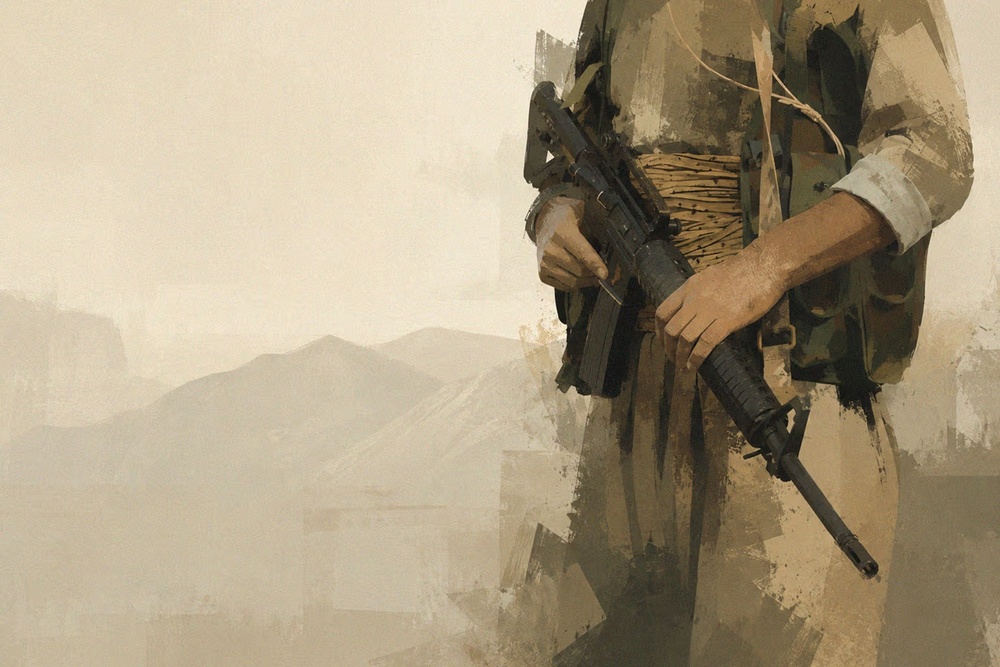
Kak Noshirvan was one of the few guerillas in the mountains of Iraqi Kurdistan who wrote his memoirs with a critical and enlightening approach. The four volumes of his book (from the banks of the Danube to the Nauzang valley, turning inside the ring and claws break each other.... In addition to documentary history, he has a special literary eloquence that indicates his intellectual vitality and spirit of activism. The combination of pen and gun in the mountains is one of the rare The success of which became Noshirvan's intellectual genius. In addition, Kak Noshirvan has written several other books, including the Republic of Mahabad and Kurds and Ajam and the political history of Kurds, etc. With a brief look at his political thought, it is regrettable that I wish Noshirvan would turn the field of politics into an era of literature and intellectualism, and he would definitely follow geniuses like Ezzedin Mustafa and Mustafa Zalmi, but on the other hand, it was a pity that the experiences of a mountain guerrilla in managing the society were forgotten. Certainly, his thought was always involved in combining mountain guerrilla thinking and the city's civility, and this is the same spirit. The reason for his public popularity was that he did not like the mockery of the elites. He had a critical view of the Kurdish movement from the beginning, and he wrote about the problems of the movement with an eloquent pen and a well-reasoned method. Simple life and contentment was one of the prominent characteristics of Kak Noshirvan Mustafa, so that in the era of looting that has become the rule for Kurdish leaders, he was an exception. The son of one of the famous nomadic chiefs of Kurdistan narrated that when Kak Noshirvan left Kurdistan by force and continued his studies in Europe, unlike other leaders of Kurdistan, he had no shelter and no money to bring with him. He said that my father found out about this and ordered me to deliver an amount to Kak Noshirvan in order to save him from suffering, because every night he was somewhere in the morning. He said that I offered him a large amount of dollars, but no matter what I did, he did not accept it, and finally he took out a hundred dollar bill from among the dollar packages. After a period away from Kurdistan where he wrote several books, he returned to Sulaymaniyah at the request of the Kurdistan forces, but the party that he and his colleagues had built was far from this party. Kak Noshirvan's critical spirit prompted him to start refining within the Patriotic Union Party. Therefore, by creating the party, he launched the change movement with the slogan of fighting corruption, rent and corruption in 2009 and practically separated himself from his former colleagues. The slogan of the fight against corruption was the slogan of the leaders of Kurdistan, which was needed by the youth of Kurdistan, that's why a large number of young people, academics and different sections of the society gathered around him, and in the first local elections, after the Kurdistan Democratic Party, which had a lot of power and wealth, it became the second political trend in Kurdistan Noshirvan Mustafa was one of the phenomena of the Kurdish movement in Iraq, who, while being a Kurd, adhered to his ethnic beliefs, he was a political thinker and modernist. He was able to properly define the city's civilization by preserving the identity of the mountain. Unlike some of his colleagues, he did not put the mountain's culture up for auction by renewing the carpets and collecting tributes. He did not even care about changing his appearance. I was distinguished. He was an ethnic communist in the mountains and a civil socialist in the city. His name is associated with the fight against financial corruption and ethnocentrism. He never sacrificed ethnicity for politics and entered into political civility based on the same agreement. He was a far-sighted politician and he understood the dangers of emotional ethnocentrism and knew the facts of Kurds and Kurdistan. He knew the threats of Kurdistan, that's why he was afraid of regional threats as much as he was fighting against corruption. Just three days after his death on the 9th of May 2017, the date of the Kurdistan referendum was announced. Maybe if it was him, the fate of Kurdistan would not have been drawn here, and the spirit of fighting corruption would have spread and Kurdistan would not have turned into a pasture for looters and marauders. Yes, he was the creator and driver of the new political thought process of change, but he never changed until the last moments of his life.
Your Comment