

According to Kurdpress, citing National Context, for the first time in more than 15 years, a transit convoy carrying Turkish goods entered Iraq from Syria. The route that completely bypasses the Kurdistan region and could be the beginning of a new trade corridor between Türkiye, Syria and Iraq.
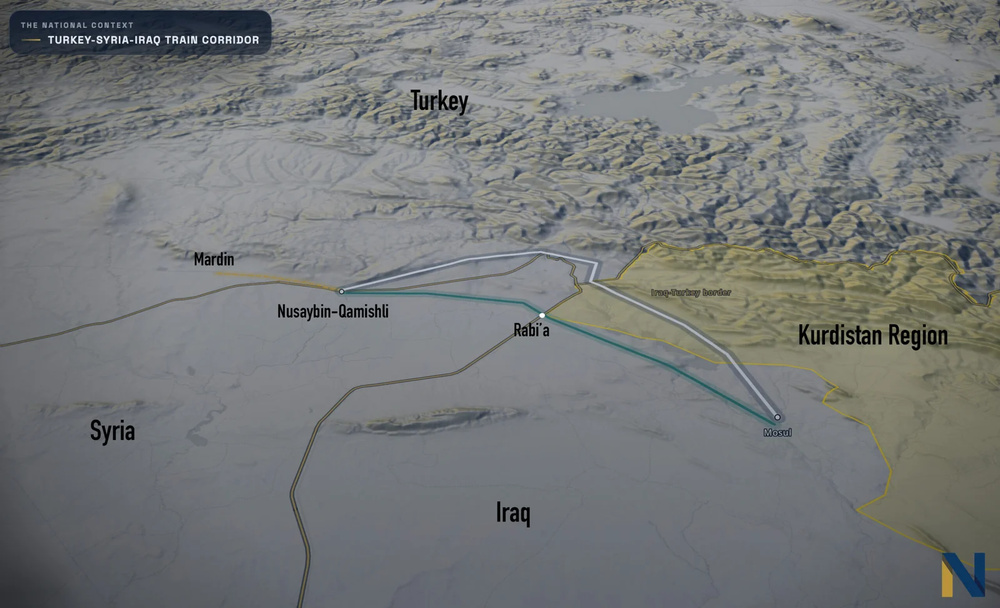
According to the published information, the trucks carrying Turkish goods entered the territory of Syria from the "Tal Abiz" crossing or Gari Sepi. This crossing was reopened last week. This convoy then reached the "Rabia" crossing in the Nineveh province of Iraq from the north of Syria, which has also recently resumed its activity.
This development occurs while during the past two decades, most of the land trade between Turkey and Iraq was carried out through the Kurdistan Region and especially the strategic crossing of "Ibrahim Khalil". Now, however, Ankara, Damascus and Baghdad appear to be shaping an alternative course that will reduce regional trade's dependence on the Kurdistan Region.
The possibility of expanding the Türkiye-Syria-Iraq corridor
Economic sources and regional observers believe that the new route could be part of a wider land connection project between Türkiye, Syria and Iraq. In this context, the possibility of reopening the "Nasibin-Qamishlo" route in the coming months has also been raised, which, if activated, will form a new transit network in northern Syria.
If these routes are established, an important part of the transportation of goods between Türkiye and Iraq can be done from Syrian territory, which will have important economic and geopolitical consequences for the Kurdistan Region.
Reducing the geopolitical role of the Kurdistan region
This new development is taking place in a situation where the geopolitical position of the Kurdistan region has gradually weakened in recent years.
At the same time as the customs dispute between Baghdad and Erbil escalates, the Iraqi government has started the implementation of the digital customs system "ASYCUDA" at federal crossings and is trying to exert more control over border trade and revenues.
As a result of these policies, many traders and transport companies have preferred Baghdad-controlled routes to avoid double payment of tariffs. Reports indicate that the volume of commercial traffic between Türkiye and Iraq through the Ibrahim Khalil crossing - the most important commercial highway in the region - has decreased by 70% in recent years.
Economic experts believe that if the Syrian route is established as a stable corridor, the Kurdistan region will not only lose a part of its customs revenues, but one of its most important economic and political levers in the equations of Iraq and the region will also be weakened.
Competition over regional trade routes
The reopening of the Tal Abiz and Rabia crossings can be seen as part of a broader competition over transit routes and trade corridors in the Middle East, where countries are trying to redefine their place in the regional transportation network.
For Baghdad, the activation of the Syrian route can remove part of Iraq's foreign trade from dependence on the Kurdistan region. For Türkiye, this route is considered a new option for land access to Iraq and Arab markets. On the other hand, Erbil follows these developments with concern; Because the reduction of the climate's transit role can directly affect its revenues, investment and political influence.






Your Comment