

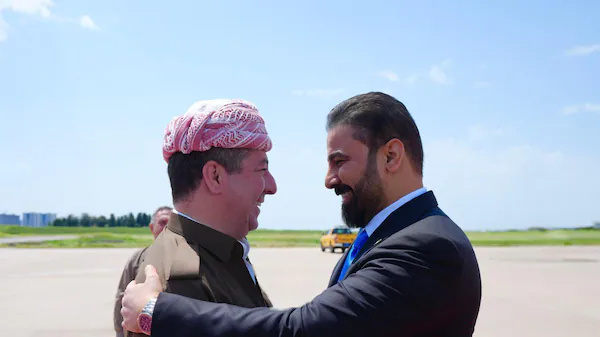
According to Kurdpress, the recent visit of Masrour Barzani, the Prime Minister of the Kurdistan Region and one of the senior leaders of the Kurdistan Democratic Party to Baghdad, has sparked wide-ranging discussions in Iraqi political circles about the current position of this party and the future of relations between Erbil and Baghdad. While supporters of the Democratic Party see this trip as an attempt to redefine relations with the central government and resolve the accumulated differences between the two sides, critics consider it a sign of the party's declining political influence in the new Iraqi equations.
During his three-day trip to Baghdad, Masrour Barzani met with Ali al-Zaidi, the new Iraqi Prime Minister, senior judicial officials, Shia and Sunni political leaders, security commanders, tribal chiefs, and a number of high-ranking parliament officials. Sources close to the Kurdistan Democratic Party announced that the main focus of these consultations was to resolve the long-standing differences between Erbil and Baghdad over the payment of regional employees' salaries, the oil and gas case, the disputed areas and the mechanism of power sharing in the political structure of Iraq.
The media close to the Kurdistan Democratic Party described this trip as an attempt to "re-engineer political understandings" between Erbil and Baghdad. However, different perceptions of these movements have been raised in the political atmosphere of Iraq.
Iraqi lawyer and political activist Ibrahim al-Soumidi believes that Barzani's trip was a belated attempt to prevent the Democratic Party from losing influence in Baghdad. According to him, this party has now realized that the new Iraqi parliament operates based on "different rules" from the past and that the previous political balances are no longer in its favor. Despite this, he emphasized that entering a dialogue with Baghdad late is still better than continuing to distance himself from the center of power.
On the other hand, some Iraqi observers have criticized Masrour Barzani's warm reception by the "Coordination Framework" member groups. They remind that the relations between the two sides have been accompanied by tension and disagreement many times in the past years. These critics believe that some Shiite leaders are now on the verge of forming a new government, seeking to create new coalitions to maintain their political position. Meanwhile, after meeting with Barzani, Mohammad Al-Halbousi, the leader of the Tadegh coalition, announced his plan to travel to Erbil in the near future and emphasized that the difference of opinion between political forces is a natural thing and part of the Iraqi political process.
Masrour Barzani also announced at the end of his trip that the talks were "very positive" and covered all the issues of interest to the people of the Kurdistan Region. He also emphasized the need to learn from past mistakes and focus on the future.
This trip was made in the situation that the newly formed government of Ali Al-Zaidi is facing many challenges. In the vote of confidence on May 14, the Iraqi parliament agreed with only 14 ministers out of the total of 22 proposed ministers, and differences between political blocs prevented the completion of the cabinet. In the meantime, the Kurdistan Democratic Party and its allies, including the Government of Law coalition and Azam Front, could not appoint their candidates for some key ministries. According to many analysts, this failure is a sign of the decrease in the bargaining power of the Democratic Party in Baghdad.
On the other hand, a coalition consisting of a number of Shiite and Sunni parties together with the Patriotic Union of Iraqi Kurdistan, the main rival of the Democratic Party in the region, managed to play a more decisive role in some parliamentary cases. This process was also observed earlier in the voting related to the election of the deputy speaker of the Iraqi parliament last December; An event that is referred to as one of the political failures of the Democratic Party in Baghdad.
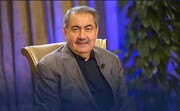
Hoshiar Zibari, one of the senior leaders of the Kurdistan Democratic Party, recently admitted that the developments of the past year in Baghdad did not have positive signs for his party. He also warned that the inability of the Democratic Party and the Patriotic Union of Kurdistan to form a new regional government after the 2024 elections has damaged the credibility and political influence of the Kurds in Washington.
More than 18 months have passed since the Kurdistan Regional Parliament elections were held, but the two main Kurdistan parties have not yet been able to reach an agreement on the formation of a new cabinet. This situation has not only reduced the region's bargaining power against Baghdad, but has also made the image of the Kurds' political divide stronger against foreign actors.
At the same time, reports about internal disputes in the Kurdistan Democratic Party have also been published. Some Iraqi media talk about the growing competition between Masrour Barzani and his cousin Nechirvan Barzani, the head of the Kurdistan Region, to increase influence in Baghdad.
According to these reports, over the past years, Nechirvan Barzani has established wider relationships and more effective channels with the main players in Baghdad, and this has caused Masrour Barzani to make more efforts to strengthen his position in the capital of Iraq. According to some observers, this intra-party competition can affect the internal cohesion of the Democratic Party and its interaction with Baghdad.
Based on this, Masrour Barzani's visit to Baghdad can be seen as a sign of the Kurdistan Democratic Party's efforts to restore relations with the central government in a period when the political balance of Iraq is changing. The decline of this party's success in the Iraqi parliament, the continuation of the political stalemate in the Kurdistan Region, and the internal competition in the leadership of the Democratic Party, are all factors that have pushed Erbil towards a more active interaction with Baghdad. However, it is still unclear to what extent this new approach can restore the position of the Democratic Party in the Iraqi power equations and resolve the chronic differences between Erbil and Baghdad.

Your Comment