

According to Kurdpress, at the same time as the process of integrating the self-governing structures of northeastern Syria into the transitional government of Damascus continues, concerns about the future of political and cultural rights of Kurds, the role of women and the concentration of economic power in the new Syria have increased. This process entered a new stage after the January 2026 agreement between the Syrian Democratic Forces (SDF) and Damascus.
Megan Bodet, research director of the Washington-based Kurdish Peace Institute, spoke to the "Amargi" magazine after her trip to Qamishlo, talking about the gap between political promises and the realities on the ground in northeastern Syria.
According to Bodet, the most important achievement of the January 29 agreement was the prevention of ethnic cleansing in Kurdish areas. He reminds that hundreds of thousands of Kurds, Christians and Yazidis were displaced during Turkey's operations in Afrin and Srikanieh in 2018 and 2019, but this time a large part of the residents of northern Syria have been able to remain in their areas or return to their homes.
He stresses that this situation was "not inevitable" as sectarian clashes and violence had also occurred at the same time as Damascus-aligned forces advanced into SDF-controlled areas.
According to this report, the security cooperation between the SDF and Damascus has enabled the return of some of the refugees to Afrin; An area that was under the control of Ankara-backed groups after the Turkish military operation in 2018 and was re-entered by Syrian government forces in early 2025. Also, a significant part of the Sunni Arabs who were settled in this region with the support of Türkiye in the past years have returned to their original regions.
In the military field, the integration process of the People's Protection Units (YPG) and other SDF-affiliated forces in the form of four new brigades has been described as relatively tension-free. In addition, thousands of stateless Kurds have been able to apply for Syrian citizenship; A right that was denied to them for decades during the Baath regime, although still only the title of "Syrian Arab" can be chosen for them in official documents.
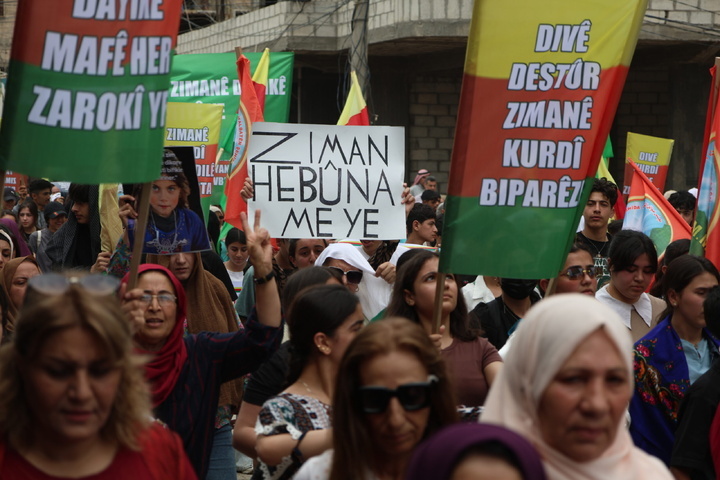
However, Bodet warns that civil and political rights remain under threat, especially for Kurds, women and minorities. According to him, the promises related to the teaching of the Kurdish language and its official recognition have not yet been implemented and the Kurdish language has been removed from public signs, government documents and many schools. In some regions, Kurdish education is limited to only one optional subject.
He says: "One of the main reasons for the struggle and resistance of the Kurds was the suppression of the Kurdish language. Now this language will be removed from the public arena again."
In cities such as Qamishlo, bilingual Kurdish-Arabic signs have been removed several times and replaced with purely Arabic signs. Also, the Syriac language has been completely removed from public spaces. Some government officials have even suggested changing Kobani's name to "Ain al-Arab"; The name used during the Baath regime.
Bodet says that these actions have created widespread anger among Kurds, because for many of them the possibility of studying and living in their mother tongue is considered an essential part of their political and social identity.
Concerns have also increased in the field of women's rights. The Women's Protection Units (YPJ) have declared that disarmament is their "red line". At the same time, the Syrian transitional government has opposed the appointment of women in some key positions, and only one woman, the Kurdish mayor of Kobani, has succeeded in obtaining an official position.
Boudet says that the "joint presidency" system, which was implemented in the self-governing structure of northeastern Syria, and based on which men and women from different ethnic groups jointly managed the institutions, has now been abandoned. According to him, removing this governance model is a sign of the return of centralized and patriarchal structure in Syria.
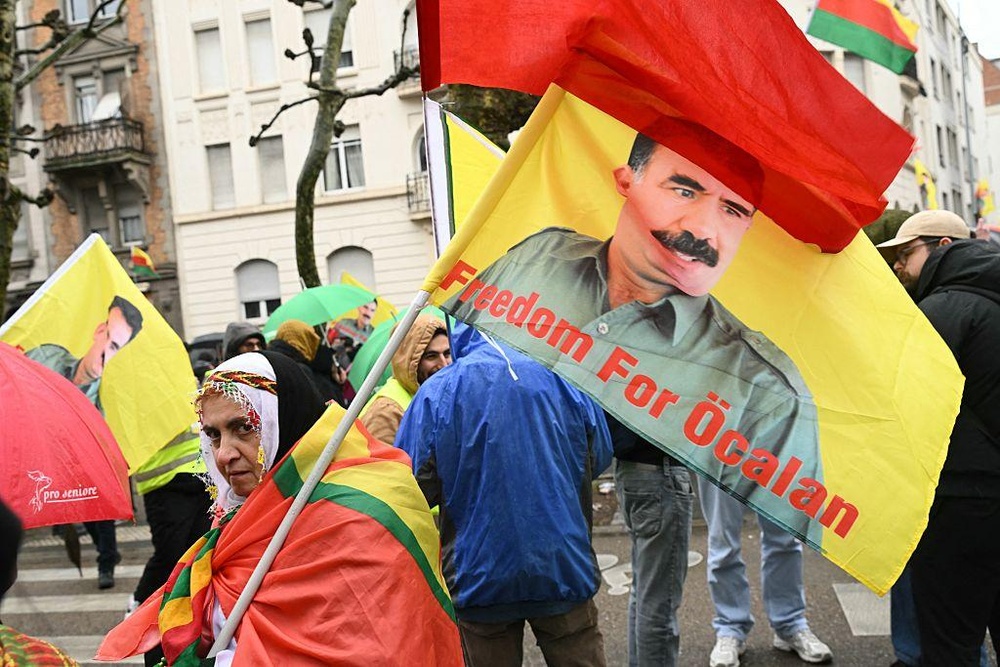
These developments have also led to street protests in recent weeks. During Nowruz celebration in Qamishlo, a number of Kurdish youth pulled down Syrian flags from government buildings; This action happened after some Arabs attacked Kurds and captured Kurdish symbols in other cities.
Bodet believes that the generation gap among Kurds is deepening. The generation that grew up during the war and the experience of self-government, now hardly accepts to be defined again only by the identity of "Syrian Arab" and to use only Arabic language in daily life.
"If the only language you can use in a hospital, court or police station is a language you don't understand, it's not just a symbolic issue," he stresses. Rather, it is a form of discrimination."
Along with identity issues, the competition for economic resources is also an important part of the developments in the new Syria. Northeastern Syria has most of the country's oil and gas resources as well as agricultural products, and controlling these resources has been one of the main motivations of Damascus to advance the integration process.
Boudet says that the economic structure being formed in Syria is under the control of figures close to power and foreign investors, rather than benefiting the people. According to him, the new investment laws are very similar to the economic structure of the Baath era, but give more powers to the government and foreign investors.
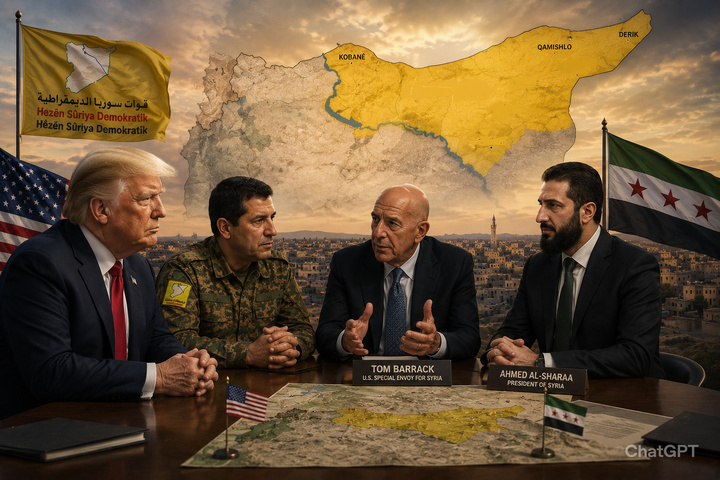
He also points to reports that some Syrian financiers have discussed with the Donald Trump administration about economic projects in Syria; Projects that may serve the interests of circles close to power in America, Türkiye, and the Arab countries of the Persian Gulf.
According to Bodet, despite the integration process, the economic situation in northeastern Syria is still critical; Prices have risen, unemployment is spreading and many residents of the region have yet to feel a tangible change in their lives.
In the end, he emphasizes that the future of Syria will not be determined by political agreements alone, but requires the formation of a "social contract" that guarantees ethnic and religious diversity, women's rights, and economic justice.
Boudet warns that if the new Syrian government continues with restrictive policies, the current grievances could lead to new instabilities; Especially among the generation of Kurds who have experienced self-government and political participation.
Your Comment