

According to Kurdpress, in a new analysis, the Center for Kurdish Studies examines the process of the gradual withdrawal of the US from Syria and its consequences for the Kurds, the Damascus government, and the regional balance of power, and says that during the second term of Donald Trump's presidency, Washington was able to simultaneously manage the three main obstacles to the withdrawal from Syria, including: curbing the influence of foreign countries, transferring part of the responsibility for fighting ISIS, and determining the future assignment of the Syrian Democratic Forces (SDF) and the Kurdish regions of northeastern Syria.
This analysis says that since the beginning of the second term of his presidency, the Trump administration came to the conclusion that the centralized structure in Damascus is more in line with the interests of the United States and its regional allies than the multipolar or federal model. In this context, Tom Barak, the US special envoy for Syrian affairs, openly rejected the idea of the "QSD" becoming an independent political and military power or parallel to the government of Ahmed al-Shara and emphasized the necessity of integrating the institutions of the self-governing administration into the structure of the central government of Syria.
According to the Kurdish Studies Center, this approach was supported by Türkiye and some Arab countries, because these countries were concerned about establishing an autonomous Kurdish structure in northeastern Syria. On the other hand, Israel was initially skeptical about the withdrawal of the US and the expansion of Damascus's influence in eastern Syria, but after the formation of new security understandings, Tel Aviv's opposition subsided to a large extent. This analysis also points to internal differences in Trump's first administration, where officials such as John Bolton, James Mattis, and Lindsey Graham were against the complete withdrawal of American forces from Syria and warned that such an action could lead to the return of ISIS, the increase of the influence of some countries, and Turkey's attack on the Kurds. However, developments in recent years, including the fall of Bashar al-Assad's government and the withdrawal of some countries from Syria, have changed the situation in favor of the US exit strategy.
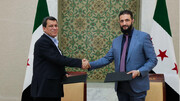
The Center for Kurdish Studies believes that Washington adopted a policy of separation between "supporting the Kurds" and "supporting the SDF" in order to prevent a large-scale conflict between Damascus and the Kurds. Accordingly, America, while encouraging the parties to negotiate, tried to facilitate the process of integrating the forces and institutions of the self-governing administration into the structure of the Syrian government.
In this framework, the agreements made in early 2026, including the understandings related to the deployment of Syrian government forces in Deir ez-Zor and Raqqa, are described as part of a process that aims to reduce the costs of the US presence and prepare the ground for the final withdrawal of this country's forces from Syria.
According to the Center for Kurdish Studies, Tom Barak played a central role in this process and practically became the coordinator of American policy in Syria, Türkiye, Iraq and Lebanon. This analysis emphasizes that Washington's success in exiting Syria was largely the result of its simultaneous management of security, Kurdish and regional issues.
In the summary of this analysis, it is stated that Donald Trump's view of Syria has not changed and he considers this country to be a costly and lacking economic priority for America. From this point of view, the gradual withdrawal of the US from Syria is considered part of Trump's grand strategy to reduce Washington's direct commitments in the Middle East and leave crisis management to regional actors.


Your Comment