

According to Kordpress, Vesey Aktash, a member of Amrali's secretariat, emphasized the concept of "democratic integration" as a solution to the Kurdish problem at the "Democratic Transition of the Republic in the Second Century" conference, and said that this approach does not mean surrender or assimilation, but is a model for the equal coexistence of all identities within the framework of a democratic republic. He also considered the new peace process in Türkiye to be the result of the role played by various political actors and Abdullah Ocalan's call to end the armed struggle.
Referring to the process that has accelerated since the end of 2024, Aktash stated: "Today, we are in one of the most sensitive, promising and transformative stages of our history. "The time has come for the process of peace and democratic society to become an objective and concrete transformation."
He considered the current process to be the result of a series of political developments and role-playing by various actors and said: "This process began with the forward-looking calls of the Bahceli government, gained new depth and direction with Abdullah Ocalan's messages from Amrali, continued with Özgur Özel's avoidance of deterrent approaches, and entered the practical stage with the political will of the President of Turkey."
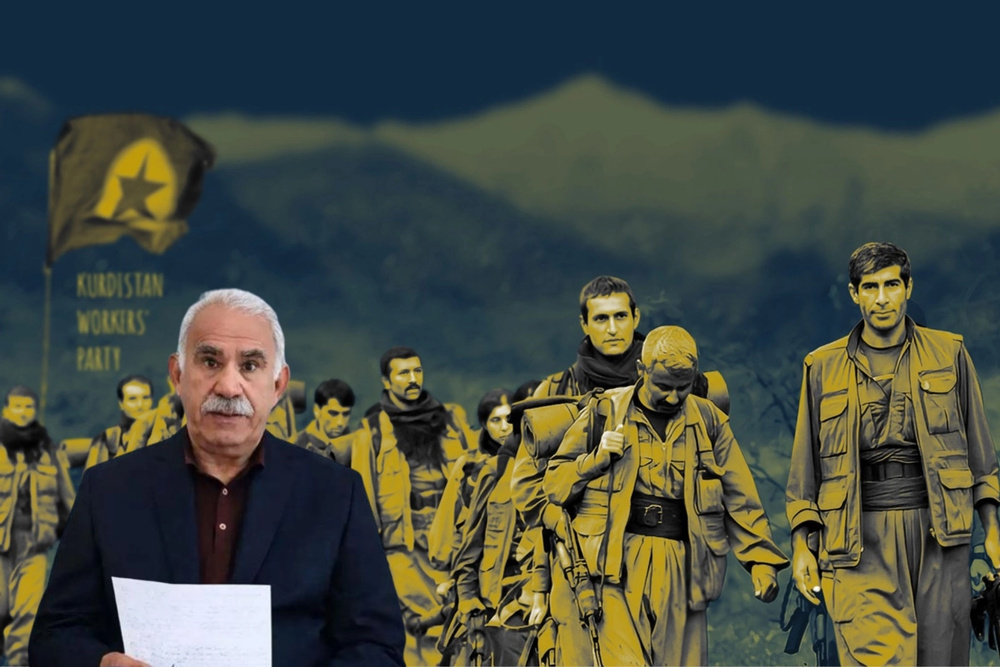
The member of Amrali's secretariat further referred to Abdullah Ocalan's call on February 27, 2025 and described it as a historical turning point in the process of solving the Kurdish issue. He said: "Abdullah Ocalan announced the end of the period of violence-based struggle with his call to lay down his arms and dissolve the PKK. This call was not just a declaration of a political position, but it was the gateway to a new era; "A period in which democratic politics, dialogue and civil participation replace weapons and armed struggle loses its relevance."
Aktash also emphasized what he called the "honesty and goodwill of the Kurdish side" in this process and added: "After this call, important practical steps were taken. "The holding of the PKK dissolution congress, the announcement of a cease-fire, the withdrawal of troops, and the holding of a symbolic disarmament ceremony, all show the serious will of the Kurdish side to advance the peace process and move towards a political and democratic solution."
In the main part of his speech, he introduced the concept of "democratic integration" as the core of the new phase of the peace process and said: "Democratic integration is one of the most fundamental concepts of the new era. This concept means connecting the Kurdish society to the democratic republic based on equality and freedom; Neither separatism nor denial of identity. Democratic integration offers a third way between assimilation and separatism and emphasizes the common, equal and free life of all citizens.
Rejecting the notions that consider this concept to mean surrender or being absorbed into the existing structure, he clarified: "Democratic integration is neither assimilation nor surrender. No identity is supposed to dissolve into another identity and neither side is supposed to fail. This model is based on recognizing all identities, strengthening equal citizenship and creating an environment where everyone can live together freely while preserving their cultural, linguistic and social characteristics.
Aktash further criticized the traditional model of the nation-state in Turkey and said: "Democratic integration seeks to overcome the single-identity, one-voice and denying model of the nation-state; A model that has been the cause of many crises, tensions and conflicts over the past decades. Instead of this model, we propose the philosophy of "unity in difference"; A philosophy that considers ethnic, linguistic, cultural and religious differences not as a threat, but as part of the wealth and richness of the society.
He added: "Democratic integration is based on the principle that different people and communities can live within the framework of a common and democratic political structure without losing their identity. This approach is neither the victory of one side over the other nor the submission of one side to the other; Rather, it is an attempt to build an inclusive democracy in the second century of the republic that includes all citizens."
Amrali Secretariat member emphasized that the ultimate goal of this approach is to create a society where Turks, Kurds and all ethnic and religious groups can live together on the basis of legal and political equality. According to him, accepting ethnic, linguistic and religious diversity, strengthening equal citizenship, expanding political participation and creating democratic mechanisms to resolve disputes are among the most important prerequisites for the realization of this model.
At the end, Aktash noted: "Democratic integration is not the only solution to the Kurdish problem, but a project for the democratization of the whole of Türkiye." If this path is followed successfully, it can be the basis for lasting peace, strengthening social coexistence and building a common future for all citizens of Türkiye."
Your Comment