

According to KurdPress, relations between the United States and the Kurds have had a turbulent path over the past century.This path began with the idea of self-determination for non-Turkish peoples in the final years of the Ottoman Empire and in subsequent periods, it placed the Kurds in different positions such as victims of repression, geopolitical allies in the Cold War, and ultimately Washington's security partners in the fight against extremist groups.
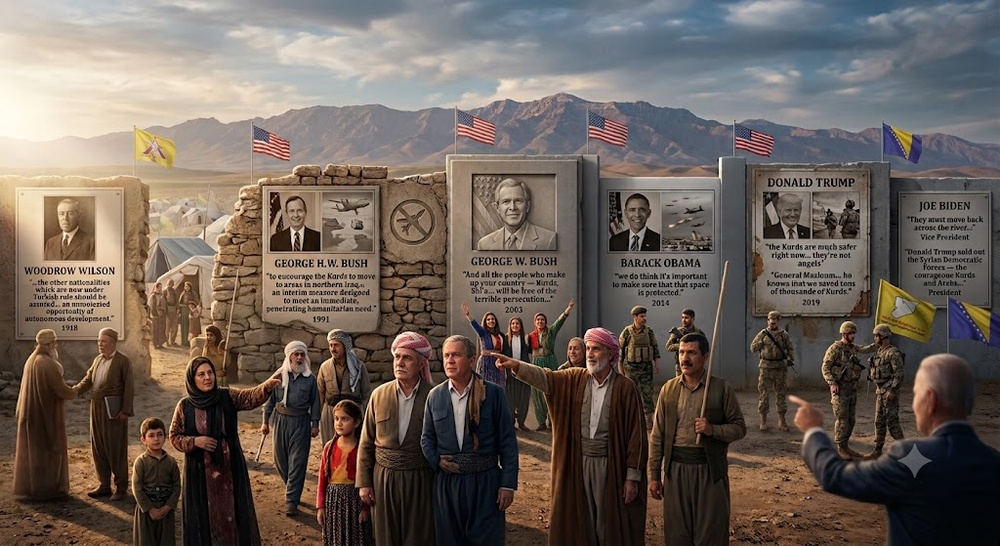
This issue has been reflected in US foreign policy at various times. US presidents, from Woodrow Wilson, who spoke of the "opportunity for autonomous development" of non-Turkish peoples in the Ottoman Empire in 1918, to Joe Biden, who has defended the role of Kurdish forces in the fight against ISIS in the contemporary period, have had different approaches towards the Kurds. After Wilson, this issue was pursued more in the context of the Cold War, developments in Iraq, and geopolitical considerations during the eras of John F. Kennedy, Lyndon Johnson, Richard Nixon, Gerald Ford, Jimmy Carter, and Ronald Reagan.After that, George H. W. Bush with the humanitarian crisis of the Iraqi Kurds in 1991, Bill Clinton with the policy of containing Saddam and supporting the no-fly zone in northern Iraq, George W. Bush with the formation of a federal Iraq after the fall of Saddam, Barack Obama with military cooperation with Kurdish forces against ISIS, and Donald Trump with the combination of supporting the military role of the Kurds and limiting American commitments, each shaped part of the history of Washington's view of the Kurdish issue.
A review of these positions shows that American policy towards the Kurds has always moved between supporting their security and political rights on the one hand, and strategic considerations, maintaining regional stability, and opposing changing the official borders of the Middle East on the other.
The first important position of a US president that was later taken into account in relation to the Kurdish issue dates back to the era of Woodrow Wilson, the 28th President of the United States.In his famous address to a joint session of Congress on January 8, 1918, which became known as Wilson's Fourteen Points, Wilson outlined the framework for America's vision of the post-World War I world order.
In the section on the Ottoman Empire, he declared: "The Turkish-populated parts of the present Ottoman Empire shall be assured of a secure sovereignty, but the other nationalities now under Turkish rule shall enjoy certain security of life and unhindered opportunity for independent and self-governing development."
Although Wilson did not mention the Kurds directly in this speech, the twelfth point of his speech later became one of the most important documents cited by the non-Turkish peoples of the Ottoman Empire, including the Kurds, in the debate over the right to self-government.Many Kurdish leaders in the years after World War I used these promises as the basis for their political demands. This view was eventually reflected in the Treaty of Sèvres in 1920, although with the changing political equations of the region and the victory of the Turkish nationalist movement, this treaty was not implemented and was replaced by the Treaty of Lausanne in 1923.
After World War II and the beginning of the Cold War, the Kurdish issue entered a different phase. During this period, Washington viewed the Kurdish issue less from the perspective of national rights and more in the context of competition with the Soviet Union, the stability of regional states, and the balance of power in the Middle East.
During the presidency of John F. Kennedy, the Iraqi Kurdish movement led by Mustafa Barzani attempted to draw American attention to the issue of autonomy. Barzani sent a letter to Kennedy in 1963, requesting American support for Kurdish rights within the framework of Iraq.He wrote in the letter:
"We demand nothing more than our just and national right; autonomy within the framework of the Iraqi government."
However, the Kennedy administration, and then the Lyndon Johnson administration, preferred to avoid direct involvement in the Kurdish conflict. US State Department documents show that Washington during this period pursued Kurdish demands for autonomy as one of the factors destabilizing Iraq, but its main priority was to maintain regional stability and prevent the spread of Soviet influence.
The presidency of Richard Nixon was one of the most important periods in the history of US relations with the Iraqi Kurdish movement before 1991. During this period, the United States secretly supported Mustafa Barzani's forces, in collaboration with Iran during the reign of Mohammad Reza Shah.Washington's main goal was not to create a Kurdish state, but to use the Kurdish potential to pressure the Iraqi Baath government and limit Soviet influence.
"The difficult situation of Kurdistan and its potential to play a role in the Middle East are being considered."
Also in 1974, a document entitled "Further Support for the Kurds in Iraq" was prepared by the US National Security Council, which considered continuing assistance to the Barzani movement.
However, this support was also strategic in nature and did not mean supporting the independence of Kurdistan. The US goal was to strengthen the Kurds' position vis-à-vis Baghdad and use them in the framework of regional competitions.
After Gerald Ford came to power, this policy continued, but the Algiers Agreement between Iran and Iraq in 1975 changed the equation.With Iran’s support for the Iraqi Kurds ceasing, the United States also stopped its aid to Barzani’s forces. This decision was later criticized within the United States, and the U.S. House Intelligence Committee’s report, known as the Pike Report, accused Washington of using the Kurds for geopolitical purposes and then abandoning them.
During the Jimmy Carter era, although American foreign policy placed greater emphasis on human rights, the Kurdish issue still did not find an independent place in Washington’s policy. The Carter administration criticized the repression of regional governments, but did not provide direct political support to Kurdish movements.
The Ronald Reagan era was one of the most sensitive periods in the contemporary history of the Kurds.During the Iran-Iraq War, the US government maintained its relations with Baghdad due to concerns about an Iranian victory. After the Iraqi army's chemical attack on the city of Halabja in March 1988, which killed thousands of Kurds, the US government condemned the use of chemical weapons, but Reagan's direct response to Saddam Hussein's regime remained limited.
A review of historical documents shows that the Reagan administration sought to avoid direct confrontation with Iraq while maintaining its strategic relationship with Baghdad.
Joost Hiltermann, A Poisonous Affair: America, Iraq, and the Gassing of Halabja;
With the end of the Cold War and Iraq's invasion of Kuwait, America's view of the Kurdish issue entered a new phase. After the Iraqi Kurdish uprising against Saddam Hussein in 1991 and the mass flight of the Kurdish population towards the Iranian and Turkish borders, the George H. W. For the first time, Bush directly and publicly addressed the issue of protecting the Kurds.Bush said on April 16, 1991, when announcing Operation Provide Comfort: “If we cannot provide sufficient food, medicine, clothing, and shelter for the Kurds living in the mountains along the Turkish-Iraqi border, we must encourage the Kurds to move to areas in northern Iraq where the geography allows for widespread assistance. Our long-term goal remains the same: that the Iraqi Kurds and all Iraqi refugees, wherever they are, return to their homes and live in peace; free from oppression and free to live their lives.”
However, Bush emphasized that the U.S. action was not a permanent political solution to the Kurdish question.
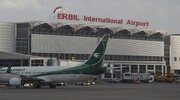
During Bill Clinton's term, the US supported the no-fly zone in northern Iraq and guaranteed the security of Iraqi Kurds against attacks from Baghdad, but continued to oppose the partition of Iraq and the independence of Kurdistan.After Saddam's forces invaded Erbil in 1996, Clinton said, "Iraqi forces have invaded and captured the Kurdish-held city of Erbil in northern Iraq."
He also warned, "When you oppress your own people or threaten your neighbors, there is a price to pay."
But Clinton made it clear that the United States did not aim to create a divided Iraq: "The United States did not aim to see a divided and unstable Iraq."
After the US invasion of Iraq in 2003, the Kurdish issue became a central element in the design of the new Iraqi political order. The George W. Bush administration supported a federal model of Iraq and considered the Kurds to be a key component of this structure.
Bush said on March 6, 2003, “Iraq can be a place where people can see that Shiites, Sunnis, and Kurds can live together in a federal system.”
After the fall of Baghdad, he also declared in a televised message to the Iraqi people on April 10, 2003: “All the peoples who make up your country—Kurds, Shiites, Turkmen, Sunnis and others—will be freed from the terrible oppression that so many have endured.”
Under Barack Obama, America’s relations with the Kurds entered a new phase. The rise of ISIS made Kurdish forces in Iraq and Syria Washington’s most important ground partners in the fight against the group.
In 2014, Obama said of the Kurdistan Region: “The Kurdistan Region is run effectively; it is tolerant of other regions, of other faiths and religions, and that is something we want to see in other places. So it is important that this atmosphere is maintained.»
The Obama administration also identified Kurdish forces as among the strongest forces fighting ISIS.
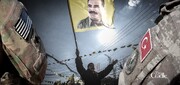
Under Donald Trump, the contradiction between the military importance of.




Your Comment