

According to KurdPress, more than a year after the Kurdistan Workers' Party (PKK) announced the end of the armed struggle and the dissolution of its organizational structure, the peace process in Turkey has entered a new phase.Although military clashes have largely subsided, the main challenge has now shifted to the political and legislative arena, where the adoption of a “peace framework law” has become the most important point of contention between the Turkish government and the Kurdish movement.
This law is supposed to determine the mechanism for disarmament, verification, the return of PKK forces to normal life, and the legal framework for the transition to peace. Although almost all the main actors agree on the need to adopt such a law, no bill has yet been submitted to the Turkish parliament.
Why is a new law necessary?
Supporters of the plan believe that continuing to rely on existing anti-terrorism laws and regulations, especially the so-called “effective expression of remorse” law, is incompatible with the process of a political settlement. In their view, the peace process requires an independent legal framework that replaces the security and ad hoc approach of the past.Unlike the peace talks of previous years, this time the Turkish government, the Peoples’ Equality and Democracy Party, Abdullah Öcalan and even the former leaders of the PKK have all emphasized the need for legislation by parliament. The main disagreement is no longer over the substance of the law, but over its content.
What is the reason for the delay?
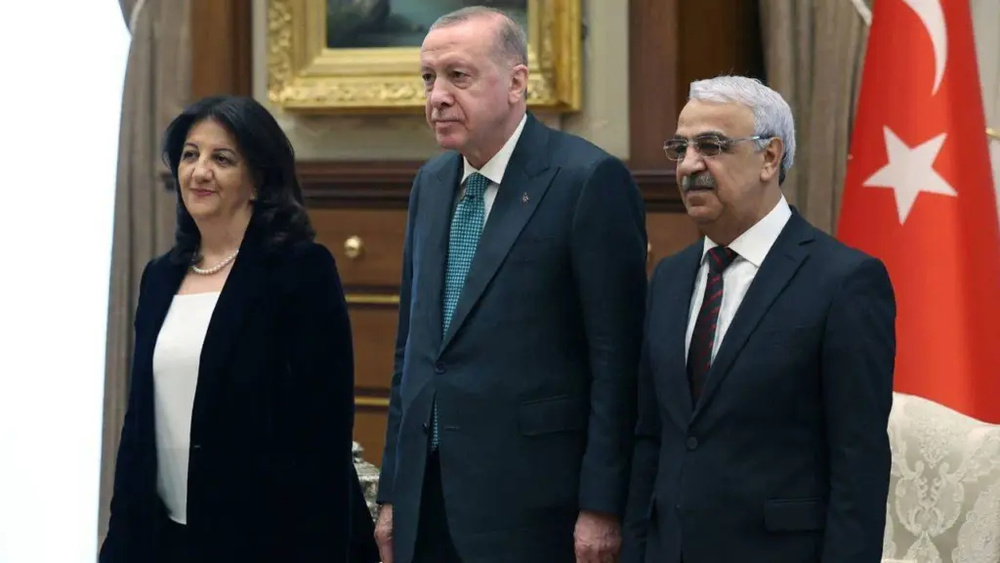
After the announcement of the dissolution of the PKK, the Turkish parliament formed a special commission to examine the preparations for drafting the law. All parties in the parliament, except for the “Good” party, were present in this commission, which is considered one of the broadest political consensuses on the Kurdish issue in recent years.
However, the drafting of the law has been postponed several times. The Turkish government believes that the complete disarmament of the PKK must first be approved by the security institutions and then the provisions of the law can be implemented. In contrast, the Peoples’ Equality and Democracy Party has warned that the continued delay will erode the trust built after the dissolution of the PKK.It will destroy the PKK and eliminate the opportunity.
The main differences
The first difference is over the scope of the law. The government intends the law to cover mainly ordinary members of the PKK, excluding senior leaders. The government also rejects any general amnesty and considers the implementation of the law conditional on the full verification of disarmament.
In contrast, the PKK opposes any distinction between leaders and ordinary members and wants the law to be implemented for all members of the organization.
The second issue concerns the “effective expression of remorse” law, which reduces the punishment of members of armed groups if they cooperate with the government and provide information. The government will likely maintain a modified version of the law, but the PKK believes that such a mechanism is designed to separate individuals from a group and should not be used as a basis for resolving a political dispute.In their view, the requirement to express remorse reduces the peace process to “surrender.”
A third disagreement concerns the status of Abdullah Öcalan. The government has not presented any plans to change his legal status, but the PKK has repeatedly stressed that achieving a lasting peace must ultimately lead to Öcalan’s release.
Another disagreement is about the ultimate goal of the peace process. The government sees the process as limited to disarmament, verification, and the return of forces, while the Kurdish movement calls for broader reforms, including legal guarantees, the expansion of local democracy, equal citizenship, and political rights.
The changing role of Abdullah Öcalan
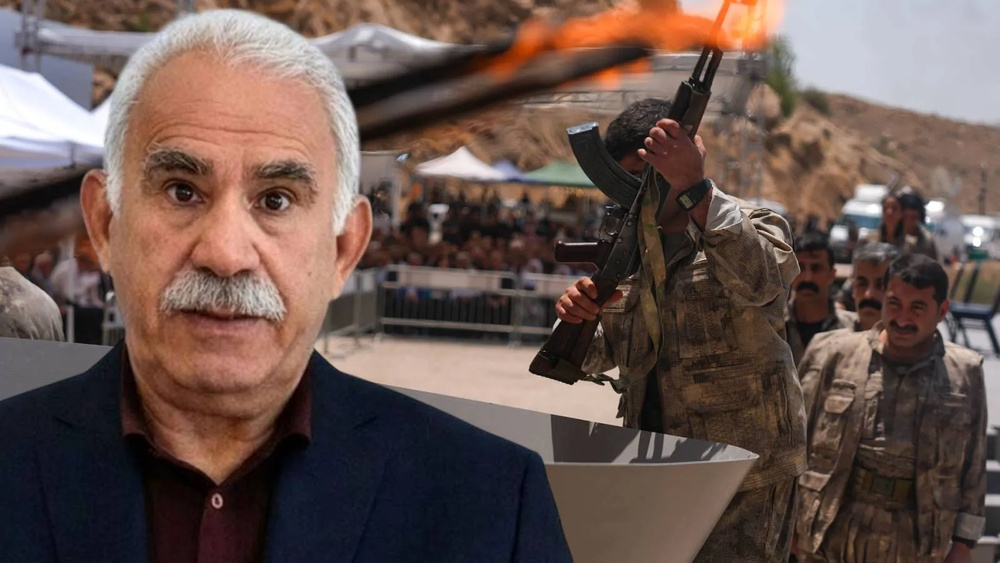
One of the most important developments in the process is the changing position of Abdullah Öcalan. For years, he was known as the leader of an armed movement, but now he is increasingly presenting himself as an advocate for a political solution.In recent statements, Öcalan has emphasized concepts such as legal guarantees, democratic coexistence, equality before the law, and the role of parliament in building a lasting peace, rather than focusing on organizational demands. He has also limited his personal demands to improved prison conditions, the possibility of legal communication, and continued participation in negotiations.
Meanwhile, the Peoples’ Equality and Democracy Party has translated these principles into specific parliamentary proposals, and former PKK leaders continue to defend the organization’s practical demands, including opposition to the exclusion of leaders and opposition to the “effective expression of remorse” law.
Analysts believe that these differences are more a division of political roles than a strategic difference, with Öcalan appearing to be a guarantor of the continuation of the peace process rather than a beneficiary of the negotiations.Where is the main gap?
Contrary to the image presented by many international media outlets, the main difference is not only between the Turkish government and the PKK. While the various parts of the Kurdish movement have reached a consensus since Öcalan’s call in February 2025 on ending the armed struggle and transferring the Kurdish issue to the political and parliamentary arena, such unity is not observed on the Turkish government’s side.
Recep Tayyip Erdogan has presented the current process mainly in the form of the slogan “Turkey free of terrorism” and considers the dissolution of the PKK to be the result of the success of the government’s security policies. This approach reduces the political cost of a possible failure of the negotiations for the government and, if successful, also preserves the possibility of political exploitation.In contrast, the government of Devlet Bahçeli, the leader of the National Movement Party, is a more serious supporter of advancing the peace process and the rapid adoption of the law and has repeatedly emphasized the need for immediate parliamentary action. In addition, security institutions and other political movements each pursue their own priorities and considerations.
The future of the peace process
It seems that the fate of the peace process depends more than ever on the decision of the Turkish parliament. The Kurdish movement considers the end of the armed struggle to be an irreversible decision, but the main question is whether the Turkish government will also be willing to abandon the exceptional security system of the past few decades by adopting a stable legal framework and start a new phase of a political solution to the Kurdish issue.







Your Comment