

According to KurdPress, six hundred and fifty-three days have passed since the parliamentary elections in the Kurdistan Region of Iraq on October 20, 2024, but the tenth cabinet of the regional government has still not been formed; a record that has even surpassed the longest periods of political deadlock in Europe.However, unlike similar examples, the Kurdistan Region continues to govern without a new government, a fact that can be traced back to the power structure, the geographical division of influence between the Kurdistan Democratic Party of Iraq and the Patriotic Union of Kurdistan, and the changing priorities of the United States in the region.
While the Brussels region and the Northern Ireland local government managed to end the deadlock on government formation after 613 days and 639 days, and Belgium’s record of 541 days has now been surpassed, the Kurdistan Region has entered its 653rd day without a cabinet.
However, the main difference between the Kurdistan Region and these examples is that the ninth government continues to operate with full authority. During this time, it has concluded important contracts, made long-term financial decisions, and has never considered itself a “caretaker government.”This is despite the fact that the Iraqi Federal Supreme Court, in its ruling No. 213 of 2025, stated that the federal government is only authorized to carry out day-to-day affairs after the end of its legislative term and does not have the right to make strategic decisions or long-term commitments. However, no similar ruling has been issued or implemented regarding the regional government so far.
At the same time, the regional parliament has also effectively ceased to function. Representatives met only once, on December 3, 2024, to take the oath; a session that also marked the beginning of the payment of representatives’ salaries, but the parliament has not convened since then. This institution has neither a president nor a presidium, nor have its specialized commissions been formed.
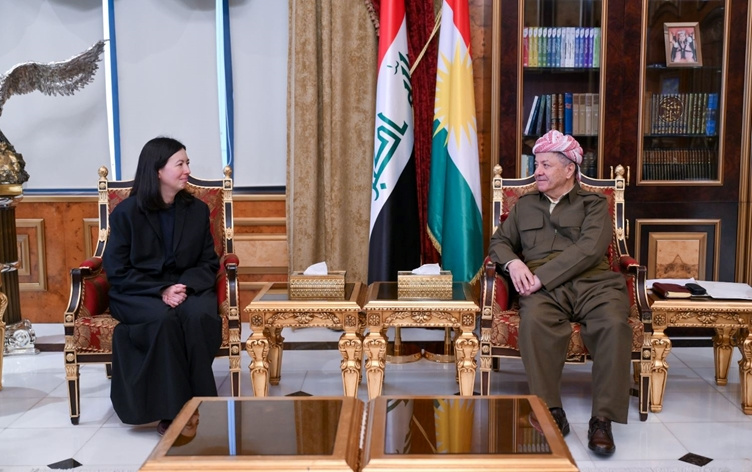
The reason for this situation must be sought in the actual structure of power in the region.Although legally, the parliament, the regional presidency, and the Council of Ministers are the main organs of government, in practice key decisions are made within the KDPI and the PUK, and the official institutions only play the role of recording and implementing the agreements of the two parties.
A clear example of this situation occurred in 2015; when the parliament was considering the end of Massoud Barzani’s presidency, the KDPI prevented the speaker of the parliament from entering Erbil, and the parliament’s activities were suspended for nearly three years. That experience showed that official institutions cannot exercise their authority without the support of party power. Now, the same pattern has been repeated, with a relative change in the roles of the actors.
Meanwhile, the PUK’s position has been strengthened compared to the past.The concentration of power in the KDP in the hands of the Barzani family has limited the scope for decision-making and increased the cost of any compromise. On the other hand, the Kormor gas field in Sulaymaniyah province, which is within the PUK’s sphere of influence, reached around 750 million standard cubic feet per day after its capacity was expanded in 2025 and now supplies around 80 percent of the region’s electricity, including Erbil and Dohuk. The cessation of production from the field in February 2026 and its gradual resumption at the end of July have exposed the region’s heavy dependence on this energy source. Thus, while oil revenues remain the KDP’s main tool of influence, natural gas has become an important lever of power for the PUK.
Beyond the issue of energy, the two parties have effectively created two independent administrative systems.Each of them runs its own intelligence, security and counter-terrorism services with separate chains of command. The fuel distribution system, refineries and pricing of petroleum products are also managed independently in the two regions controlled by the two parties.
A similar situation exists in the area of public revenues. In order to avoid monitoring or sharing revenues with the other party, each party has created separate structures of private companies to collect customs and internal revenues. This trend has even extended to services; such that mandatory inspections of elevators in commercial buildings are carried out in each region by different companies affiliated with the same power structures.As a result, what has emerged in the Kurdistan Region today are two parallel governance structures, each of which simultaneously carries out political, security, economic and social tasks in the territory under its control, and also has its own economic market and sources of income.
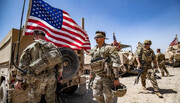
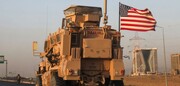
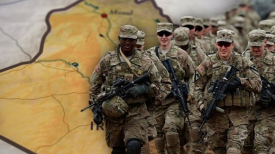
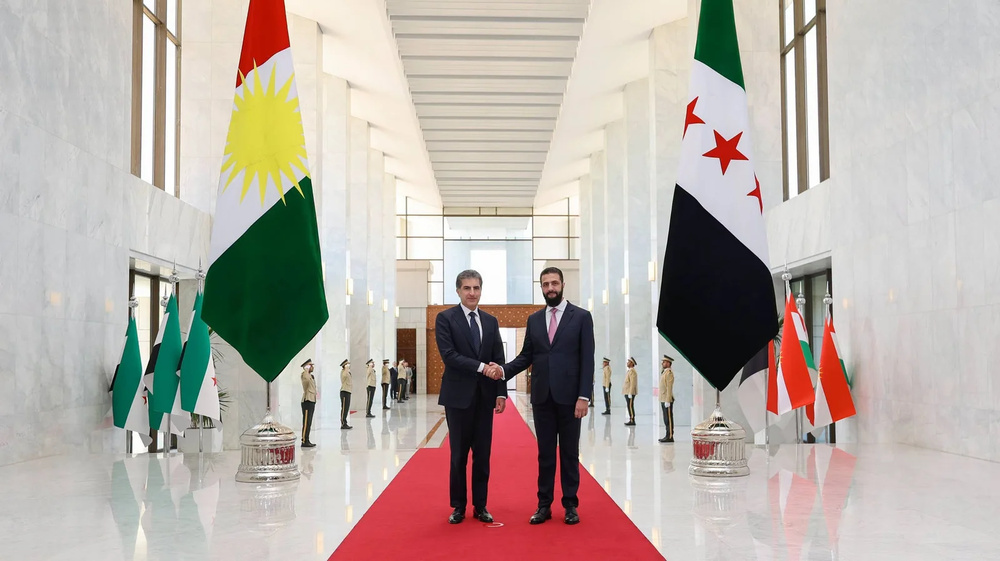
Another important factor is the change in the United States’ approach towards the Kurdistan Region. The US National Security Strategy, published in November 2025, no longer places issues such as the quality of governance, the development of democratic institutions, human rights and state-building among Washington’s priorities. On the contrary, energy cooperation, the development of economic corridors and cooperation with local forces to combat terrorism have become the main axes of US policy.Since the KDPI and the PUK have been working separately with the US for years on energy, security, and intelligence cooperation, forming a single cabinet is no longer a prerequisite for achieving Washington’s goals in the region. The US now works directly with the party that controls each region or project, and the lack of a single government does not impose any costs on its policies.
In addition to these factors, the composition of parliamentary seats has also contributed to the impasse. The KDPI, with 39 seats, is unable to convene a parliamentary session and elect a presidium on its own, and the PUK’s alignment with the New Generation Movement has strengthened its deterrent position. As a result, the KDP is unable to advance the process of forming parliamentary institutions without an agreement with its rival.The result of all these factors is that forming a new cabinet requires redistributing power, budgets, and positions that the two parties already control through their parallel structures. Therefore, the cost of concessions is high for both parties, while the cost of waiting remains very low. Since executive functions are effectively carried out through party structures, the absence of a formal government has not disrupted the daily administration of the region. However, the price of this situation is paid by the region’s legal institutions and citizens, whose means of monitoring, accountability, and pursuing their demands through these same formal institutions have effectively ceased to exist.


Your Comment