

KurdPress
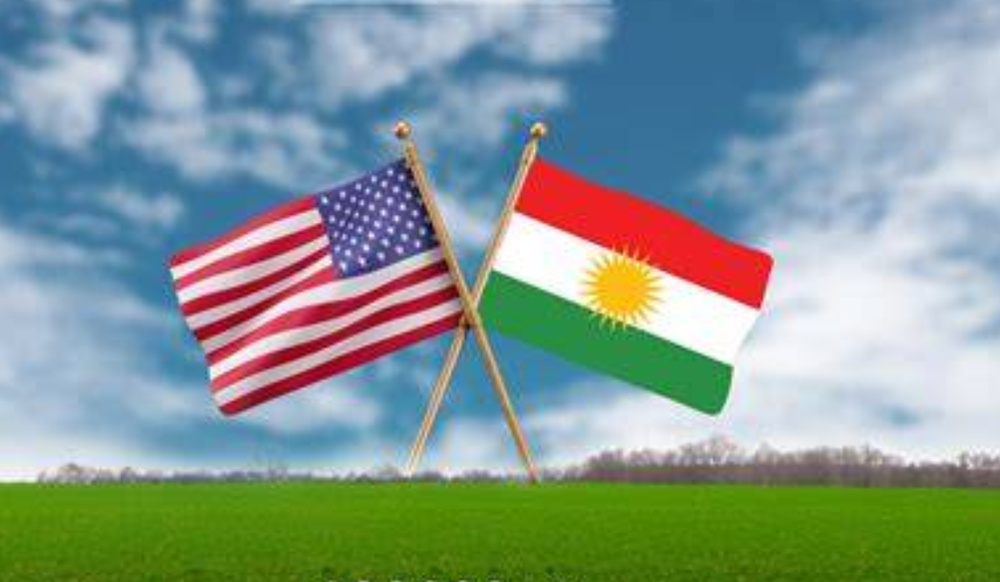
In this analysis, "Kurds" refers to a part of the political leaders and movements that have at various times been attached to the promises and support of America in the region.A phenomenological look at half a century of US policy in West Asia, especially in the Kurdish regions, reveals a pattern of variable, wave-like, and unpredictable behavior; a pattern in which the Kurds have been used as tools in US geopolitical equations at many points, but at historical junctures, support has given way to new calculations of Washington’s national interests.The cooperation of Kurdish forces with the US-led coalition in overthrowing the Baath regime and their subsequent prominent role in the fight against ISIS in 2014 created a new image of the Kurds as reliable allies in Washington’s regional policy. Although the security situation after the fall of Saddam and the emergence of terrorist groups strengthened the Kurds’ political position, this position was always subject to changing US calculations.
During the 2017 referendum on independence for the Kurdistan Region of Iraq, when many Kurdish leaders expected Washington to support or at least accompany them, the US, by prioritizing its relations with the central Iraqi government and regional considerations, left the Kurds alone in the face of Baghdad. This experience once again showed that US support for its allies is defined not on the basis of permanent commitments, but on the basis of that country’s changing strategic interests.
A similar experience was repeated in Syria.A short-term political stance by American officials could change the equations of the Kurdish forces and weaken their position in the future political structure of Syria. This fact shows that for Washington, local allies are important as long as they are defined within the framework of the larger goals of American foreign policy.
From another perspective, the American presence in the countries of the region has always had its own logic. The Bagram base in Afghanistan and the Green Zone in Baghdad are examples of the extensive American presence after the military interventions of these countries; areas that have practically become the main centers of Washington's influence. In this context, American foreign policy has in many cases been regulated not on the basis of a long-term commitment to local political structures, but on the basis of the importance of those areas in its security and geopolitical strategy.Syria and Iraq are more complicated due to the presence of Kurdish regions with semi-independent political and security structures. The Kurds have played an important role in the formation of the new political order of these two countries, but this situation has made it more difficult for the United States to manage regional equations. On the one hand, Washington has introduced itself as an ally of the Kurds and has benefited from their role in confronting regional threats, but on the other hand, it changes its priorities when the cost of supporting these allies does not match its strategic interests.
Kurdish equations in the Middle East are among the most complex political cases in the region. Intra-Kurdish rivalries, party disputes, interventions by regional countries, and the dependence of some currents on foreign support have presented the political future of the Kurdish regions with serious challenges.In this context, some Kurdish political movements, including the Kurdistan Democratic Party of Iraq, have tried in recent years to regulate their relations with the central government of Iraq by adopting a more pragmatic approach.
However, the Kurds are among the actors who are most concerned about the decline of the US presence in the region, because some movements have adopted tougher positions against some countries in the region in recent years, based on Washington's support. The decline in the role of the US could confront them with the need to redefine regional relations and reconsider political calculations.
Meanwhile, the Iraqi Kurdistan Region, as a political structure with semi-independent characteristics and one of America's main partners in the region, is more sensitive than others to Washington's change in approach.In contrast, some Kurdish movements that have come into conflict with Iran due to their proximity to US policies may pay more than other groups for the change in regional equations.
It seems that the US, within the framework of changing its strategic priorities and redefining its role in the Middle East, is gradually reducing its direct presence in some regions, including the Iraqi Kurdistan Region. The legacy of this presence for the Kurds is not a permanent security guarantee, but a more complex case and a set of unresolved equations.
Historical experience has shown that US policy towards the Kurds is more a function of sectional interests and geopolitical changes than it is based on lasting agreements. The poison of this policy, each time with a new form and title, but with a familiar taste, has been absorbed into the palate of some Kurdish leaders.
Until another test, and perhaps another experience.




Your Comment