

According to Kurdistan Press, the hasty withdrawal of US and European allies’ air defense systems from Erbil, as the deadline for US forces to leave Iraq approaches, has posed a fundamental question for the Kurdistan Region: If the US military presence in Iraq is ending, what force is going to fill the void created in defending the region’s skies?
The importance of this question increases when the Kurdistan Region has been one of the main targets of missile and drone attacks in recent months.According to Rudaw, the region has faced more than 900 drone and missile attacks since February 28, and American and coalition systems have played a major role in countering these attacks.
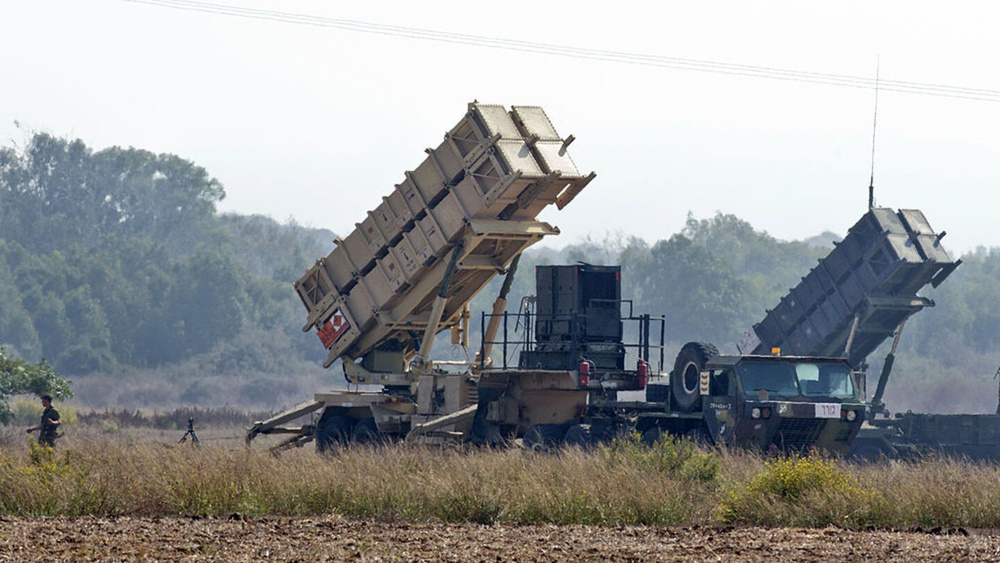
Now, the withdrawal of the Patriot systems, along with the transfer of the British Rapid Sentry system and the reduction of the military presence of the United States, Britain, France and Germany, has left this defense architecture with a serious void. According to published reports, the United States has transferred eight Patriot batteries from Erbil to Jordan in a rapid operation, and the United Kingdom has taken Rapid Sentry to Cyprus. As a result, the most important layer of defense against ballistic missiles has been removed from the region.
Meanwhile, the emphasis of Umbreen Zaman, a journalist and analyst of Middle East issues, on the accuracy of her report on the withdrawal of the Patriot is of particular importance.He has announced that the bulk of US forces have withdrawn from the region and that Patriot systems are no longer present in Erbil, although US special forces will remain in some locations. This development means that even if the full withdrawal of US forces does not take place by the end of September, the nature of Washington’s presence in the region is changing: from a large presence with direct defensive coverage to a smaller, more specialized presence based mainly on special forces, intelligence and security cooperation.
This change makes an important difference. The presence of US forces alone does not necessarily mean creating an air defense umbrella for the entire region, but the presence of Patriots, C-RAM, Coyote and Rapid Sentry created a multi-layered network to protect sensitive bases and facilities.Patriot was particularly important for countering ballistic missiles, while C-RAM and shorter-range systems were more useful for rockets, mortars and drones. Experts who spoke to Rudaw also clarified that C-RAM and Coyote cannot replace Patriot’s anti-ballistic capability. For this reason, the current issue is not simply “the exit of a system”; it is the risk of losing an important layer of the region’s air defense architecture.
One of the important points in this case is that the Kurdistan Region has never had an independent and comprehensive air defense network at the level of countering ballistic missiles. Even when Patriot was stationed in Erbil, its coverage was mainly limited to the Erbil region, and many other regions of the region were still under threat.According to one security expert cited by Rudaw, even during the Patriot era, many areas outside Erbil’s coverage were vulnerable to ballistic missiles. So the Patriot withdrawal has not created a completely new problem; rather, it has exposed the structural weakness in the region’s defenses.
This weakness has a long history. The Kurdistan Region was targeted by ballistic missiles for the first time in 2018. This was followed by missile strikes on targets inside Erbil in 2022 and 2024. As a result, the region is not only exposed to the threat of suicide drones and cruise missiles, but also has direct experience with ballistic missile attacks.The Great Contradiction: Defense That Was Supposed to Be Provided to the Peshmerga
One of the most important aspects of this crisis goes back to a decision that was made in the United States in 2023 and 2024 but has not yet been fully implemented. Section 1266 of the US National Defense Authorization Act for fiscal year 2024 required the Pentagon to prepare a plan to equip and train the Peshmerga forces of the Kurdistan Region, including in the field of air defense. American University also stated in its analysis that this plan should have included defensive capabilities against missiles, rockets, and unmanned systems, but the deadlines set for its implementation have passed.
The Kurdistan Region’s representative in Washington also announced in 2024 that the US Congress, in the defense budget law, had required the Ministry of Defense to present a plan to provide air defense for the region.Even then-Pentagon spokesman General Pat Ryder confirmed in January 2024 that the Peshmerga would be equipped with air defense systems, confirming the existence of the provision in the defense law, although he declined to provide details on its implementation.
But this decision never led to the creation of an independent and operational air defense network for the Peshmerga. The American University analysis states that the deadlines set in the 2024 law for the preparation and implementation of the air defense plan have been missed. This situation has now created a strategic paradox: while Washington is reducing its military presence, it has not yet been able to implement the plan that was considered a few years ago to strengthen the Peshmerga’s air defense capabilities. In other words, the region is losing external defense without having received its own independent defense.Why is the Patriot withdrawal more important than the troop withdrawal?
It could be argued that the withdrawal of US forces is part of the agreement between Baghdad and Washington to end the US military mission in Iraq and therefore should not be seen as an independent development against the climate. But the Patriot withdrawal is fundamentally different.
The military can be redeployed in the event of a crisis; but building an air defense network requires radar, command and control systems, interceptor missiles, trained personnel and a communications network. Building such a capacity is time-consuming and expensive. On the other hand, the US Patriot stockpile has also been strained. A recent Reuters report on August 7, 2026, said that the US Patriot interceptor inventory has been severely depleted as a result of extensive use in the wars in Ukraine and the Middle East, and the US stockpile has fallen by about 65%.This same pressure on reserves could explain why Washington is repositioning its systems geographically. So the move of Patriots to Jordan should not be seen as a mere technical move; it is part of a broader competition for limited US missile defense resources in the Middle East.
The Defense Gap Is Not Just a Military Issue
The vulnerability of the airspace has implications beyond military security. The airspace today hosts airports, US consulates, international companies, energy infrastructure, oil facilities, and a significant number of foreign investors.In an interview with Rudaw, the RANE expert warned that the perpetrators of the attacks do not even need to completely destroy the region’s energy infrastructure to create economic pressure; they need only periodically cause production to stop, lay off employees or increase security costs, which will reduce investor confidence and increase financial pressure on the region’s government. This is doubly important for a region whose economy is largely dependent on energy, foreign investment and trade. Therefore, air defense cannot be considered a purely military issue; it is directly related to the region’s economy, energy, investment and even political credibility.
Does the US withdrawal necessarily mean an increase in attacks?
Here, a simplistic conclusion should be avoided. The withdrawal of Patriots does not necessarily mean that previous attacks will immediately increase.Some analysts believe that the reduction of the US presence in the region may even lead to a reduction in attacks, since one of the main motivations for previous attacks was to target American forces and installations. Caroline Rose of the Soufan Center also believes that direct attacks will decrease at times after the reduction of the US presence. In fact, the main problem is that the region cannot base its long-term security on the assumption that others will not attack it.
Baghdad: the solution or part of the problem?
After the reduction of the US presence, one natural option is for the Iraqi federal government to take greater responsibility for protecting the region’s skies. But this raises an important political question: is Baghdad willing to provide an effective air defense network to the region or the Peshmerga forces? The experience of recent years shows that this is not a simple matter.Even in 2024, the Carnegie analysis noted that the likelihood of Baghdad agreeing to transfer advanced air defense systems to Kurdish forces was low, given the differences over territorial jurisdiction. On the other hand, complete reliance on Baghdad is also incompatible with the philosophy of creating independent defense capabilities for the Peshmerga. A more sustainable solution would be to create a joint defense architecture between Baghdad and Erbil, with technical and intelligence support from the United States and European countries.
What happened in Erbil must be seen in a larger context. The withdrawal of Patriots, the transfer of Rapid Sentry, the reduction of European forces, the collection of air surveillance systems, and the reduction of the American military presence are all signs of the end of an era.During this period, the Kurdistan Region informally enjoyed an external security umbrella; one that, while not covering all areas of the region, provided at least in Erbil an important layer of deterrence and defense against missile and drone attacks. Now, this umbrella is shrinking. More importantly, the replacement for this umbrella is still unclear. The region does not have a comprehensive independent radar and missile network, nor does it have sufficient capacity to counter ballistic missiles, nor has the US 2024 plan to build a Peshmerga air defense capacity reached the operational stage. In this sense, the term “defenceless skies of the region” may not mean an absolute lack of defense; but strategically it describes a sharp reduction in defense coverage and the creation of a real defense vacuum.A Big Test for Erbil
The Kurdistan Region now faces a strategic choice: either continue to rely on the temporary presence of foreign powers to protect its skies, or use the experience of recent years to create a sustainable air defense architecture. Washington is also apparently changing the nature of its relationship with Erbil. According to the RANE analyst, the US withdrawal does not necessarily mean the end of the partnership, but could shift the relationship from “direct protection of the region’s territory” to information sharing, Peshmerga training, weapons transfers, anti-ISIS cooperation, and diplomatic support. But for the region, this change carries a clear message: the era of reliance on the US defense umbrella will not last forever. Therefore, the vacuum created after the Patriot withdrawal should be seen not simply as a consequence of the US withdrawal, but as a warning about the future.








Your Comment