

According to Kurdpress, while the repeated myth of the Turkish media about "circumventing the Iraqi Kurdistan region through the creation of a new border crossing in Ovakoy" continues to be raised, important developments are underway in the border triangle of Turkey, Syria and Iraq; Developments related to the position of the Kurdistan Democratic Party and the new "Development Road" project. This project may now be directed through Syria instead of passing through the Kurdistan region.
Since the early 1990s, the Turkish media has continuously talked about the opening of a new crossing to directly connect Türkiye to Iraq and bypass the Kurdistan region. However, after nearly four decades, the issue remains largely a media debate. The fact is that Türkiye and the central government of Iraq do not have a direct border with each other. The entire border strip between Türkiye and Iraq, both practically and legally, is within the jurisdiction of the Kurdistan Region. Except for some periods from the 1980s to the early 2010s, when parts of it were under the control of the PKK, this region has been practically under the control of the Kurdistan Democratic Party. Currently, Türkiye has no direct control over this border strip.
In the 1990s and until the end of the 2000s, Turkey's main problem was that it had not yet established full official and government relations with the Kurdistan Region of Iraq, because based on the existing legal status, business was conducted with an official entity called the "Government of the Kurdistan Region". From the mid-2000s onwards, the sensitivity towards the official name of the climate decreased, but the main issue shifted to the field of economics and business.
The extensive trade relations between Türkiye and the Kurdistan Region generated huge income for economic operators and benefited both parties. However, since the formation of its practical governance in 1991, the Kurdistan Region has faced chronic problems such as corruption, weak rule of law, dominance of tribal and family relations over official structures, and mutual pressures between Baghdad and Erbil. These factors have repeatedly disrupted trade and oil and gas export routes precisely at the times when Türkiye and Western countries needed cooperation with the climate the most.
Another important issue is the business environment in the areas under the control of this party. From small companies to international investors, many economic activists complain about corruption and the requirement to have a "local partner"; A mechanism that is not consistent with the model of free, fast trade based on legal guarantees that America and the Trump administration emphasize. Those who have had business experience in these areas understand this fact very well.
Meanwhile, although the idea of Uwakoi crossing to bypass the climate has more color in the media, the Rabia border crossing between the central government of Iraq and Syria has been reopened after about 15 years. This crossing connects Baghdad to northern Syria and is only a few tens of kilometers away from the Turkish border.
This is where the "Development Road" project gains new importance. This project was initially designed to pass through Iraq and reach Turkey, but now an alternative route through Syria is also in front of it. At first glance, the addition of Syria to this route may mean more customs formalities and crossing an additional border, but in practice the Kurdistan Region behaves like an independent unit.
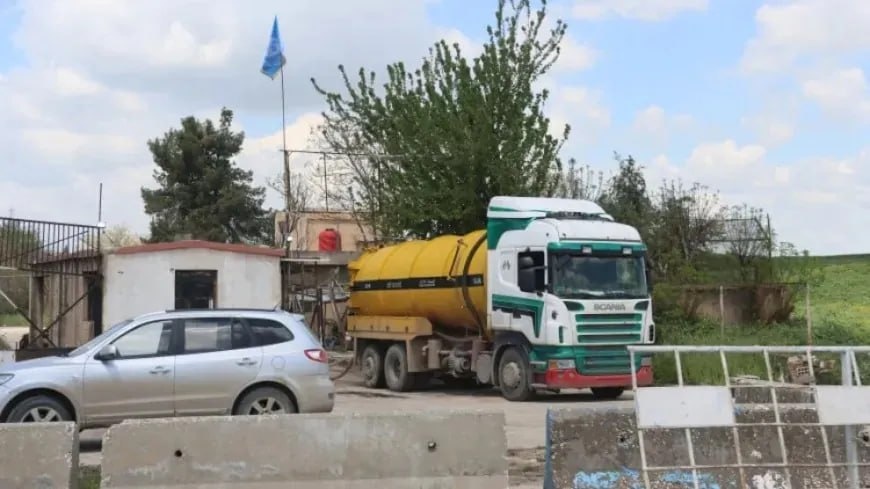
At the border between the region and the central government of Iraq, commercial trucks are stopped, varying tolls and taxes are collected, and arbitrary procedures seriously disrupt trade. On the other hand, if Syria stabilizes and has official crossings and a clear tax system, it can provide a more efficient and less expensive route, even though passing through one more country. Iraqi border authorities have also announced that the Rabia crossing could be one of the important routes of the development road project; The issue that shows that the option of bypassing the Kurdistan Region is now more serious than in the past.
The Khabur border crossing, which was considered the main route connecting Iraq to Türkiye in the original road development plan, has been facing severe congestion, disorder and heavy congestion for years. On the other hand, the Rabia crossing has an important advantage: the historic Baghdad-Mosul-Nasibin-Istanbul-Europe railway line, which can be reactivated with repairs and renovations. This rail line has the capacity to connect the development road project to the European rail network and create an effective link between East Asia and Europe.
Today, there are two main concerns in Ankara: first, the Kurdistan Democratic Party's control over areas far beyond the scope envisaged in the initial self-government agreement, especially in areas such as Sinjar; From Turkey's point of view, it has created an important strategic advantage for this party and is a sign of its territorial ambitions in the disputed areas of Iraq and even an attempt to fill the power vacuum in Syria after the People's Defense Units.
The relationship between Turkey and the Kurdistan Democratic Party is a broader topic than this discussion, but it is clear that although the two sides have had close relations since the mid-2010s, Ankara has always viewed the political and geographical aspirations of this party with skepticism. The doubt that is now reflected in the scenarios of bypassing the climate and simultaneously de-escalating with the patriotic union.



Your Comment