

According to Kurdpress, "Intelligence News" media wrote in an analytical report that the Turkish Kurdistan Workers' Party (PKK) has entered a new title in its political and organizational literature after a year has passed since announcing its official dissolution.
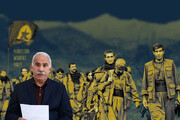
According to this media, during this press conference which was held in northern Iraq and the Kurdistan region, a picture of Abdullah Ocalan, the imprisoned leader of the PKK known as "Apo", was behind the heads of the senior members of this group. In their speeches, the members used the new title to refer to the organizational structure of the PKK.
Intelligence News writes that over the past year, many media outlets have talked about the "dissolution" and "disarmament" of the PKK, but the reality on the ground and the network structure of this process show that the organization in question continues to exist, although with different names and forms.
Returning to the roots of "Apuy"
It is stated in this report that before the official establishment of the PKK in 1978, the initial circle around Abdullah Öcalan between 1973 and 1978 was known as "Apocular"; The name used by critics and competitors to refer to Öcalan's supporters.
Now, about half a century later, this movement has once again returned to its original roots and calls itself "Management of the Apuyi Movement"; A change that, according to analysts, carries important ideological and political messages.
name change; Part of the historical strategy of P.K.K
Intelligence News emphasizes that since its establishment in 1978, the PKK has always used an "umbrella" and multi-layered structure and used different names to suit the political, legal and geopolitical conditions.
This report reminds that the PKK announced its dissolution for the first time in 2002, three years after the arrest of Abdullah Ocalan. After that, the main structure of this movement has been operating under the names "Kurdistan Freedom and Democracy Congress" (KADEK), "Kurdistan People's Congress" (KONGRA-GEL) and since 2005, under the name "Union of Kurdistan Communities" (KCK).
A network of names in Syria, Iraq and Iran
This report also points out the extent of PKK-affiliated structures in the region and writes that the most important success of this movement in recent years has been the expansion of its influence in northern Syria.
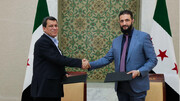
In this context, names such as the Democratic Union Party (PYD), the People's Protection Units and Women (YPG/YPJ), the Syrian Democratic Forces (SDF) and the Democratic Society Movement (TEV-DEM) are still active in Syria.
Intelligence News claims that the idea of complete separation of these structures from the PKK is wrong, and the military forces stationed in Syria are in fact the continuation of the same network of organizations that are now integrated in the form of battalions in the new Syrian army.
Cease fire, change of narrative and uncertain future
In the final part of the report, it is stated that since the 1980s, the relationship between the Turkish government and the Kurdish political movement has always fluctuated in a cycle of war, negotiation and ceasefire.
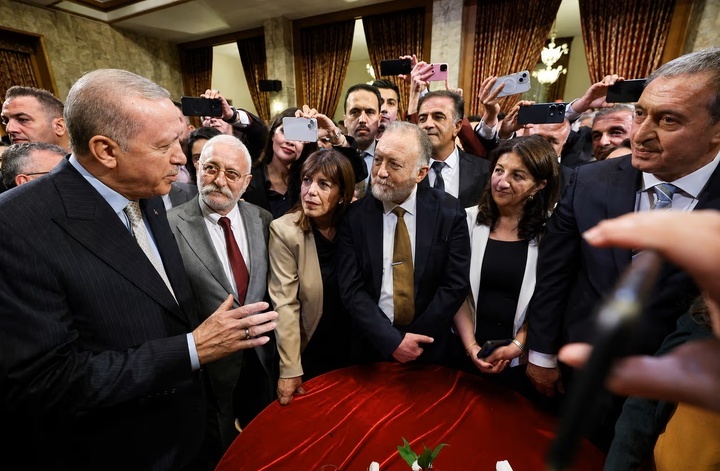
According to this media, the current ceasefire began in October 2024 at the same time as Türkiye's internal political developments, pressures against the opposition and Donald Trump's return to the American political scene.
Intelligence News also claims that the media ceremony of burning some old weapons by PKK members was part of managing public opinion and preparing the society to change the political narrative rather than a sign of real disarmament.
In the end, this report emphasizes that the Kurdish issue has a complex and multi-layered structure, and the popular media narratives do not necessarily reflect the realities behind the scenes.

Your Comment