

According to Kordpress, political and media activists believe that US President Donald Trump's recent verbal attacks against the "Kurds" and accusing them of taking possession of weapons sent by the United States are more than just a tactical difference, but seem to reflect the failure of a larger project to pressure and destabilize Iran. A project that is now facing a crisis of accountability and finding the culprit in Washington and Tel Aviv.
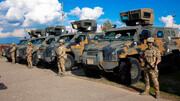
In recent weeks, Trump has claimed several times that the US sent weapons and ammunition through Kurdish intermediaries, but the "Kurds" kept these shipments for themselves. He even said in his latest statement: "The Kurds just take, take, take... I'm really disappointed with the Kurds.
But the series of reports and analyzes published by the media, journalists and regional experts show that the story is much more complicated than Trump's simple narrative.
The analytical website National Context wrote in a report entitled "Trump sacrifices the Kurds for the failure of his strategy", that Trump's accusations should be analyzed in the context of the failure of his Iran project; A project that was based on a combination of airstrikes, targeted operations, economic pressure and the activation of internal fronts.
The report emphasizes that, contrary to Trump's current narrative, the main issue was not the "weapons theft" but the overall failure of the project, which was based on incorrect estimates.
In the same framework, Dutch expert on Kurdish issues, Vladimir Van Willegenberg, also revealed in a report that despite Trump's recent attacks on Kurdish groups, he ultimately vetoed the plan to use the Kurds. According to this report, Türkiye's diplomatic pressure and Recep Tayyip Erdogan's direct contact with Trump played an important role in stopping the project.
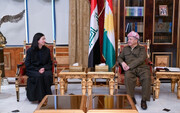
Meanwhile, the analytical account of "Kurdistan Watch" also believes that Trump's constant repetition of this accusation shows that some of the claims are probably based on real information. This media claimed that the most likely scenario is that a limited number of weapons were transferred through Erbil; An issue that can explain the sudden change in Washington's behavior towards the Kurdistan Democratic Party.
According to this analytical account, in recent months, several simultaneous cases against the faction close to Masrour Barzani, the Prime Minister of the Kurdistan Region of Iraq; Among other things, the revival of the corruption and money laundering case related to one of his relatives in the United States, the reduction of the delivery of weapons to the Peshmerga forces affiliated to the Democratic Party, and the pressure on financial resources close to this party have been activated. Meanwhile, the military faction close to Qabad Talabani and the Patriotic Union still enjoys the security support of the United States.
This analysis also points to an obvious contradiction in Trump's behavior; Just one day before the attack on the "Kurds", he had republished Qabad Talabani's interview that Trump was adept at making deals. For this reason, some observers believe that the main target of Washington's pressure is not all the Kurds, but specifically the networks close to the Kurdistan Democratic Party and the circle close to Masrour Barzani.
At the domestic level of America, some Republicans have opposed Trump's positions. Referring to his words, the page of Republicans against Trump on the X channel wrote: "His dictator friend in Türkiye must have been happy about these attacks against the Kurds."
Also, Joe Kent, the former US counterterrorism official, described the project of delivering weapons to the Kurds as an "unrealistic fantasy that Israeli officials sold to Trump." At the same time, he emphasized that the Kurds are still one of the most important allies of America in the fight against terrorism.
In the meantime, some experts have warned against the constant repetition of this issue. Winthrob Rogers believes that continuing to question Trump about this case not only does not help to clarify the reality, but can also harm the situation of the Kurdistan Region, because it actually reproduces Trump's narrative and claims.
Jang Segnik, an expert on Kurdish issues, made similar statements and said that "there is no transparency" in this case, and it is unlikely that Trump himself will provide a clear explanation.
All in all, what is seen today in the form of Trump's anger towards the "Kurds" seems to be more than anything a reflection of the failure of a regional strategy, part of its political cost is thrown on Kurdish actors.




Your Comment