

According to Kurdpress, Abdullah Ocalan, the imprisoned leader of the Turkish Kurdistan Workers' Party (PKK), after his historic call on February 27, 2025 to end the armed struggle and move towards a political solution, has placed a new concept called democratic integration at the center of his political thought. A concept that, according to him, does not mean surrender to the existing order, but an attempt to create a new form of politics, society and coexistence beyond the nation-state.
This intellectual evolution, which became more prominent after the announcement of the official dissolution of the PKK in May 2025 and the start of its activities under the new name of "Apuyi Movement", has now become the main focus of discussions about the future of the Kurdish issue in Türkiye and even the prospects of the Middle East political order.
In his February 2025 message, Ocalan, reviewing the historical conditions of the formation of the PKK - from the Cold War and the denial of Kurdish identity to the closure of the paths of democratic politics - emphasized that geopolitical changes and the relative reduction of Kurdish identity denial policies have now necessitated a new form of political struggle.
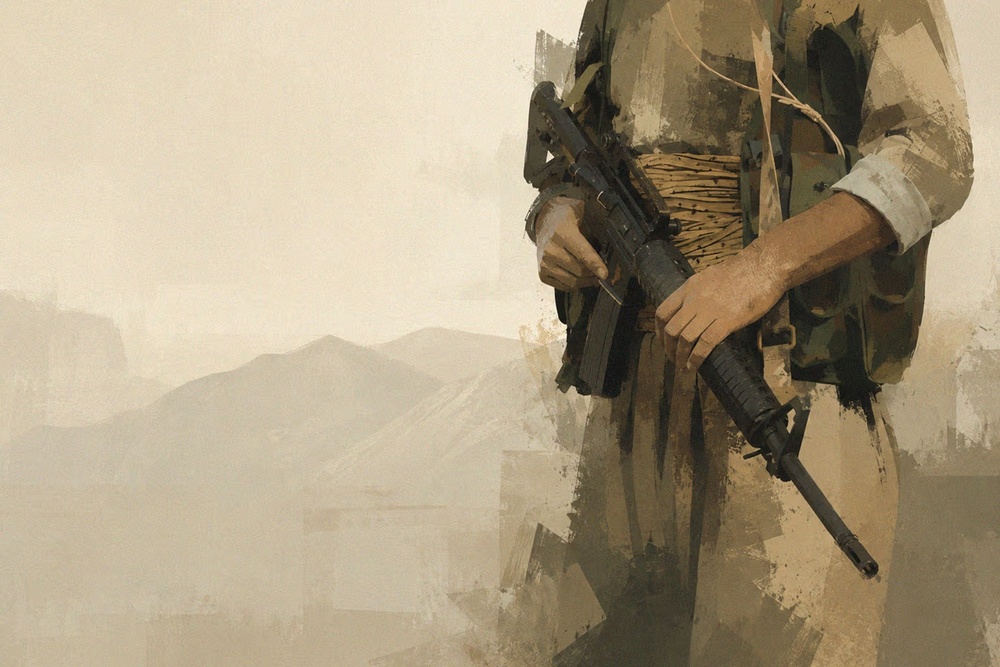
Accordingly, he demanded to lay down the weapons and dissolve the PKK; A process that was accompanied by the announcement of a unilateral ceasefire, the official decision to dissolve the party and the symbolic ceremony of burning weapons in the summer of 2025.
However, according to Öcalan, the end of the armed struggle does not mean the end of the movement, but "the beginning of a new political reality"; A reality in which the political struggle must continue through civil society, councils, self-governing institutions and democratic forms of organization.
Joost Jungerden, a Dutch researcher and a professor of development and society studies at Wageningen University, explains in a detailed article that the concept of "democratic integration" in Öcalan's thought is a logical continuation of his three previous concepts:
"Democratic Self-Government"
"Democratic Confederalism"
"Democratic Republic"
According to him, Ocalan is now trying to redefine these three ideas in the form of a single project; A project based on creating an open space for "self-expression" and "self-organization" of different social groups.
In this view, democratic integration does not mean integration into the existing structure of the Turkish government; Rather, it is an invitation to create a policy independent of the government and even beyond the government.
Jungerden believes that the main difference of the current stage lies not in Öcalan's political vision itself, but in the way of pursuing it.
In previous peace processes, the PKK's actions were usually conditional on reciprocal steps by the Turkish government. But this time, Öcalan has presented the end of the armed struggle not as the result of a political agreement, but as the starting point of a new political process.
In other words, in his view, the dissolution of the PKK is a "unilateral action" to open the way for democratic politics, not a deal based on immediate concessions from the government.
Kurds' doubts and the narrative of "Türkiye without terror"
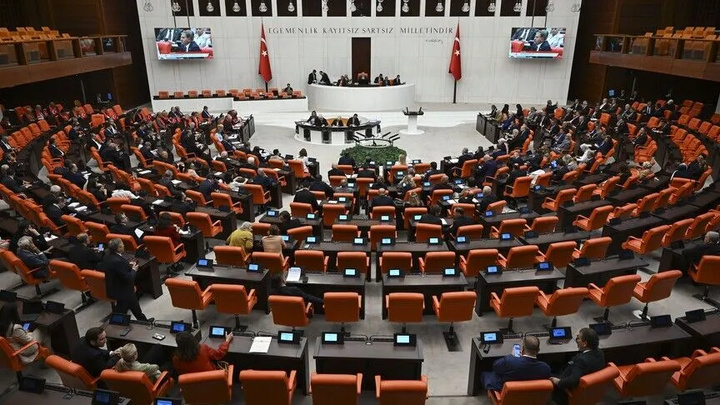
Despite this, an important part of the Kurdish society is skeptical about this process. The main reason for this doubt is the lack of concrete steps by the Turkish government; A government that was based on the denial of Kurdish identity for decades.
In his new manifesto published in 2026, Öcalan interprets history based on the constant conflict between "state" and "collective forms of social organization".
From his point of view, the state is a centralized institution that reproduces power hierarchies in the fields of gender, class, and politics. In the form of the modern nation-state, the state becomes a tool for the assimilation of identities.
On the other hand, freedom and the right to self-determination are not in the government, but in the "democratic self-organization of society".
Öcalan also tries to present a new model of socialism for the 21st century. He considers the failure of 20th century socialism to be due to its "statist logic".
Consequently, in his view, socialism should no longer be defined by the seizure of state power, the dictatorship of the proletariat, or party rule; Rather, it should be based on the democratic regulation of relations between society and political institutions.
He speaks of a world order based on decentralized democratic networks; What it calls "Union of Democratic Nations" or "Collective International".
One of the most important parts of Ocalan's new thought is trying to remove violence from politics.
He believes that violence is not just a political tool, but a part of the existence logic of governments. Hence, long-term armed struggle may reproduce the very structures it aims to destroy.
For this reason, he believes that political transformation is possible not through violent overthrow, but through a negotiated relationship between self-organized society and existing government structures.
Redefining citizenship
In Ocalan's new thought, citizenship is no longer just a legal status granted by the government.
Jungerden explains that the Kurdish movement in Turkey, from the 1970s onwards, tried to remove the concept of citizenship from the framework of Turkish identity and to recognize the Kurds' right to political representation.
These efforts later expanded in the form of local councils, women's organizations and self-management structures; Structures that define citizenship not through the government, but through collective participation and social organization.
In the conclusion of his article, Jungerden writes that Öcalan is looking for an order in which the Kurdish identity is no longer considered a threat to the state and at the same time, a kind of democratic coexistence beyond the nation-state is provided.
But the realization of this project faces two basic challenges:
First, the continuation of the security and nationalistic approach of the Turkish government, which can turn violence into the only policy tool.
And second, the real ability of the Kurdish society and political forces to create sustainable institutions of self-organization such as councils, assemblies and local democratic structures.
According to this Dutch researcher, the importance of Öcalan's new thought is not only limited to the success or failure of the current peace process, but is related to a bigger question: Is it possible to create a new form of political coexistence in a world worn out by nationalism, power concentration and economic crises?

Your Comment