

According to Kordpress, the British Foreign Ministry welcomed the merger agreement between the "Syrian Democratic Forces" (SDF) and the Syrian Transitional Government and considered it a "vital step" for the formation of a stable and unified Syria. However, reports indicate that key issues such as Kurdish cultural and linguistic rights and the fate of the Women's Protection Units (YPJ) remain deadlocked.
"Hamish Falconer", British Middle East Affairs Minister, in response to the joint letter of more than 70 members of Parliament and the House of Lords of this country about the security situation of the Syrian Kurds, announced that London will continue to cooperate with the Syrian Transitional Government, the Syrian Democratic Forces and regional and international partners to support the Syrian political transition process.
Falconer described the January 30 agreement between Damascus and the SDF as an "important step" to stabilize Syria, and said that the implementation of Kurdish civil and educational rights for the first time is particularly important. He also considered the appointment of Nuruddin Ahmed, the candidate supported by the SDF, as the governor of Haskeh as a sign of progress in the implementation of the agreement.
Despite these supports, the report published in Amaragi magazine emphasizes that the negotiations between the transitional government of Syria and the autonomous administration of North and East Syria have not progressed on more sensitive issues. Among these cases, we can mention the recognition of the linguistic and cultural rights of the Kurds in the future constitution of Syria and the determination of the status of the YPJ.
According to this report, British policy towards the case of the Syrian Kurds is still based on maintaining the centralized structure of the Syrian government; An approach that actually conflicts with the self-governance model desired by the Kurds in the north and east of Syria. In this framework, even the model of "climate of Iraqi Kurdistan" has not been proposed as an option to solve the problem of Syrian Kurds.
In another part of his positions, Falconer has emphasized that "stable Syria" is in line with the interests of London and the Syrian people, and Britain will continue to interact with the Damascus government to secure its national interests.
This position is raised while the British government has expanded its relations with the new Syrian government led by "Ahmad al-Shora" in recent months. After the fall of Bashar al-Assad's government in December 2024, Western countries accelerated the process of normalizing relations with Damascus, and Britain was one of the countries that officially welcomed Sharia.
The statistical report also points to the criticism of London's silence regarding the sectarian violence against the Alawites in Latakia and the Druze in Sweida. According to this report, the British government not only did not condemn these attacks, but also did not present a clear position about the possible pressure on Damascus to guarantee the rights of the Kurds.
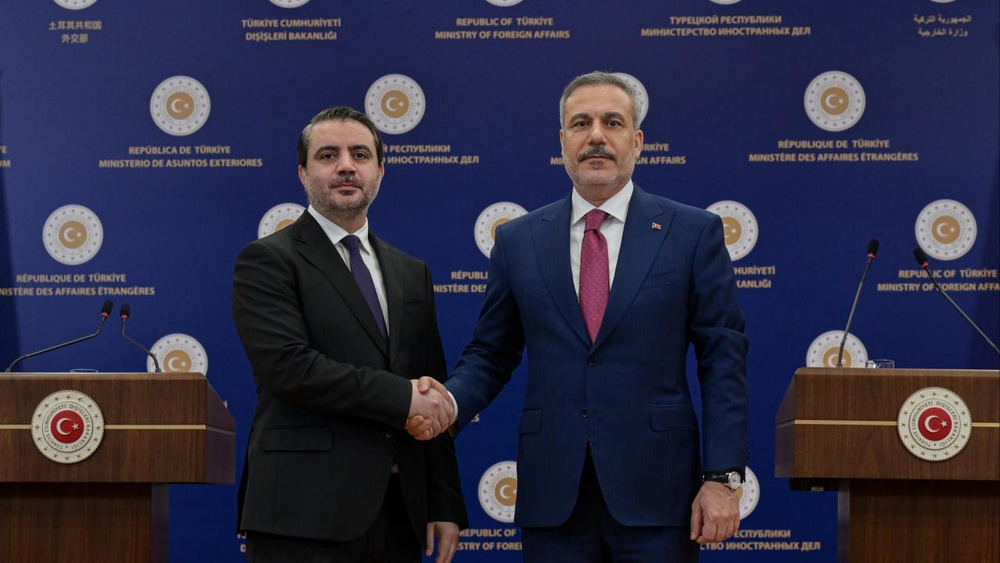
In the continuation of the report, it is stated that the issue of the Kurds in the British Middle East policy has practically been subordinated to London's relations with Damascus and Ankara. Britain has signed several security and defense agreements with Türkiye over the past two years; A country that considers the case of the Syrian Kurds as part of its security priorities.
In this regard, Richard Moore, the former head of the British Foreign Intelligence Organization (MI6) confirmed in September 2025 that the British intelligence service had communicated with Hayat Tahrir al-Sham (HTS) before the fall of Bashar al-Assad in order to facilitate London's quick return to Syria.
The author of the report believes that parliamentary support for the Kurds in Britain does not necessarily mean the commitment of the government of this country to the political demands of the Kurds, and London is still balancing between symbolic support for the Kurds who played a central role in the war with ISIS and maintaining its strategic relations with Damascus and Ankara.
This report also mentions that after the rise of tensions in the Kurdish neighborhoods of Sheikh Maqsood and Ashrafieh of Aleppo at the beginning of this year, thousands of people demonstrated in London and other European cities in support of the Syrian Kurds.




Your Comment