

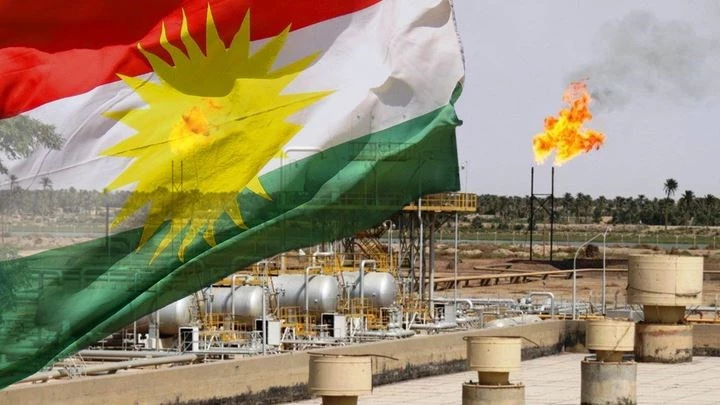
According to Kurdpress, the Kurdistan region of Iraq is gradually establishing its position as one of the most important natural gas hubs in Iraq. A development that is not only an energy project, but can change the political and security equations of Iraq and even the region.
In the same week, the new gas transmission pipeline between Kormor and Chamchamal gas fields and then Sulaymaniyah power plant was completed. This project will make the region one of the most important energy integration centers in Iraq. It is also expected that the Chamchamal gas field will start producing gas from the middle of 2027 and provide the feed required for the Bazian industrial zone.
Estimates show that these two fields together will supply more than 70% of Kurdistan region's electricity and the major part of Sulaymaniyah province's heavy industries by next year, and in the next stages, the transmission network will be expanded to Erbil.
The largest gas cluster in Iraq
The importance of these projects is not limited to electricity production. Kormor field has about 8.47 trillion cubic feet of proven and probable gas reserves, and Chachmal field adds another 6.62 trillion cubic feet to this capacity. In total, these two fields with about 15 trillion cubic feet of reserves form the largest gas production area in Iraq.
In the same area, two other important fields, namely "Miran" and "Kordamir", have also been handed over to American companies and are expected to enter the production circuit in the coming years, although the exact time of their operation is still unknown.
Transition from oil economy to gas power
These developments indicate a fundamental change in the economic and geopolitical position of the Kurdistan region. The region, which until now was mainly known as an oil exporter, is now becoming a major producer of gas-based electricity and a potential player in energy transmission routes.
Increasing Baghdad's dependence on electricity produced with climate gas can provide Erbil with new bargaining tools in negotiations with the federal government. At the same time, this process gradually weakens Iran's relative monopoly in supplying Iraqi gas.
Strengthening the position of the Patriotic Union of Kurdistan
This development will have important political consequences within the region as well. All gas fields, pipelines and major infrastructures that have recently been put into operation are located in areas under the control of the Patriotic Union of Kurdistan.
For the first time since the formation of the Kurdistan Region in 1991, this issue provides an important economic leverage to the Patriotic Union and can change the balance of power between this party and the Kurdistan Democratic Party; A change whose effects will go beyond the energy sector.
Competition on the Iraqi gas market
The growth of Kurdistan region's gas industry can change the equations of Iraq's energy market. According to one of the senior officials of the regional government, replacing the gas produced in the regional region with a part of Iraqi gas imports will face obstacles and political and regional sensitivities.
For many years, Iraq has provided an important part of the fuel required for its power plants through gas imports, and any change in this pattern of supply, in addition to economic consequences, will also affect the political balance and Baghdad's relations with regional actors.
From this point of view, the increase in gas production in Khormur and Chamchamal fields, their connection to the national electricity grid and the increase in the share of domestic gas in Iraq's electricity supply can gradually reduce the country's dependence on gas imports and bring Iraq's energy market equations into a new phase.
America's role in climate gas development
At the same time, the United States has supported the development of the Kurdistan region's gas infrastructure in recent years. This policy is followed in a situation where Washington, on the one hand, emphasizes the implementation of sanctions related to the energy sector, and on the other hand, considers it necessary to maintain the stability of the Iraqi electricity grid.
In this framework, increasing electricity production using gas from the Kurdistan Region can help diversify Iraq's energy supply sources, reduce dependence on gas imports, and strengthen the country's energy security.
From Ukraine crisis to export prospects
After the start of the war in Ukraine, some officials of the Kurdistan Region spoke about the capacity of the region's gas reserves to participate in supplying energy to foreign markets, including Europe, and considered these sources as a potential option for diversifying Europe's gas supply sources.
However, the realization of such a scenario was faced with numerous political, security and infrastructural challenges, and the development process of export projects was followed more cautiously. As a result, at the current stage, the main focus is on increasing gas production, providing electricity to Iraq and strengthening domestic infrastructure, although the option of exporting to regional and European markets is still considered as a long-term goal.
All in all, the development of Khormur and Chamchmal gas fields is not just an energy project; Rather, it is the beginning of the formation of a new order in the geopolitics of Iraqi energy; An order that can simultaneously affect the balance of power between Erbil and Baghdad, the internal competition between the main regional parties, Iran's regional influence, and America's strategy in Iraq.
National Context




Your Comment