

According to KurdPress, the Conference of Democratic Kurdish Jurists—held at the Çand Amed Cultural Center in Diyarbakır under the slogan "For Freedom, a Democratic Legal Status"—wrapped up its proceedings on the second day with the release of this final statement.
Representatives of legal organizations, lawyers, academics, and legal experts from the four parts of Kurdistan and Turkey attended the conference. Following sessions on local governance, ecology, and women's rights, the conference's final statement was read by Abdülkadir Güleç, head of the Diyarbakır Bar Association.
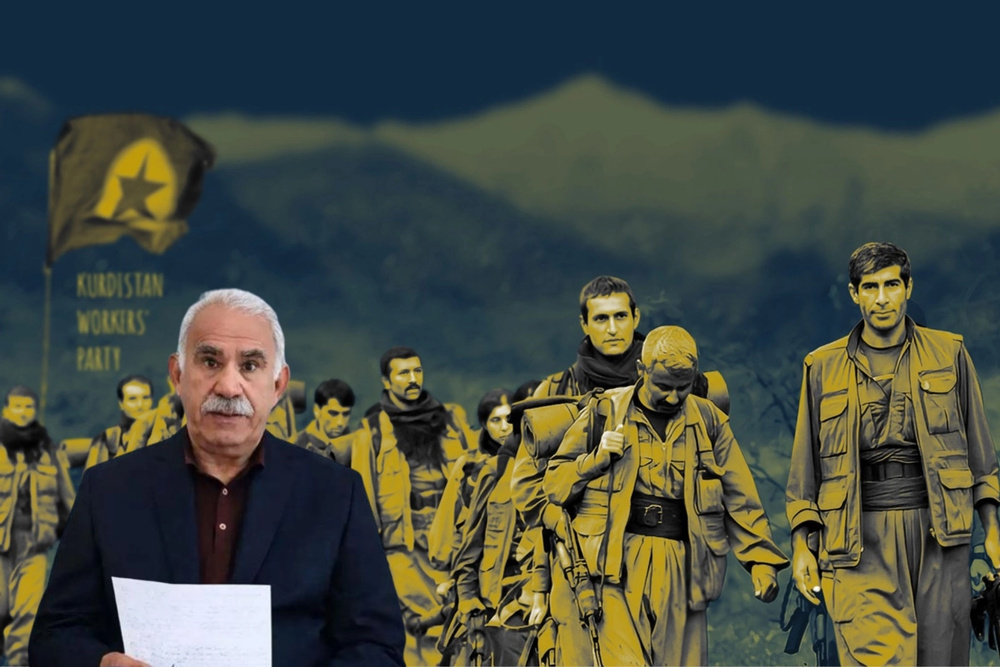
The final statement recalled the role of Kurds in the founding of the Republic of Turkey and emphasized that, for over a century, Kurds have faced policies of denial, disenfranchisement, and marginalization, while their fundamental individual and collective rights have been disregarded. The conference hailed Abdullah Öcalan’s call of February 27, 2025—titled "Peace and Democratic Society"—as a historic turning point, noting that by calling for the dissolution of the PKK and emphasizing the necessity of recognizing democratic politics and a legal framework, Öcalan has highlighted the importance of the legal and political path.
The statement asserts that for the "Peace and Democratic Society" process to continue, a new legal system must be established—one that moves away from security-oriented, patriarchal, nationalist, and sectarian paradigms and is instead grounded in women's freedom and equality, a commitment to democracy and ecology, and the guarantee of fundamental and collective rights.
The conference also emphasized that the Kurdish issue must be removed from the framework of security policies and addressed within the context of democratic dialogue and a political solution. In this regard, it was urged that Kurds—with their distinct language, culture, identity, historical memory, and political will—be recognized as equal, founding constituents within a democratic republic, alongside other nations and faith groups.
Another part of the statement underscored the necessity of guaranteeing the use of the mother tongue in the public sphere and the right to education in the mother tongue. The conference declared that the use of the Kurdish language—particularly in social life as well as in legal and civic activities—must be expanded.
The final statement also called for a redefinition of the concept of citizenship, ensuring that the existence of Kurds, diverse identities and beliefs, and women are recognized and legally protected as equal, free, and foundational elements. In this context, it was emphasized that women must participate in peace and negotiation processes not merely as contributors, but as key decision-makers.
The Conference of Kurdish Jurists identified the transition from a period of conflict to a democratic society as requiring "inclusive transitional justice," declaring that immediate legal arrangements must be made for those laying down their arms, political prisoners, exiles, and individuals deprived of citizenship, enabling their return to social, political, and democratic life.
The statement emphasized that the "framework law" must be drafted without systemic discrimination and through an inclusive approach, encompassing all relevant levels and structures. The conference declared that the adoption of this law—and other democratic regulations—must be achieved through dialogue with the parties involved, thereby enabling a transition from "negative peace" to "positive peace."
A key focus of the statement was the role of Abdullah Öcalan in the peace process. It asserted that Öcalan’s status as a central actor in the "peace and democratic society" process is fundamental to the democratic resolution effort; consequently, responsible authorities must legally recognize and guarantee his position as a "principal negotiator."


Your Comment