

According to Kurdpress, the formation of a Syrian transitional parliament marks a significant shift in Ahmad al-Shara's approach to the Kurdish issue. The president of the transitional government has selected the Kurdish National Council of Syria as his political partner; conversely, the Democratic Union Party (PYD)—which for over a decade served as the primary political force among Syrian Kurds and the backbone of the Autonomous Administration of North and East Syria—holds no seat in the new parliament.
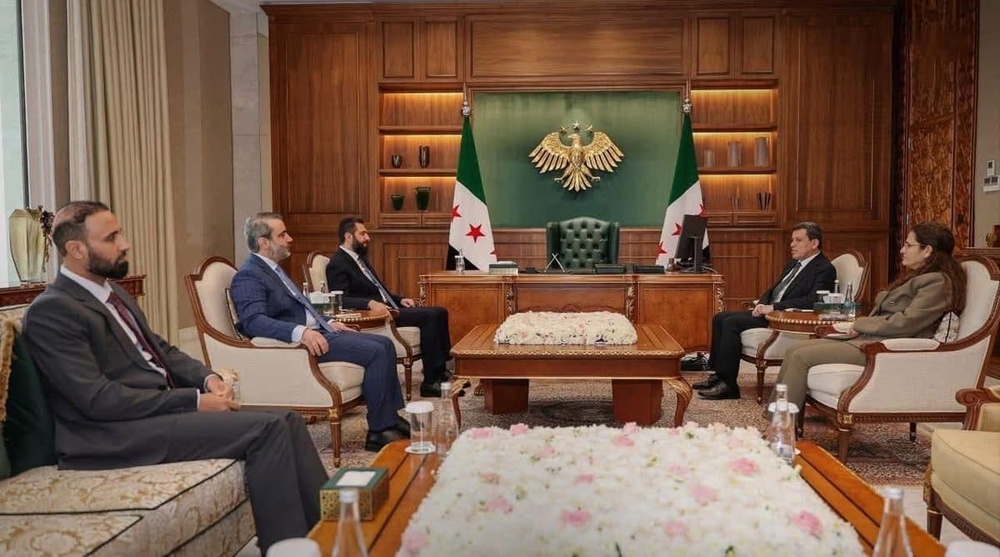
The 210-member Syrian parliament, finalized with the appointment of its last 70 members by Ahmad al-Shara, includes no representatives from the Democratic Union Party. In contrast, Abdulhakim Bashar, a leader of the Kurdish National Council of Syria, has been appointed as a member of the parliament. Damascus has chosen the Kurdish National Council of Syria as its dialogue partner to advance the political transition process.
According to Leo Goldberg, this choice reflects Al-Sharaa's effort to establish a centralized and unified state. In this context, the Kurdish National Council of Syria—which has welcomed engagement with Damascus and participation in the new political structure—has replaced the Democratic Union Party, a party that has consistently advocated for maintaining the self-governing structure of Kurdish-majority regions.
While the Democratic Union Party insists on the continuation of the self-administration system in northern and eastern Syria, the Kurdish National Council of Syria supports Kurdish participation in the Syrian state structure and the establishment of a federal system, having adopted a more conciliatory approach toward the transitional government in recent years.
The exclusion of the Democratic Union Party (PYD) from parliament also signifies a reduction in the political influence of the Syrian Democratic Forces (SDF)—a coalition in which the PYD is the key political force. Although figures close to these forces, such as Sipan Hamo, serve in the transitional government, the absence of representatives from this movement in parliament will limit its role in the political decision-making process.
According to Recep Teke, a researcher at the Turkish Center for Middle Eastern Strategic Studies (ORSAM), the Kurdish National Council of Syria has now become the primary channel for conveying Kurdish demands to the Damascus government; this development could strengthen the movement's political standing among a segment of the Syrian Kurdish population.
In the author's view, this development primarily benefits Turkey. For years, Ankara has regarded the Democratic Union Party (PYD) and the Syrian Democratic Forces (SDF) as threats to its national security due to their ideological ties to the Kurdistan Workers' Party (PKK).
In contrast, the Kurdish National Council of Syria maintains closer ties with the Kurdistan Region of Iraq and Turkey, and is viewed by Ankara as a more acceptable political partner for Syria's future. Consequently, strengthening the Council's position aligns with Türkiye's regional objectives.
Despite this political shift, many experts believe that an expanded role for the Kurdish National Council of Syria does not necessarily translate to an improvement in the situation of Syrian Kurds.
Megan Bodette, Director of Research at the Kurdish Peace Institute, argues that the core problem lies in the political structure of the transitional government—specifically a parliament whose members were largely selected through appointments or indirect mechanisms and which lacks the independence required to oversee the executive branch.
According to her, Syrian Kurds continue to seek security, prosperity, recognition of their national identity, and equal rights; furthermore, many are critical of both the Damascus government and the conduct of the two main Kurdish factions—the Democratic Union Party and the Kurdish National Council of Syria—believing that these groups engaged with the government without securing tangible gains for the Kurdish community.
Conclusion
The composition of Syria’s new parliament indicates that Ahmad al-Shara seeks to shift the political balance in Kurdish-majority areas and diminish the role of the Democratic Union Party (PYD). Conversely, the Kurdish National Council of Syria has emerged as Damascus’s key political partner among Kurdish parties—a shift that could enhance Turkey’s influence in the Syrian equation but does not necessarily entail resolving the Syrian Kurds' long-standing demands regarding political and cultural rights and genuine participation in the power structure.


Your Comment