

According to a report by *Kurdistan Watch*, the release of new statistics regarding the size of the Kurdistan Region’s military and security forces has once again raised the question of whether the region remains in a state of "permanent security readiness," or if a significant portion of this structure is a product of the prevailing political and economic system.
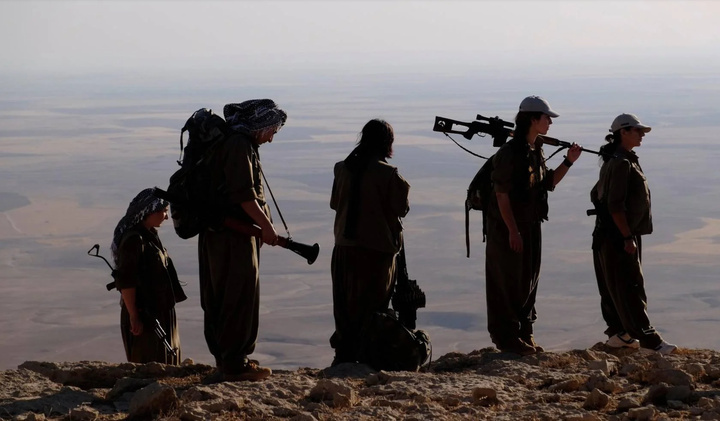
Based on these figures, out of the region's population of 6.37 million, there are 152,000 Peshmerga, 87,000 police officers, and over 42,000 Asayish (security) personnel—totaling 282,000 individuals, or 4.43 percent of the entire population. In other words, one out of every 23 residents serves in a military or security institution.
Comparing these figures with those of countries in the region reveals a striking difference. This ratio is estimated at approximately 1 percent for Turkey, 1.1 percent for Iran, and 1.3 percent for Iraq (excluding the Kurdistan Region). Even Greece—considered one of Europe’s most militarized nations due to its long-standing rivalry with Turkey—stands at around 1.8 percent, a figure that still differs significantly from that of the Kurdistan Region. The European Union average, meanwhile, is approximately 0.7 percent.
These figures indicate that, despite lacking the status of an independent state, the Kurdistan Region maintains a more extensive security structure—in terms of the ratio of military and security personnel to the total population—than many other countries.
On the other hand, the high concentration of internal security forces is also noteworthy. The ratio of police personnel stands at one officer for every 73 citizens, while the Asayish organization maintains one officer for every 148 people—figures that far exceed conventional international standards.
However, the significance of these statistics extends beyond security; the economic implications are equally substantial. According to the report, military and security forces account for 35 percent of the government workforce yet consume 41 percent of the total government wage bill. This means that a significant portion of state financial resources is dedicated to maintaining military and security structures—funds that could otherwise have been invested in sectors such as infrastructure, education, healthcare, or economic development.
Another challenge concerns the issue of retired Peshmerga personnel. The number of retirees has reached 139,000—roughly equal to the size of the active force. This situation has imposed a heavy financial burden on the region's budget and skewed the ratio of active personnel to retirees far beyond the norms typically observed in pension funds.
However, an analysis by "Kurdistan Watch" emphasizes that the sheer scale of this structure cannot be explained solely by security threats. According to the organization, the persistence of parallel structures linked to the Kurdistan Democratic Party (KDP) and the Patriotic Union of Kurdistan (PUK) means that a significant portion of recruitment within military and security institutions serves not only a defensive function but also acts as a mechanism for maintaining networks of political influence and state-sponsored employment.
Under these circumstances, the Region’s security apparatus has evolved beyond a mere reflection of defense needs into an integral component of its governance model and political economy—a model that, for the past three decades, has rested on public-sector employment, partisan loyalties, and the maintenance of a balance of power between the two dominant parties.
Overall, recent data indicate that the Kurdistan Region continues to possess one of the most densely concentrated military and security structures relative to its population; a reality that, beyond its security implications, raises significant questions regarding fiscal sustainability, institutional reform, and the future of the Region’s economy.
Your Comment