

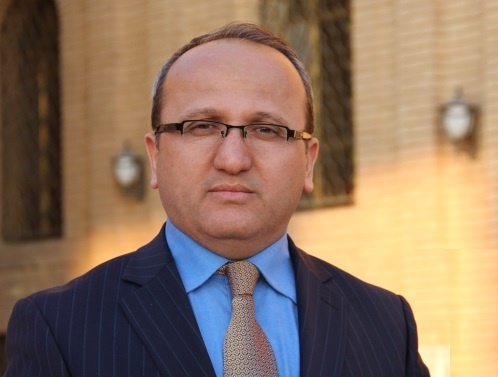
According to KurdPress, Kurdish journalist and analyst "Dogan Jahan" discussed the process of forming the autonomous administration in northern and eastern Syria and the consequences of the January 29 agreement, in an interview with Mesopotamia News Agency correspondent Omar Akin, on the occasion of the 14th anniversary of the July 19, 2012 developments in Syrian Kurdistan. With the outbreak of the Syrian civil war in 2011, the residents of the north and east of the country decided not to side with the government of Bashar al-Assad or with the Salafi opposition groups. This approach, known as the “Third Way,” led to the formation of independent political, social, and defense structures in the Kurdish regions from July 19, 2012. Women have also played a large role in political, social, and military organization since the beginning of this process.
Formation of Political and Social Institutions
The institutional foundations of this structure were laid with the establishment of the Democratic Society Movement (TEV-DEM), the People’s Assembly of Syrian Kurdistan (MGRK), and the Kurdish Language Institute.
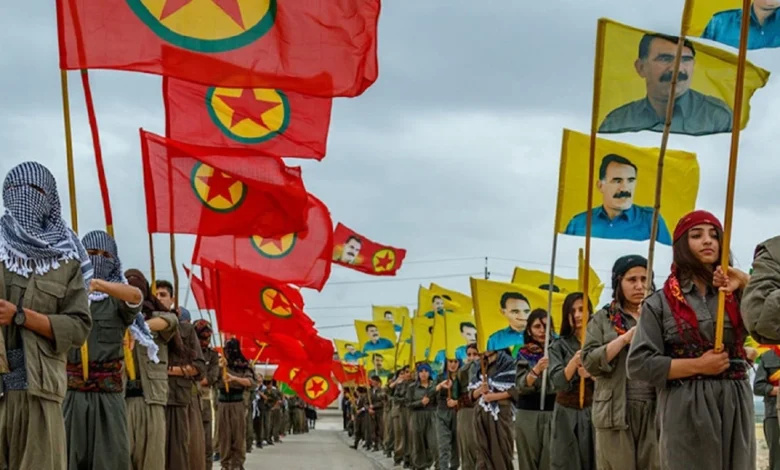
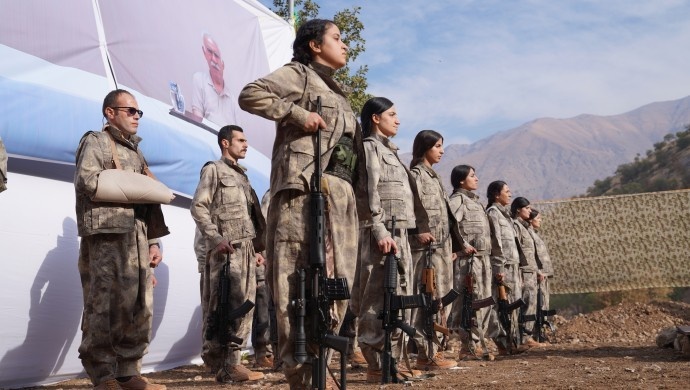
Subsequently, councils and committees were established in the fields of diplomacy, social services, and defense. On July 19, 2012, Syrian government forces withdrew from Kobani, and similar developments occurred in Afrin, Sarhkani, Derbasiye, Amuda, Dirak, Gerkelge, Trebspi, and Tel Tamr. After the cantonal structure was announced in Kobani, cantons were also formed in Afrin and Qamishlo. As the fighting intensified, local defense units were first formed, and then the People's Protection Units (YPG) and Women's Protection Units (YPJ). Later, these forces were organized into the Syrian Democratic Forces (SDF).
Attacks on North and East Syria
Over the years, the northern and eastern regions of Syria have been repeatedly targeted by armed groups. Jabhat al-Nusra attacked Sar-e-Kani in 2013, and ISIS targeted Kobani in 2014.
In 2018, Turkey and its affiliated armed groups attacked Afrin, and in 2019, Garaspi and Sar-e-Kani were also targeted by military operations.
After the fall of Bashar al-Assad's regime in December 2024, the political balance in Syria also changed. The Tahrir al-Sham Front, which seized power in Damascus, attacked Kurdish neighborhoods in Aleppo in early 2026, and then areas controlled by the autonomous administration in northern and eastern Syria.
At the end of January, an agreement was signed between the interim government in Damascus and the Syrian Democratic Forces, which covers issues such as military and administrative integration, the deployment of government forces in Hasakah and Qamishlo, and the guarantee of some civil rights for Kurds.
The Syrian government was formed on the basis of denying the Kurds
Emphasizing the importance of examining the historical background, Dogan al-Jahan said: “Without knowing history, the assessment of the present and the future will be incomplete. From the beginning, the Syrian government did not recognize the Kurds as one of the main elements of the country and adopted a policy of official denial.»
He added that in 1958, as part of land reforms, the Syrian government confiscated parts of the Kurds' lands and agricultural lands, and that from that period, preparations began for changing the demographic makeup of Kurdish areas.
Developments after the fall of Assad
Doghan Jahan, referring to the fall of the Assad regime on December 8, 2024, said that this development completely changed the balance of power in Syria, and the Tahrir al-Sham Front entered Damascus with the support of regional and international actors.
He added that the attacks on Aleppo and the northern and eastern regions of Syria threatened the existence of self-governing structures, but the Syrian Democratic Forces and the self-governing administration chose negotiation and agreement as an option to prevent the spread of the war. Jahan said that the January 29 agreement was formed in such circumstances and was the result of changing balances and political talks.
The Kurds were accepted in an official agreement for the first time
The journalist and political analyst, referring to the importance of the January 29 agreement, said: “For the first time in the history of Syria, the Kurds were accepted politically and militarily in an official agreement. "Some may consider this agreement insufficient, but in the current circumstances, it is a historic starting point for the Syrian Kurds. The developments of July 19 broke the policy of denial of the Kurds, and the January 29 agreement formalized their existence," he added.



Your Comment