

According to Kurdistan Press, a scientific study published in the international journal Heritage reported a significant increase in the destruction and looting of ancient sites in Syria and announced that a significant part of the country's cultural heritage has been damaged in recent years due to illegal excavations, military activities and new construction.The study, conducted by a team of archaeologists led by Jesse Cassana, a professor at Dartmouth University in the United States, used satellite images of nearly 200 ancient sites in Syria to assess the condition of the country's historical monuments.
According to the findings of the study, out of 199 ancient sites examined, 116 sites, or 59 percent, showed signs of looting or destruction. The researchers emphasized that this figure was a significant increase compared to a similar study that examined the condition of historical monuments in Syria between 2011 and 2016. In that study, only 13.4 percent of the sites examined were damaged.The authors of the article have identified four main factors in the destruction of historical monuments in Syria, including traditional illegal excavations, widespread destruction using bulldozers, the conversion of ancient sites into military bases, and the construction of camps or new buildings on these sites.
Afrin; the main focus of the destruction of historical monuments
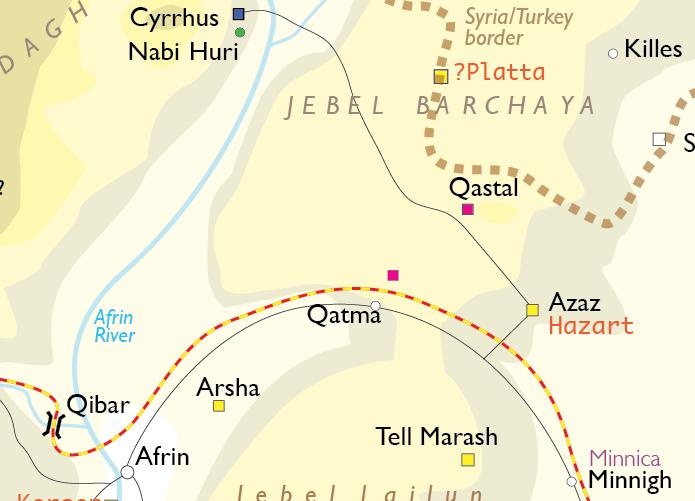
In this study, the Afrin region has been introduced as one of the most important centers of the destruction of cultural heritage in Syria. Researchers say that this region, which is home to dozens of ancient hills and sites, has experienced the highest rate of illegal excavations and systematic destruction since 2018.
The article states that after the control of Afrin by the Turkish army and its allied groups, many of the ancient sites in this region have been excavated using heavy machinery.Citing satellite images, the researchers emphasized that this operation was carried out in an organized manner in several cases and resulted in the destruction of valuable archaeological layers.
Ayn Dara; from bombing to extensive excavation
One of the examples mentioned in this study is the ancient site of Ayn Dara. According to the study, the site was damaged during military operations in early 2018, after which the famous stone statue of the Lion of Ayn Dara was removed from the site.
Satellite images show that extensive excavation operations began at the site in February 2019 and by January 2022, almost the entire ancient hill had been excavated. The researchers warned that this type of excavation with bulldozers, in addition to stealing historical artifacts, would also permanently destroy archaeological layers and eliminate the possibility of future scientific studies.Widespread Destruction of Nabi Hurri and Other Sites
The study also reported widespread destruction of the ancient city of Nabi Hurri (Cyrrhus) on the outskirts of Afrin. According to satellite images, the process of destruction of this site began in mid-2019 and by October 2020, a large part of it had been destroyed.
The researchers also pointed to the destruction of a site with the code CRN 4715, where bulldozers first destroyed vegetation and olive trees and then completely excavated its archaeological layers.
Conversion of Historical Monuments into Military Bases
According to the study, some of the historical sites in Syria have been converted into military bases during the years of war. The creation of trenches, defensive fortifications, the deployment of military equipment and the construction of artillery positions on ancient hills are among the factors that have led to the destruction of these monuments.The report also states that parts of the ancient city of Abla in Idlib province and Tell Qarqur in Hama province were converted into military zones during the years of conflict, and as a result, their archaeological layers were seriously damaged. According to the researchers, the remains of unexploded ordnance are still present in these areas, and their clearance is a prerequisite for any restoration work.
Setting up camps on ancient sites
In another part of the study, the researchers announced that some historical sites have been converted into places for displaced people. For example, in Tell al-Bai, east of Raqqa, satellite images recorded the presence of more than 120 tents between 2018 and 2020.Although these camps were later dismantled, studies show that their long-term presence caused serious damage to historical sites, and after the camps were dismantled, new illegal excavations began in these areas.
The researchers concluded by warning that continued security instability, weak law enforcement, and economic crisis have increased the risk of further destruction of Syria’s cultural heritage. They called for cooperation between international institutions, the Syrian government, and specialized organizations to protect historical monuments and prevent further looting and destruction of these sites.









Your Comment