
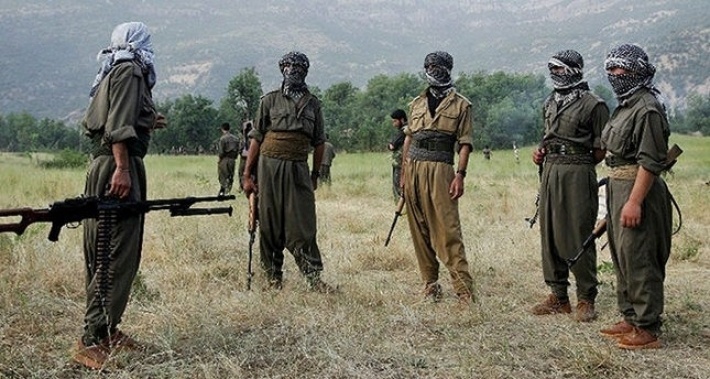
According to KurdPress, Dr. Donya Bashul, a researcher on Kurdish issues, in an analysis of reports and rumors related to the establishment of new positions and infrastructure by the Kurdistan Workers’ Party (PKK)K) In the Halabja region, he emphasizes that these developments cannot be reduced to a mere military relocation or the establishment of a few limited bases; rather, they must be examined in the context of Halabja’s geopolitical location, the region’s historical background, and recent developments in relations between Kurdish actors.
According to Bashul, Halabja is one of the most sensitive areas in the Kurdistan Region in terms of history, society, and security. The city not only holds a special place in the collective memory of the Kurds due to the 1988 chemical attack disaster, but is also geographically located in a point that has made it an important communication area between different parts of Kurdistan.
He believes that to understand why the recent movements in Halabja are important, it is necessary to first understand the specific characteristics of this region. Unlike some other areas of the Kurdistan Region, Halabja is not an area that can be easily dominated by a specific political or military current.The city has a history of political, social, and intellectual diversity, and this characteristic has always made the local community wary of the region becoming a battlefield for external forces. Bashul points out that Halabja has gone through different experiences in the past decades. Before the 1988 disaster, the city was one of the active cultural and intellectual centers of Kurdistan, and its social atmosphere was considered relatively open and diverse. However, the psychological and social consequences of the chemical attack created profound changes in the social structure of the region, strengthening some conservative tendencies while increasing the sense of Kurdish national identity. The researcher emphasizes that the people of Halabja are generally not interested in their city becoming a point of contact between regional powers again.For this reason, the dominant approach in this region over the past years has been to maintain a kind of balance between the different actors and avoid being in a specific alignment.
PKK and the limitations of its presence in Halabja
In examining the position of the PKK in Halabja, Başol says that unlike some areas around Sulaymaniyah, Rânîyeh and Dukan, the group has not been able to establish the same level of social and political influence in Halabja itself. Traditional networks, local social structures and political characteristics of the region have made the group's presence in Halabja more limited. However, according to him, the mountainous areas around Halabja have always been important for limited activities, the establishment of small camps or logistical use in recent years. The natural characteristics of the region, the presence of inaccessible heights and proximity to communication routes, have made these areas attractive to armed groups.Bashul says recent reports of new tunnels and fortifications should be carefully examined. The creation of such infrastructure in the mountainous regions of Kurdistan is not a new phenomenon, and armed groups have used underground networks and fortified positions to protect their forces and equipment for decades. But the focus of new reports on the area around Halabja has increased the importance of this area in the security equation.
Geographical importance of Halabja
According to Bashul, the importance of Halabja is not limited to the city itself; rather, it is a gateway to several important geographical axes in the Kurdistan Region. On the one hand, he explains, the area is connected to the Shahr-e-Zor plain, Sulaymaniyah, and routes leading to the central regions of the region, and on the other hand, its mountainous location makes any military movement in this area associated with certain geographical complexities.According to him, in such circumstances, control or presence around Halabja could have more strategic value than local value, as the area is part of a wider communication and security network in the eastern Kurdistan Region.
The PKK’s relationship with new developments in the region
Başol believes that the developments related to Halabja should also be seen in the context of a larger question about the future of the PKK. The group has faced various political and military pressures in recent years, and at the same time, new political trends have emerged regarding the future of its armed activities.
According to him, one of the main questions is how the PKK’s human, military and political structures will change if it reduces some of its armed activities or enters a new stage of organizational redefinition.
Başol says that one possible scenario is that the PKKThe PKK may try to maintain some of its capabilities in other parts of Kurdistan, not necessarily to launch new military operations, but to maintain organizational capacity, political influence, and the ability to respond to unexpected developments.
Three scenarios for recent movements
The researcher proposes three main possibilities:
First, preparation for a long period of instability.
According to this view, the creation of new infrastructure could be part of the PKK’s effort to maintain its defensive and organizational capabilities in a situation where the political future of the region is uncertain.
Second, creating a precautionary capacity for the future.
These movements may not simply mean preparation for an immediate conflict, but rather a preventive measure to preserve organizational options against possible political changes.
Third, a transition from a classic military structure to a new political-security role.
If new political trends in the region continue, the PKKThe PKK may attempt to change its role from an armed organization active against Turkey to a newly defined political or security actor.
In conclusion, Başol emphasizes that one should avoid exaggerating or simplifying the PKK’s new presence or establishment in Halabja. The real significance of these developments is that Halabja has once again become one of the points where geography, history, Kurdish politics, and the security equations of the region converge.
According to him, the future of the region will depend not only on military movements, but also on how the relations between Kurdish forces, regional governments, and the new political structure in Kurdistan are redefined.
Your Comment