

According to KurdPress, according to the field report "Three Days in the Qandil Mountains" published in the Amarci magazine on August 14, 2026, the current situation of the PKK can be described as a "post-dissolution, pre-transition" situation; that is, the organization has officially accepted the dissolution and end of the armed struggle, but has not yet reached the stage of complete withdrawal of forces from Qandil and entry into political and social activity in Turkey.
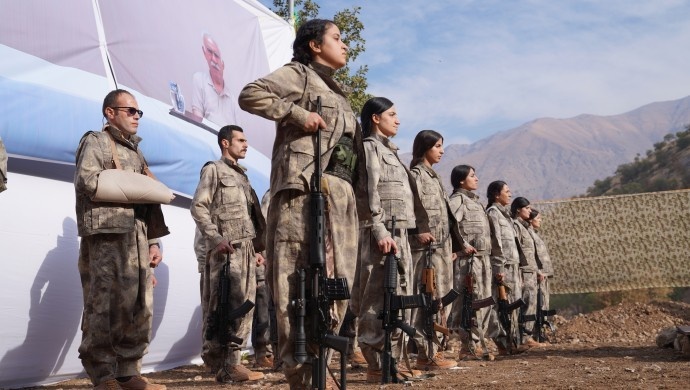
The PKK announced its dissolution after its final congress in May 2025 and abandoned armed struggle in July of the same year.The burning of weapons in the Jasna Cave in the Iraqi Kurdistan Region on July 11, 2025, was the main symbol of this transformation. However, almost a year later, a number of PKK members are still present in the Qandil bases, waiting for legal conditions to be created to return to Turkey.
The key point is that the forces present in Qandil do not see their situation as the end of the struggle, but rather as a transition from armed struggle to democratic struggle. Nurettin Demirtaş argues in this report that it is not just a matter of burning existing weapons, but also of putting “weapons of the mind” aside and pursuing the struggle for equality and freedom entirely along democratic lines.
But one major obstacle remains: the legal framework for return. PKK membersThe PKK say that after the July 2025 ceremony, they have decided not to take any further major action until a legal mechanism for their return to Turkey is approved and it is clear what Abdullah Öcalan’s assessment of this mechanism is.
This explains why, despite the peace talks, we have not yet seen a large-scale withdrawal of forces from Qandil. Asked about the future, one of the forces said: “We are ready for any eventuality,” while another stressed that it is impossible to comment on the future before seeing the framework law.
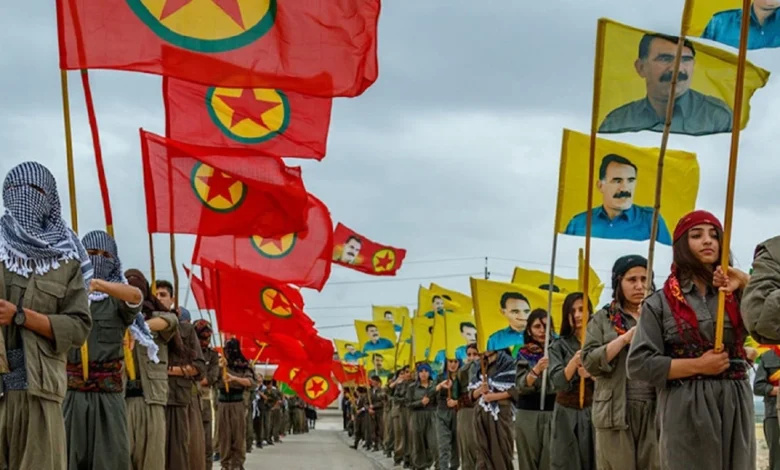
The organizational picture is also interesting. Around 30 PKK members live in one of the caves in Qandil; the men and women are mainly in their 20s and 30s. In daily life, there is no clear distinction between commanders and ordinary members, and activities such as cooking, cleaning, guarding, political meetings and theoretical discussions are carried out collectively.In addition, the PKK is creating a different image of its future. In one of the camps, about 30 members of the music, theater and cinema departments are present, and they are busy producing works of art and documentaries that, from their point of view, are related to the peace process. Therefore, part of the organization’s human capacity is moving from military activity to cultural, theoretical and social activity.
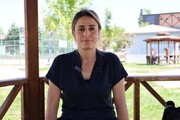
However, this transition is not yet definitive and irreversible. PKK members emphasize that if political and legal conditions are not provided, they will continue to remain in the mountains. A young female member of the organization has explicitly stated that the question of staying or leaving is not based on personal wishes; if conditions are not provided, they will remain in the mountains.
In terms of security, the atmosphere in Qandil has not completely returned to normal. Forces continue to maintain strict security measures and monitor drone reconnaissance flights in the area. PKK membersThe PKK says the intensity of these flights has increased compared to a year ago, although they believe that some of this activity may be related to regional tensions between Iran, the United States and Israel. At the same time, they claim that Turkey has observed a ceasefire over the past year.
Therefore, the current situation of the PKK can be summarized in several axes:
1. The political and organizational dissolution has been declared, but its practical consequences have not yet been completed.
2. The armed struggle has been abandoned and the weapons have been burned in a symbolic act.
3. Some members still remain in Qandil and are waiting for legal guarantees for their return.
4. The PKK is redefining the concept of “struggle” and is moving from armed struggle to democratic, social and cultural struggle.
5. Abdullah Öcalan remains at the head of the main political decision-making authority for the remaining forces.
6.The framework law adopted in Turkey is the determining factor for the next stage, as PKK members are clearly waiting to see this framework.
7. The main issue is no longer “Will the PKK lay down its arms?”; this stage has actually begun. The main question is “How, under what guarantees, and with what political and legal status will PKK members return to society after laying down their arms?”
In fact, the Qandil report shows that the PKK is moving from a guerrilla organization to a socio-political network with a new definition of struggle. However, this transition has not yet reached its final point, because the forces themselves believe that peace cannot be achieved simply by laying down their arms and that conditions for democratic political activity must be created. Nurettin Demirtaş explains this situation as follows: After laying down their arms, their responsibility has not become lighter, but heavier.
From this perspective, the PKKToday, the PKK is neither an armed force at war with Turkey nor yet a normalized political movement within Turkey; rather, it is in an intermediate zone: "The organization has been dissolved, but its forces are in the mountains, waiting for the political agreement to be transformed into legal guarantees and then a return to social life."
Your Comment