

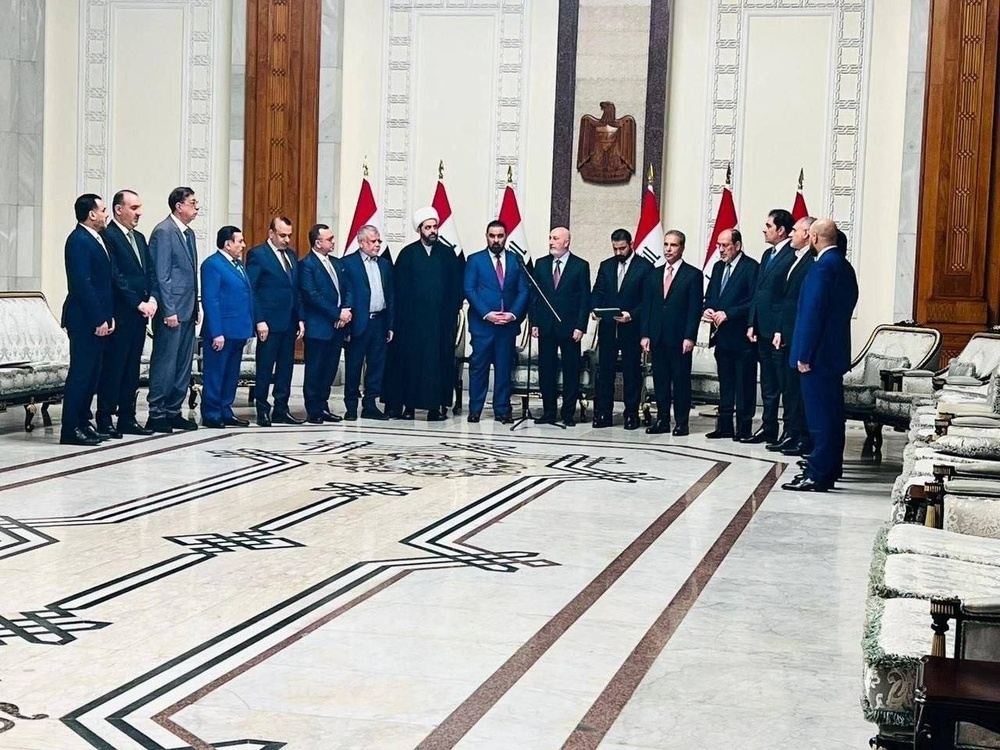
According to Kurdpress, Nizar Amidi, a figure close to the Patriotic Union of Kurdistan, was sworn in as the president of the country after winning 227 out of a total 249 votes in the Iraqi parliament; an election that ended five months of political conflict but at the same time deepened the rift between Kurdish parties.
In this regard, officials of the Kurdistan Democratic Party questioned the voting process in an interview with the National newspaper. An official form the party stated: "We do not accept this process because the new president was elected by the majority of Shia votes; therefore, he does not represent the Kurds, but rather represents these groups."
The officials emphasized that the Democratic Party will not interact with the current president until new elections are held.
Another party official, in an interview with the National, criticized the mechanism for electing the president, saying: "The Democratic Party's position is based on fixed principle; each component in Iraq must elect its representative based on the Democratic weight and will of its people." According to him, just as Shiites and Sunnis reach internal consensus about their positions, the Kurds should follow the same model.
However, the continuation of differences between Kurdish parties could have consequences beyond the region and affect the overall process of government formation and political stability in Iraq.
Your Comment