

According to Kurdpress, knowledgeable sources announced that the process of integration and agreement between the Syrian Transitional Government and the "Syrian Democratic Forces" (SDF) is progressing slowly; The problem is caused by deep differences over the form of the future political system, the concentration of power in Damascus and the demands of the Kurds for real participation in the governance structure.
According to Amarji magazine, the Syrian transitional government continues to emphasize the concentration of power and the application of political will of Damascus throughout the country, while the Kurdish currents want to guarantee political representation, democratic reforms and effective participation in national decision-making. This gap has kept Syria in a political stalemate.
Meanwhile, the process of Syria's return to the international diplomatic and economic arena continues. The European Union is considering a full resumption of the 1978 cooperation agreement with Damascus, while also seeking new trade and investment frameworks, as well as the return of some Syrian refugees.
Also, the senior officials of America, Türkiye and Syria met in "Antalya Diplomacy Assembly". Damascus considers Ankara to be the main partner for internal reconstruction, and Türkiye has also proposed the idea of creating a free trade zone in Idlib. The Central Bank of Syria is also seeking to establish banking brokerage relations with Türkiye to facilitate bilateral trade.
A Kurdish journalist told Amarji that the high volume of media statements and diplomatic moves about integration is in stark contrast to the lack of real progress on the ground. According to him, the two sides fundamentally have a different understanding of the concept and goals of "integration."
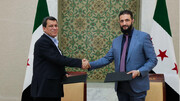
Last week, the head of the transitional government of Syria, Ahmed al-Shora, and the commander-in-chief of the Syrian Democratic Forces, Mazloum Abdi, met in Damascus and discussed the steps taken and the steps ahead.
According to some reports, Al-Shara suggested that Mazloum Abdi become one of the vice presidents, but he did not accept this offer, because this position is mainly ceremonial and lacks effective executive authority.
Sources close to the negotiations have also reported that a list of Kurdish figures to be in the central government ministries is being prepared.
Meanwhile, Elham Ahmad, one of the Kurdish political figures, announced that disputes about the appointment of government officials in Haskeh province continue and the Kurds believe that Damascus is imposing its desired forces on this region. It is said that the appointment of the security manager of Haskeh city has been postponed again due to the same disputes.
The latest round of disputes is related to the merger of the judicial structure in Qamishli. It is said that the delegation of the transitional government has demanded the return of the judges of the Bashar Assad era to their former positions and the resignation of the judges who worked during the Kurdish self-governing administration.
The complete integration of service institutions is also still stalled, although the two sides have agreed to form joint committees to activate government and executive offices in Haskeh. Also, educational committees are supposed to be formed to solve the problems related to school and university curricula and the issue of the validity of documents.
Another issue is the future of the Women's Protection Units (YPJ). The transitional government of Syria has announced that the forces of this unit can only operate in the structure of the internal security forces; A proposal that the Syrian Democratic Forces do not agree with.
A spokesman for the transitional government recently said there is no longer a need for a special women's military force, as the massive conflict has ended and the process of integration has begun. He claimed that women's rights can be guaranteed in the constitution.
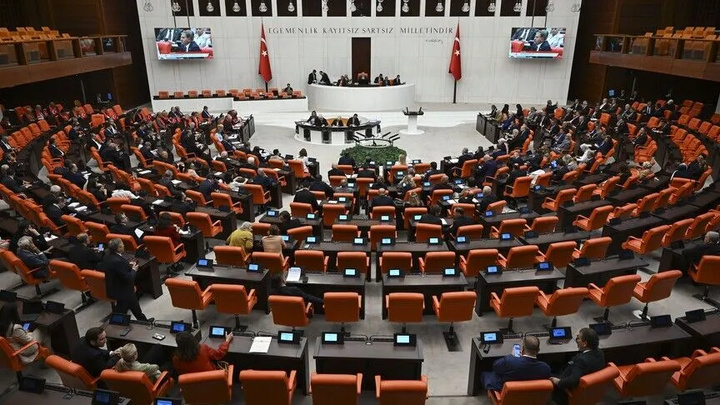
Ahmad al-Shara announced that the first meeting of the new Syrian parliament should be held by the end of this month. The composition of this parliament is to be determined through a combination of presidential appointment and some form of limited election.
The most important agenda of the parliament will be the drafting of the new constitution. It is also likely that the issue of changing the official name of the country from "Syrian Arab Republic" will also be raised; a title that critics consider to ignore the identity of non-Arab peoples.
In this regard, the Governor of Haskeh met with a delegation from the National Election Committee and discussed the mechanism of holding parliamentary elections in this province. It is expected that the election process in this region will start soon.
However, Kurdish political unity is also facing challenges. A year has passed since the "Kurdish Unity Conference", but the planned talks with Damascus have not yet started. The Kurdish leaders admit that there has been no noticeable progress in practice and the internal cooperation between the Kurdish currents has been limited.
Many Kurds in northern Syria are worried that Damascus is only looking for an appearance of an inclusive and real process to integrate the Kurdish forces; an image that can attract the consent of foreign powers to normalize political and economic relations.
At the national level, Syrian citizens talk about the growing gap between the government's external progress and internal problems. The new economic, commercial and transportation agreements have not had a tangible impact on people's daily lives so far, and the main demands of society still include a national dialogue about the political future after Assad, transparency in transitional justice and improvement of public services.

Your Comment