
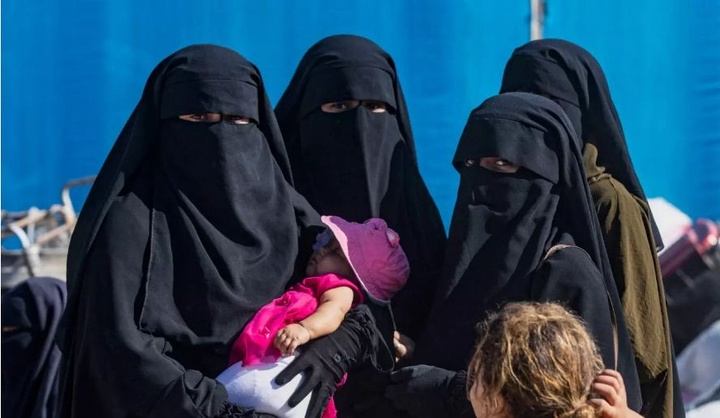
According to Kurdpress, following extensive regional developments and the start of the US-Israeli war against Iran since the end of February 2026, the Syrian crisis has been largely out of the focus of global attention. One of the most important consequences of this situation is the disappearance of thousands of foreign women and children associated with ISIS after escaping from the infamous "Al-Hol" camp in northeastern Syria; An issue that has now created new security concerns for Syria and Europe.
The al-Hol camp, which housed the families of Daesh members for many years, saw a massive exodus of its residents on February 7. About 6,200 foreign nationals fled from this camp along with thousands of other people, mostly Syrians. The escape occurred after responsibility for running the camp was transferred from the Syrian Democratic Forces (SDF) to the Syrian Interim Government.
Subsequently, the al-Hol camp was closed on February 22 and the remaining families were transferred to the "Aq Burhan" camp in the north of Aleppo. Some residents also returned directly to their original areas. However, reports show that most foreign women live freely in Idlib province; An area that is still home to Salafi-Jihad groups and foreign fighters.
Experts say that most of these families have disappeared inside Syria, especially in Idlib. Some have also managed to leave the country. There have been reported cases of fugitive women returning to Albania and Belgium, and a number of Lebanese women have also gone to Lebanon. The media also reported the arrest of a Belgian woman after entering her country.
According to Western diplomats, so far there has not been a significant wave of these people returning to Europe, but it is not clear what will happen in the future. The main concern is that these women and their children could form new radicalization cells or help revive ISIS networks.
Researchers in the field of extremism warn that some women loyal to ISIS have now become more active in cyberspace. By publishing songs and ideological propaganda, they talk about raising their children based on the beliefs of ISIS. At the same time, these people have become more cautious about hiding their digital identity.
It is also reported that these women are funded through online donations and ostensibly philanthropic campaigns. According to experts, some ISIS supporters in Europe continue to provide money and necessary facilities to these people by creating these financial networks.
Local Kurdish activists in Haskeh have also warned that many women and children who fled are still heavily influenced by the ideology of ISIS and can pose a threat to the communities where they live.
In general, although this case is not a priority for the governments in the shadow of the new regional war, the fate of thousands of women and children affiliated with ISIS, whose identity and whereabouts are currently unknown, could become a new security crisis for Syria, the Middle East, and Europe in the future.






Your Comment