

According to Kordpress, the newspaper "Daily Telegraph" in an analytical report written by "Hamish de Burton-Gordon", a former officer of the British army, examined the position of the Kurdistan Region of Iraq in the security and geopolitical equations of the Middle East and described this region as one of the foundations of stability in the Middle East.
It is stated in this report that the Peshmerga forces, as the backbone of the ground battle against the "Islamic State" (ISIS), played a decisive role in the defeat of this group. According to the author, although air support and international coordination were effective in this process, the main burden of the war was on the shoulders of the Peshmerga and parts of the Iraqi army.
Referring to the complications after the defeat of ISIS, the report highlights the role of Iran and Iraqi groups aligned with it in the security developments of Iraq and emphasizes that these factors continue to affect the balance of power and interests of the West and the Kurds.
In the following, the history of relations between the Kurdistan region and Britain is mentioned and these relations are described as deep-rooted. According to this report, the implementation of the no-fly zone in northern Iraq after the Persian Gulf War in 1991 during the prime ministership of John Major played an important role in preventing the widespread repression of the Kurds by Saddam Hussein's government.
This report also deals with the developments after 2003 and the fall of Saddam Hussein's government and considers it as the basis for the formation and strengthening of political, economic and social structures in the Kurdistan region; The process that faced a serious challenge with the emergence of ISIS.
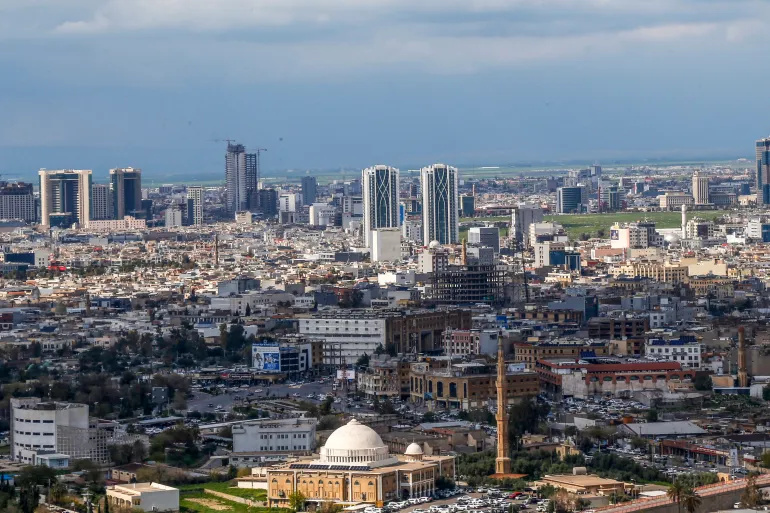
According to the Telegraph, the Kurdistan Region of Iraq is known today as one of the relatively stable regions in the Middle East, which is the result of the combination of effective governance, coherent security forces and the historical experience of this region. In this framework, the geographical location of the region and its proximity to Iran, along with the cultural links with the Kurds of Iran, have been evaluated as a potential capacity in regional interactions.
In another part of the report, the characteristics of the political elite of the Kurdistan Region are mentioned and it is stated that many of the leaders of this region have studied in Britain, which has led to greater convergence of views and values between the two sides.
Also, the role of climate energy resources, especially the oil pipeline to Türkiye, has been considered as a strategic asset. In this report, it is emphasized that under the threat of energy transmission routes, especially the Strait of Hormuz, this route can be considered as an alternative and reliable option.
In the end, the author emphasizes the need to review the level of British cooperation with the Kurdistan Region and evaluates the renewed support for Iraqi Kurdish forces as an effective factor in strengthening the stability of the region and countering the influence of non-state actors.


Your Comment