

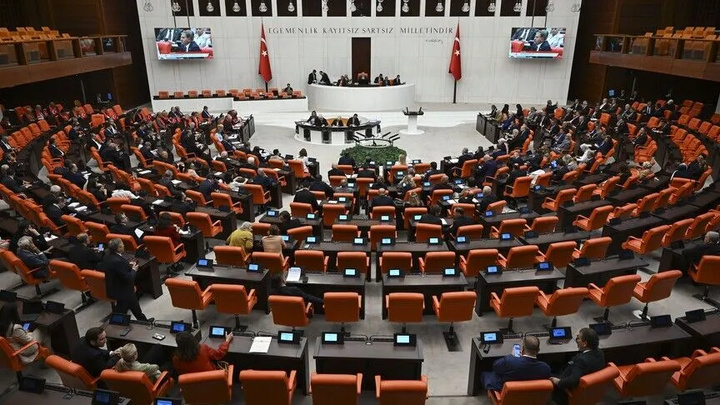
According to Kurdistan Press, the approval of the law called "Strengthening Social Unity and National Solidarity" in the Turkish Parliament on August 10, 2026, is considered the most important legal development in the peace process between the Turkish government and the Kurdistan Workers' Party, PKK, since the beginning of the new process in 2024. This law was approved with 468 votes in favor, 88 votes against and 6 abstentions, and for the first time a specific legal framework for the disarmament, dissolution of the armed structures of the PKK.K and the return of some of its members to civilian life.
However, a review of the published reports and analyses on this development shows that the adoption of the law cannot be considered the end of the Kurdish issue in Turkey. The law is more the end of the military phase of the conflict and the beginning of a legal and political phase; a phase whose success will depend on how the law is implemented, the status of Abdullah Ocalan, future political reforms and the government's attitude towards the demands of the Kurds.
What does the law change?
According to a Reuters report, the new law provides the necessary legal mechanism for the dissolution of the PKK and the return of its members to society. For a number of former PKK members who have not committed specific crimes, legal protections and the possibility of suspended sentences are foreseen.Some court cases can also be suspended or postponed for specific periods and eventually closed if no terrorism-related crimes are committed.
However, the law is not an unconditional amnesty. The Washington Post report emphasizes that the sentences of some PKK convicts will be suspended and some investigations and trials will be halted for five or ten years; but those convicted of premeditated murder and a number of life sentences are exempt from these provisions. This is of direct importance in the case of Öcalan and a number of senior PKK leaders. The architecture of the law is therefore based on one principle: legal concessions in return for disarmament and the end of armed activity, not a one-time political amnesty.
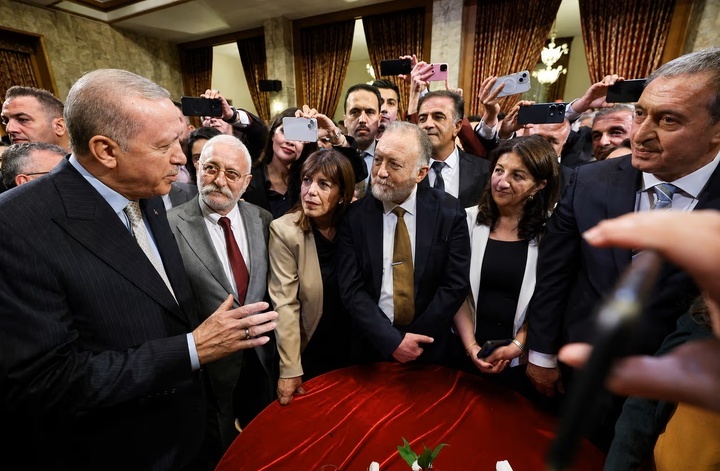
The political significance of a parliamentary vote is not just in the number of votes in favor.Reuters notes that the law was passed with the support of the Justice and Development Party, the Nationalist Movement Party and the Peoples’ Equality and Democracy Party, or DAP, or Dem Party. This combination is particularly significant because the new peace process has effectively created a different coalition than the one that existed between 2013 and 2015. In the current process, the government of Recep Tayyip Erdogan and its nationalist ally, the Bahçeli government, on the one hand, and the Kurdish political movement, on the other, have come to a common ground, which is ending the armed conflict.
But this agreement on the nature of the next stage is not yet complete. The Turkish government defines the issue mainly in terms of a “Turkey free of terrorism,” while the Kurdish political movement sees it as the beginning of a process to move the Kurdish issue from the security sphere to the sphere of politics and law. This difference is the most important potential gap in the next stage.Kurdish perception
Reactions published in some Kurdish media outlets, which reflect the perspective of the Kurdish political movement, highlight this difference. Darya Arslan, a representative of the Dem Party, told Havarnews on August 11 that the framework law could move the Kurdish issue from “violence to politics.” In her view, the importance of the law lies not simply in providing the possibility of the return of PKK forces, but in creating a basis for a political solution to the Kurdish issue. This view actually provides an important criterion for measuring the success of the law: if the law only leads to the disarmament of the PKK, then from the Kurdish movement’s perspective, a complete peace agreement has not yet been formed. Peace will be consolidated when the end of the armed conflict is accompanied by political and legal reforms. It is from this perspective that Havarnews emphasizes the possibility of this process affecting regional developments, especially in Iraq and Syria.The Kurdish Political and Cultural Rights Gap
Here, Reuters’ analysis becomes particularly important. After the law was passed, the news agency clarified that the new law does not resolve the issue of Kurdish political and cultural rights, anti-terrorism laws, and the legal status of Abdullah Ocalan. Kurdish leaders also see it more as a starting point for deeper reforms than a comprehensive agreement. This essentially shows the difference between “solving the PKK issue” and “solving the Kurdish issue.”
The Turkish government can achieve the first goal by disarming and dissolving the PKK, but the second goal is much broader and covers issues such as linguistic and cultural rights, political participation, the structure of local government, the constitution, anti-terrorism laws, the status of political prisoners, and the relationship between the center and the Kurdish regions. From this perspective, the new law can be seen as a law to end the armed conflict, not necessarily a law to resolve the Kurdish issue.Öcalan; the determining variable for the next stage
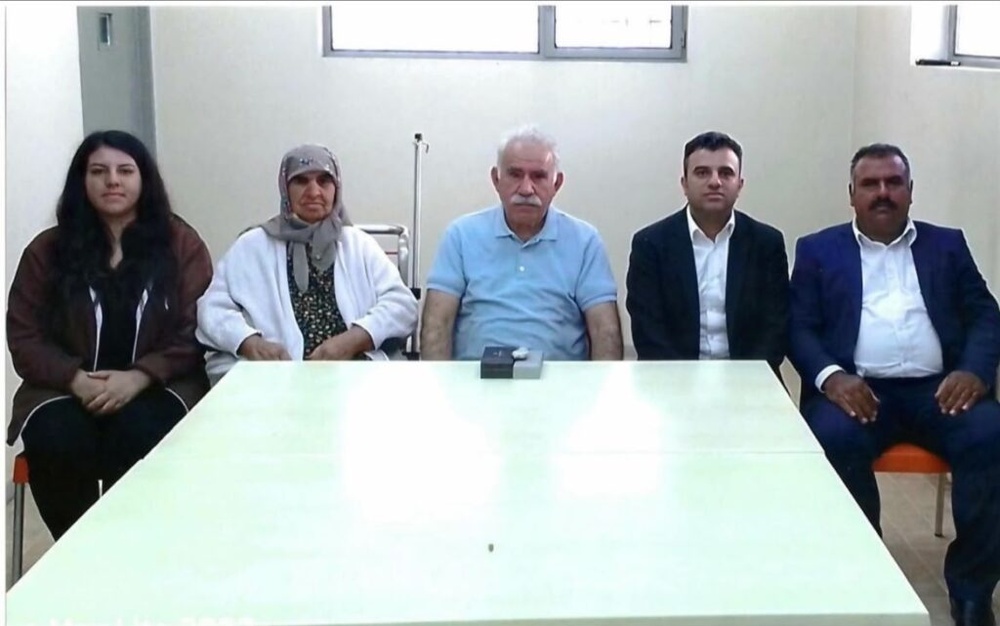
One of the main contradictions of the law is the role of Abdullah Öcalan. On the one hand, the current process essentially began with his initiative. In February 2025, he called on the PKK to end its armed struggle and disband; then in May of the same year, the PKK decided to end its armed activities and disband. Reuters also places the adoption of the law directly in the same vein. On the other hand, the new law does not fully resolve Öcalan’s situation, and some provisions regarding severe punishments effectively exclude him and senior PKK leaders from the main benefits of the law. As a result, a paradoxical situation has been created because, although the government needs Öcalan’s influence to implement the peace process, the law has not yet fully determined his legal status. This issue is likely to be one of the first issues to become a political challenge during the implementation phase of the law.Critical Turkish analyses of the new law raise an important caveat: the memory of the failure of the previous peace process is still alive in Turkish politics. In the 2013-2015 process, negotiations between the government and Kurdish representatives made significant progress, but ultimately collapsed as political competition intensified, security developments and the return of armed conflict intensified. The important difference today is that the new process has tried from the beginning to create a legal framework for implementing the disarmament phase, rather than a fragile political agreement.
But critics, including the analysis published in Haberiniz, raise questions about the speed of the process and the political objectives behind it, comparing it to previous experience. This view suggests that it is not just a matter of “passing the law”; it is trust between the parties and ensuring the implementation of commitments that will determine the sustainability of the process.A political bargain between Erdogan, nationalists and Kurds?
One of the less-considered dimensions is Erdogan’s internal calculations. The MHP’s support for a process that will eventually lead to the return of some PKK members marks a significant shift in Erdogan and Bahçeli’s political stance. But this shift does not necessarily mean abandoning Turkish nationalism. On the contrary, the legal framework shows that the government has tried to manage the issue in a way that puts the disarmament of the PKK ahead of broader political reforms. On the other hand, by supporting the law, the Democrat Party has entered into a political bargain in which it expects the end of armed activity to be accompanied by a political opening. As a result, the stability of this coalition depends on whether the government is willing to move from a “Turkey free of terrorism” to a “political solution to the Kurdish issue” in the next phase.Regional Impact on Iraq and Syria
The law’s significance extends beyond Turkey’s borders. Before the law was passed, a Reuters report on the draft explained that one of its main goals was to manage the return of troops and civilians from PKK-controlled areas in northern Iraq. This issue is directly related to the future of the Kurdistan Region of Iraq. If the disarmament process actually goes ahead, Turkey could reduce its security rationale for continuing military operations against the PKK in northern Iraq. The law could therefore potentially affect Turkey’s military presence in the region, Ankara’s relations with Baghdad and Erbil, and the security situation in border areas.
The PKK and Syrian Kurdish forces are not exactly the same in terms of organization and politics, and Turkish law cannot be directly applied to Syrian Kurdish structures. However, the end of the Turkish-PKK conflictThe SDF could be a key variable in Ankara’s calculations regarding the SDF and the future of northeastern Syria. That is why Havar News’ emphasis on the possibility of a “domino effect” in Syria and Iraq is significant.
PKK demands
The reactions published after the law’s passage show that there is not complete satisfaction even among PKK-affiliated movements. New Arab reported that the PKK described the law as “incomplete” and demanded further changes to the framework of the peace process. This is crucial because the Turkish government has now created a legal framework, but its actual implementation requires the cooperation of the other side. In other words, the Turkish parliament can pass the law, but it cannot implement the peace process alone.
The successful implementation of the law depends on at least three steps:
First, the complete disarmament and liquidation of the PKK’s armed structures.K;
Second, to create a reliable mechanism for the return and integration of forces;
Third, to move towards political reforms, which from the Kurdish perspective are necessary for the consolidation of peace.
Strengths and Weaknesses of the Law
According to reports, the main strength of the law is that it brings into the legal and institutional realm a process that has been based mainly on political negotiations and commitments by the parties.
This development is of great importance. The experience of the 2013-2015 process showed that political negotiations without legal and institutional support are vulnerable to political and security crises. But the weakness of the law lies precisely in this, because the law deals more with the issue of disarmament and the return of forces than with the political roots of the conflict. For this reason, the Reuters report correctly distinguishes between “a major step towards ending the war” and “resolving the Kurdish issue.”
The adoption of the law is in fact the end of the first stage.Before August 10, the main question was whether the Turkish government was willing to create a legal framework for the disarmament of the PKK. The answer is now yes. But since August 10, the question has changed: is the Turkish government willing to pay the political price of peace? This price could include amending anti-terrorism laws, expanding political and cultural rights for Kurds, reforming local governance mechanisms, resolving the prisoners’ case, and most importantly, determining Abdullah Öcalan’s place in the new political stage. If this step is not taken, the law may simply become an effective mechanism for the disarmament of the PKK, without fully resolving the political conflict between the Kurds and the Turkish government.But if disarmament is accompanied by political reform, the passage of this law could be a historic turning point, because for the first time the Turkish government, the ruling party, the nationalist alliance, and the main representatives of the Kurdish political movement have come together on a common legal framework to end the conflict. In that case, the real significance of the vote of 468 deputies will not be in ending a 40-year war, but in moving the Kurdish issue from the battlefield to the arena of law and politics, which the party and Kurdish representatives now see as the main goal of the law.






Your Comment