

According to Kurdpress, Reuters warned in an analytical report that Turkey's efforts to end four decades of conflict with the Kurdistan Workers' Party (PKK) are at a standstill. A situation that can increase the risk of the return of violence and the collapse of the fragile peace process.
According to Reuters, the new process of negotiations, which began in the fall of 2024, after a series of unprecedented developments, including Abdullah Öcalan's call to disarm and announce the dissolution of the PKK, has now been stopped due to a dispute over how to implement the agreements.
The conflict between the Turkish government and the PKK began in 1984 and has left more than 40,000 dead. The PKK, founded in 1978 by Abdullah Ocalan, initially engaged in armed struggle with the goal of establishing an independent Kurdish state, but later focused its demands on greater rights for Kurds and some form of limited self-government.
In the past decades, this war was mainly in the Kurdish regions of southeastern Turkey, but gradually and under the military pressure of the Turkish army, the majority of the PKK forces were transferred to the mountainous regions of northern Iraq. At the same time, the developments in Syria also led to the expansion of the regional dimensions of this crisis; where Ankara considers the Syrian Kurdish forces as a branch of the PKK.
How did the new peace process begin?
Reuters writes that the new peace process started in October 2024 after the statements of Dolat Baghçeli, the leader of the National Movement Party and the main ally of Recep Tayyip Erdogan. Baghçeli suggested that if Abdullah Ocalan demands the end of the armed struggle, he should be allowed to attend the Turkish Parliament.
After that, the representatives of the Democracy and People's Equality Party (DEM) met with Öcalan in Amrali prison for the first time in nearly a decade.
On February 27, 2025, Öcalan officially asked the PKK to lay down its weapons, and the group declared a ceasefire a day later. In May 2025, the PKK announced the official dissolution and the end of the armed struggle, and a few months later, some of the group's forces burned their weapons in a symbolic ceremony in northern Iraq.
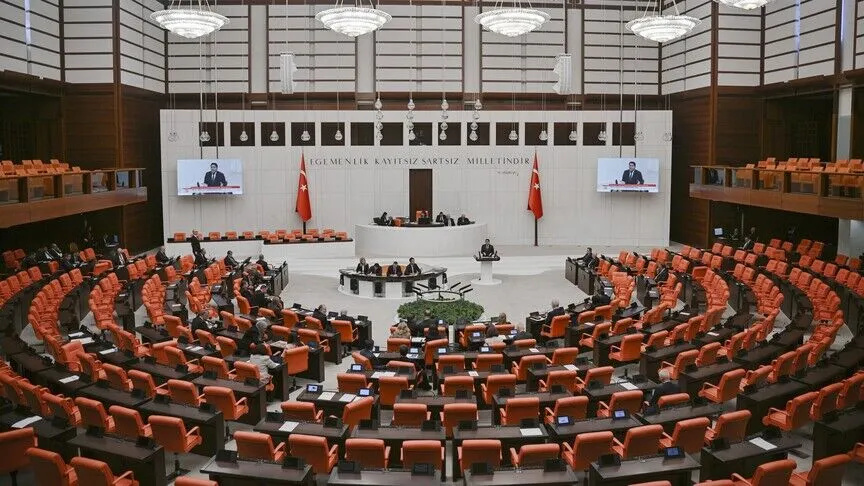
The Turkish Parliament also formed a special commission to monitor the peace process and approved a report in February 2026 that emphasized the implementation of legal reforms at the same time as the disarmament process.
What is the reason for stopping the process?
According to the Reuters report, the main difference between the two sides is over the "arrangement of the implementation of commitments".
Ankara insists that the PKK should be completely disarmed first, and then the government should act on legal reforms or guarantee the status of the group's ex-servicemen. On the other hand, PKK says that without receiving legal and political guarantees, complete disarmament could put the members of this group at risk; Especially in a situation where the region is affected by the Iran war and widespread instability.
Reuters emphasizes that there is no concrete evidence for the occurrence of such a scenario.
The central role of Abdullah Ojalan
Reuters describes Abdullah Ocalan as a "key element" of the current process. His call in February 2025 for the dissolution of the PKK was the main turning point of the negotiations and opened the way to advance the peace process.
PKK has repeatedly emphasized that Öcalan should have a direct role in monitoring the implementation of agreements. In this regard, in early May 2026, the Baghçeli government proposed the establishment of an institution called the "Peace and Politicization Coordination Office" so that Öcalan can participate in the management of this process.
However, the Turkish government has so far not officially supported his change of status or increased powers.
What is at stake?
Reuters warns that the failure of the current process could lead to the return of one of the longest and bloodiest conflicts in the Middle East. The collapse of the previous peace process in 2015 also led to the beginning of one of the deadliest periods of conflict between the Turkish army and the PKK.
In addition to the security aspects, this issue also has important political consequences for Erdogan's government. Considering the possibility of holding early elections in Türkiye, the Kurdish vote is still one of the determining factors in the political equations of this country.


Your Comment